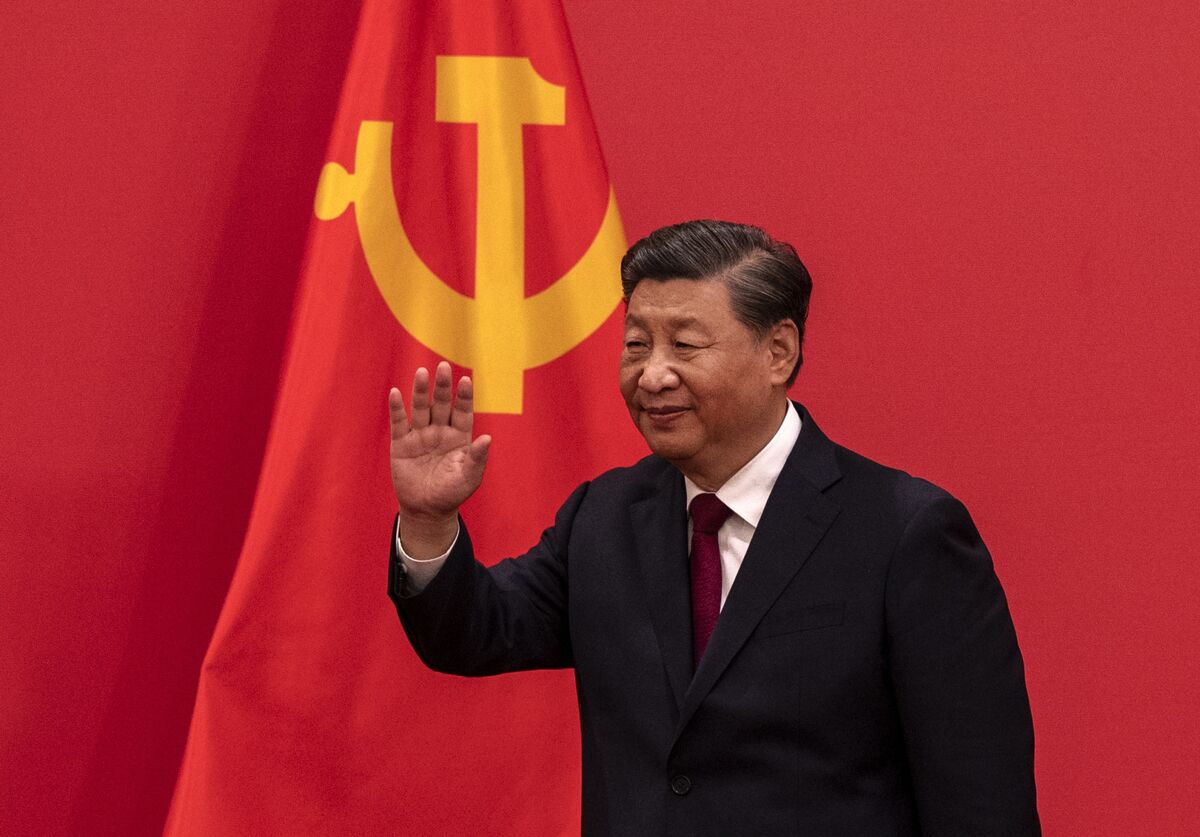
China's Communist Party membership has surpassed the 100 million mark, reaching 100.27 million members by the end of 2024. Despite this milestone, the party's growth rate slowed for the third consecutive year to 1.1%, a trend attributed to Beijing's deliberate efforts to rein in its expansion. This controlled growth signifies the CCP's pervasive and strategically managed influence, which remains a critical factor for investors assessing China's political stability and future policy direction.
Membership in China's Communist Party (CCP) has surpassed 100 million, reaching 100.27 million by the end of 2024. However, the more significant data point for investors is the decelerating growth, which slowed to 1.1% for the third consecutive year. This slowdown is not a sign of waning influence but a direct result of a deliberate policy by Beijing to control the party's expansion, likely prioritizing member quality and loyalty over quantity. This trend underscores the CCP's strategic and centralized management, reinforcing the pervasive nature of its influence across the Chinese economy. While the milestone itself has a low immediate market impact, it serves as a crucial indicator of enduring political stability and the state's top-down control, a fundamental characteristic of the Chinese investment landscape.
AI-powered research, real-time alerts, and portfolio analytics for institutional investors.
Request DemoOverall Sentiment
neutral
Sentiment Score
0.00
