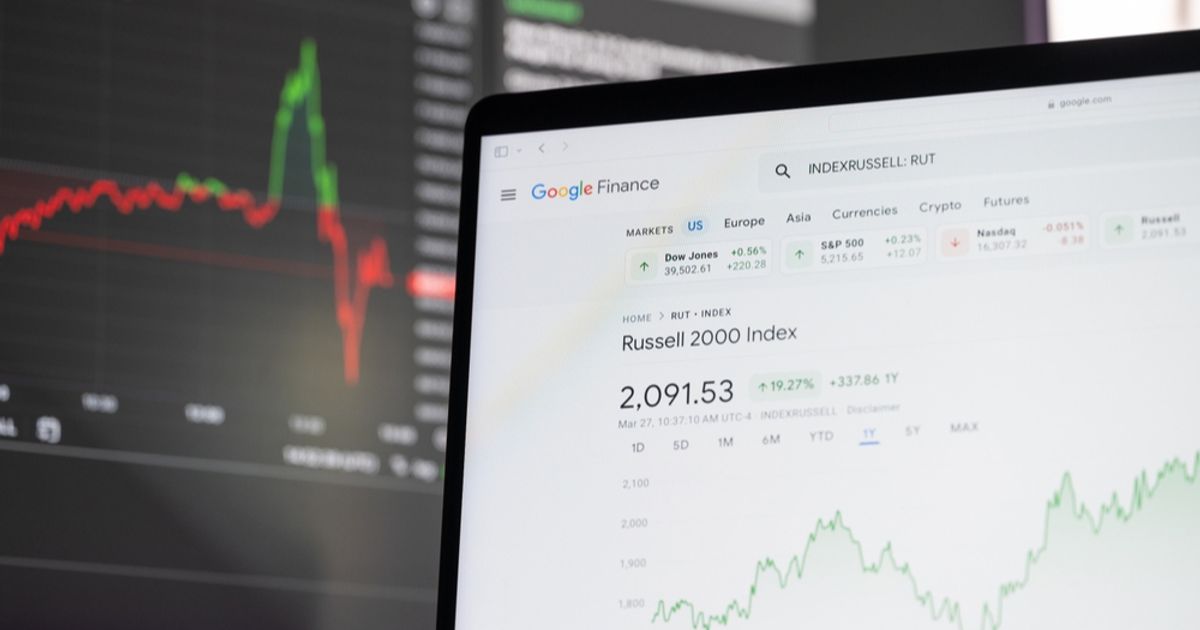
The Russell 2000 climbed to a record above 2,531 as investors rotated into small-cap stocks on growing hopes the Federal Reserve will ease policy, a shift Noble Capital Markets says would lower borrowing costs and improve refinancing and earnings prospects for smaller firms. The move is occurring against mixed US data—improving weekly payroll indicators, elevated job openings in retail, healthcare, transportation and manufacturing, and a pickup in small-business sentiment—tempered by weak capital spending plans and tight credit. Short-term yields have risen and the curve flattened as markets reprice near-term easing odds, making the degree of dissent at the December FOMC a key watch; investors are reallocating from mega-cap tech into cyclical, domestically focused names, but yield volatility and differing global central-bank cycles leave the outlook uncertain.
The Russell 2000 climbed to a fresh record above 2,531 as investors rotated into small-cap stocks on growing optimism that the Federal Reserve may ease policy in the near term, a dynamic Noble Capital Markets ties to expected lower borrowing costs and improved refinancing for smaller firms. Noble highlights that small caps are more sensitive to financial conditions and credit availability; in a higher rate-cut probability scenario, relative borrowing costs and refinancing risk fall, supporting earnings prospects for domestically focused and cyclical names.
The advance occurs against mixed US data: weekly payroll indicators show a marked improvement from recent losses, job openings remain elevated in retail, healthcare, transportation and manufacturing, and small-business sentiment has ticked up after a multi-month slide, while capital spending intentions and tight credit persist. Short-term yields have moved higher and the curve has flattened as markets reprice near-term easing odds, making the degree of dissent within the December FOMC a pivotal near-term signal for policy direction.
Market positioning has shifted away from megacap technology into cyclical and domestic exposures, but rising yield volatility, persistent credit tightness and uneven capex create downside scenarios if the Fed signals continued caution or global central banks diverge from easing expectations.
AI-powered research, real-time alerts, and portfolio analytics for institutional investors.
Request DemoOverall Sentiment
moderately positive
Sentiment Score
0.40
Ticker Sentiment
