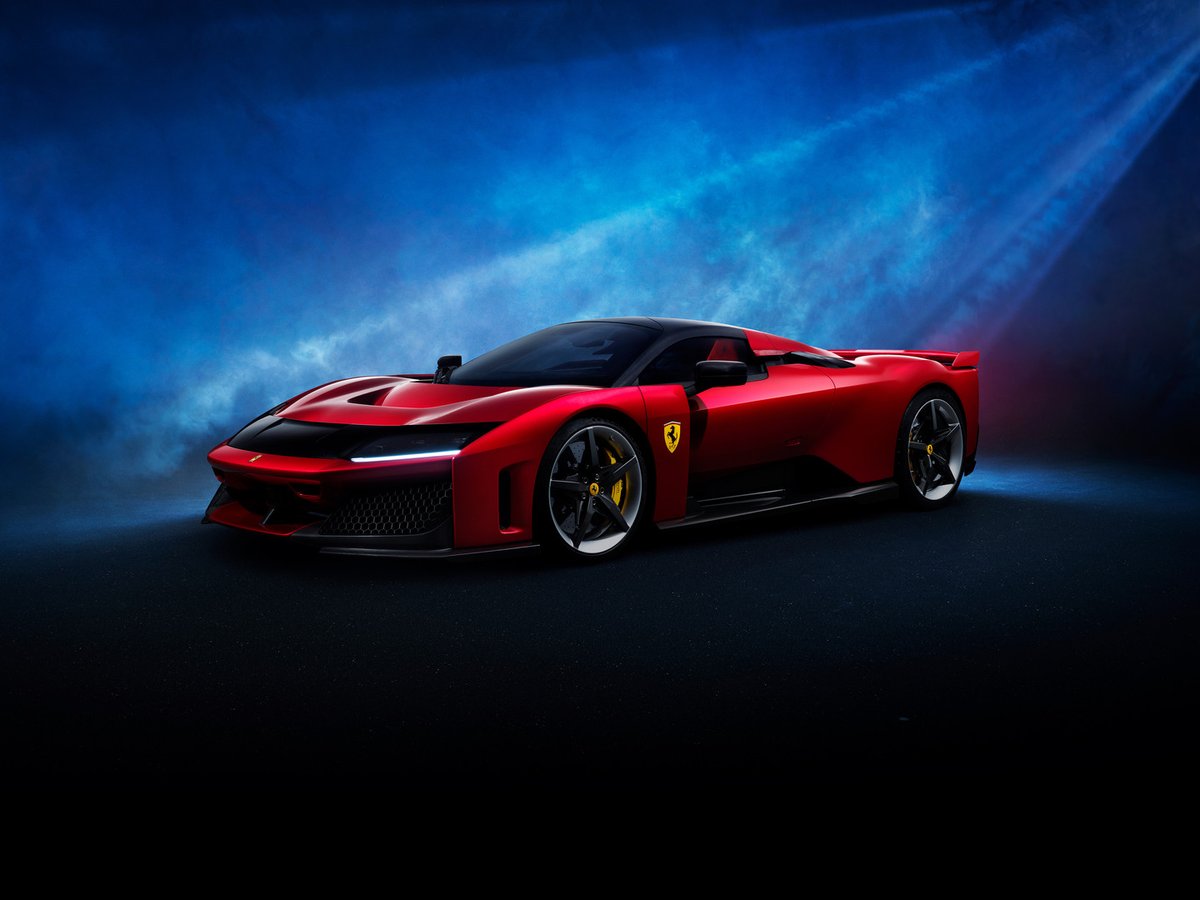
Ferrari reset its 2030 targets at Capital Markets Day to roughly €9 billion in net revenue (from a 2025 guidance of at least €7.1 billion), implying ~5% annualized revenue growth and EBIT of at least €2.75 billion (≈6% CAGR) with an implied EBIT margin of ≥30%. Management also outlined at least €3.6 billion of EBITDA and ≈€8 billion of industrial free cash flow for 2026–2030 and committed to returning about €7 billion to shareholders via dividends and buybacks; near-term performance remains strong with high-30s adjusted EBITDA margins and high-20s adjusted operating margins, and 2024 shipments of 13,752 cars (+<1% YoY). Key bullish catalysts cited include the sold-out, ultra-luxury F80 supercar (799 units, ~€3.6M base) and management’s conservative long-term targets that the author views as a floor, while the stock trades at a premium (~38x earnings) leaving execution risk if results don’t beat guidance.
Market structure: Ferrari (RACE) re-positions as a premium scarcity play — winners include RACE, suppliers of bespoke components and high-margin limited-run programs; losers are volume-focused OEMs and EV-content suppliers who lose share of Ferrari wallet. Conservatively guided 2030 targets imply supply discipline (flat unit growth, mix/pricing up) which supports residuals and dealer margins; bond spreads should remain tight for investment-grade debt while EUR FX sensitivity rises modestly as buybacks repatriate cash.
Risk assessment: Tail risks include an abrupt luxury demand shock (global consumer discretionary spending down 20%+ in 6–12 months), rapid regulatory bans on ICE supercars in key markets by 2030, or operational failure in F80 execution — each could compress EBITDA margins >500bps. In days–weeks expect sentiment-driven volatility around analyst reactions and options gamma; in 6–18 months fundamentals (F80 deliveries, 2026 guidance, buyback cadence) will dominate. Hidden dependencies: used-car residuals and limited-run pricing; catalyst list: 2026 guidance (early 2026), Q4 results, and F80 delivery schedule (through 2026).
Trade implications: Direct: establish a 2–3% long RACE position in tranches (buy 40% now, add 30% if < $370, add 30% if < $340) targeting +25–40% in 12–24 months; stop at -22% from cost. Options: buy a Jan 2027 425/525 call spread (debit structure) sized to 1% notional as asymmetric upside play; sell 3–6 month cash-secured puts at 350 for yield if comfortable owning stock. Pair: long RACE vs short AML.L (Aston Martin) or short broader luxury discretionary ETF (e.g., XLY) to isolate pure luxury-cars franchise upside.
Contrarian angles: Consensus treats 2030 as a firm ceiling; history shows Ferrari beats conservative long-term guides — management uses “at least” as a floor. The market drop (~20% from >$500 to < $400) likely overstates risk given 7bn EUR shareholder return commitment and still-high margins (adj. EBITDA mid-to-high 30s). Unintended consequences: cutting EV guidance may deter ESG investors and episodically amplify volatility, creating repeated tactical buying opportunities for patient value buyers.
AI-powered research, real-time alerts, and portfolio analytics for institutional investors.
Request DemoOverall Sentiment
moderately positive
Sentiment Score
0.50
Ticker Sentiment
