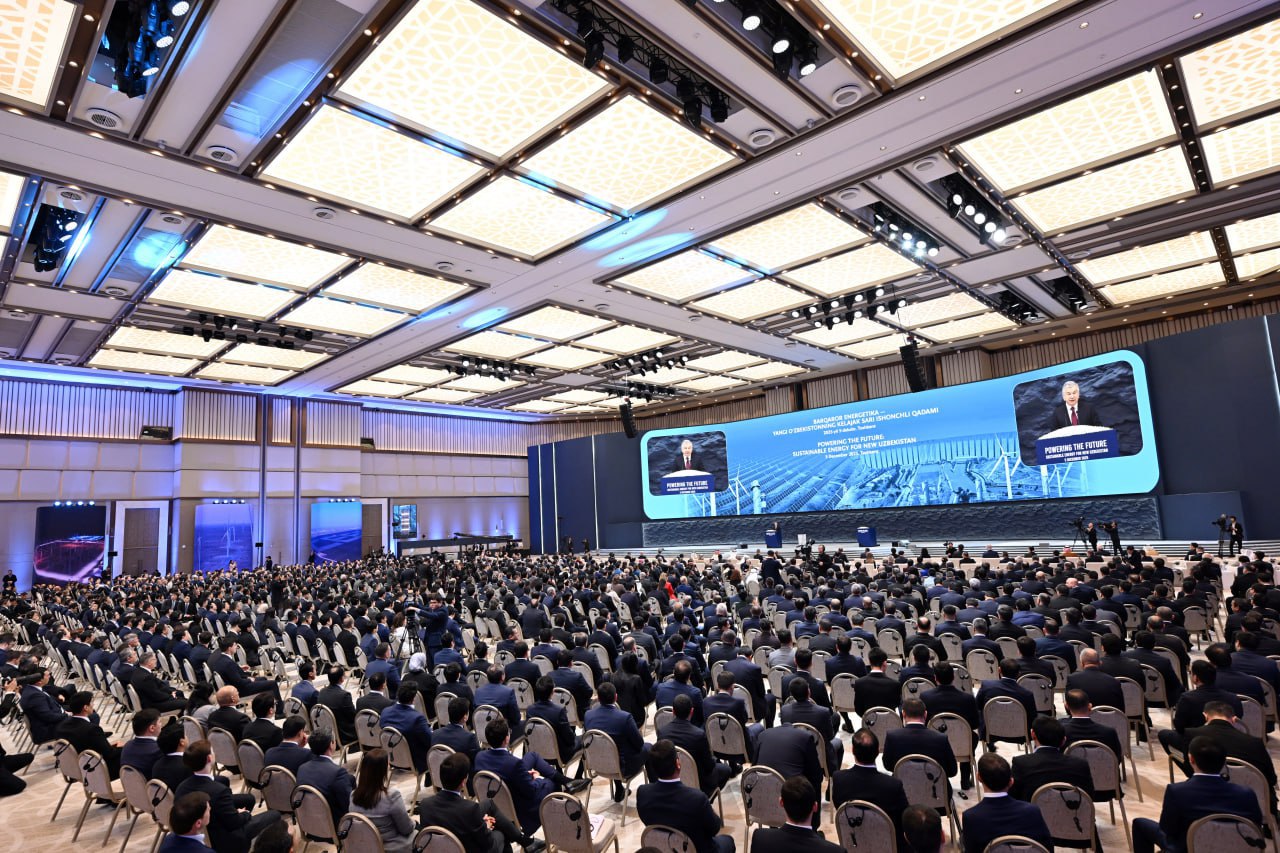
Uzbekistan pledged to cut harmful gas emissions by 50% by 2035 under updated Paris Agreement commitments and highlighted implementation of the ICRAFT project with the World Bank, which has accounted for 23 million tonnes of reduced greenhouse gas emissions and is initiating international carbon unit trading. The government said 17 major industrial enterprises have secured international green energy certification this year (targeting 100 within two years) and is coordinating regional energy projects — including planned financing next year for the Kambarata HPP-1 with Kyrgyzstan and Kazakhstan and a ‘green corridor’ to export Central Asian electricity to Europe — actions that could boost renewable capacity, carbon-market activity and regional power trade over the medium term.
Market structure: Uzbekistan’s 50% emissions target to 2035 and push for green certification, carbon trading and the Kambarata HPP-1 financing creates direct demand for hydropower turbines, transmission, grid modernization and carbon market infrastructure. Winners: hydropower OEMs, transmission/equipment suppliers, carbon registry/platform providers and green financing intermediaries; losers: regional thermal/gas generators facing displacement and exporters who lose competitive pricing power in European power markets. Cross-asset: expect increased issuance of Uzbekistan green/sustainable bonds (pressure to steepen EM credit spreads if fiscal pass-through >$3–5bn capex over a decade), modest upward pressure on copper, transformer-grade steel and polysilicon; potential FX support if electricity exports materialize.
Risk assessment: Tail risks include project financing shortfalls, transboundary water disputes (Kyrgyz/Kazakh cooperation failure), and volatile carbon prices; a failed Kambarata HPP would be a multi-year setback. Immediate (days) market moves are muted; short-term (3–12 months) catalysts are green bond auctions and World Bank/Chinese contractor contracts; long-term (3–10 years) risk is implementation and hydrology-driven variability. Hidden dependencies: success hinges on bilateral water governance, Chinese/World Bank capital availability, and EU acceptance of the “green corridor” for power.
Trade implications: Direct plays: buy carbon exposure (KRBN) and select turbine-makers (Andritz AG ANDR.VI, buy 1–2%) or GE (GE) via 9–18 month call spreads to capture tender wins; pair trade long Andritz (6–12 months) vs short Siemens Energy (SIEGn.DE) given execution track records. Fixed income: plan to allocate 1–3% to Uzbek green bonds only if new issue yields >200bp over Uzbekistan sovereign curve or >7% absolute. Sector rotation: overweight EM utilities/renewables and underweight EM gas/fossil utilities over 12–36 months.
Contrarian angles: Consensus underestimates governance/water risk — projects can be delayed 2–5 years, which would depress equipment OEMs and delay carbon demand; conversely, if Uzbekistan monetizes displaced gas exports, regional gas prices could fall and pressure Russian/central Asian gas margins. Mispricing likely in equities of small-cap suppliers that priced in immediate large tenders; consider shorting highly leveraged regional contractors that lack balance-sheet flexibility. Watch for rapid issuance of green assets (next 6–12 months) that could temporarily saturate demand and widen yields.
AI-powered research, real-time alerts, and portfolio analytics for institutional investors.
Request DemoOverall Sentiment
moderately positive
Sentiment Score
0.45
