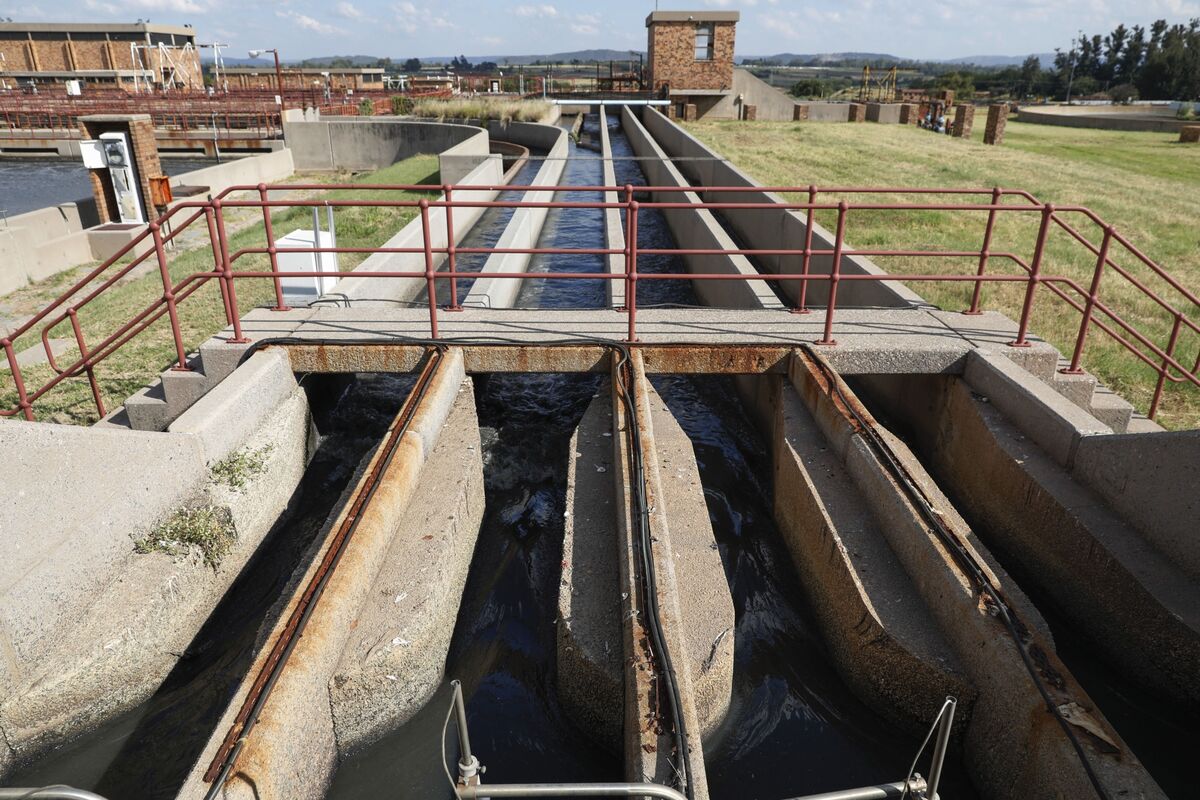
47% of South Africa’s 848 municipal wastewater-treatment systems were found to be compromised in the latest Green Drop Report, up from 39% in 2022, while systems complying with standards fell to 8% from 14% (a 6pp decline). The deterioration raises heightened risk of untreated discharges into rivers and environmental/health damage, implying potential fiscal, regulatory and remediation costs for municipalities and investors in local infrastructure. Monitor implications for municipal service delivery, creditworthiness of affected municipalities, and potential regulatory intervention or funding requirements.
The immediate capital gap is the lever: retrofitting aging treatment plants is a high fixed-cost, low-margin business that will require several hundred million-to-low billions of USD of near-term spend from constrained municipalities and national coffers. If we assume an average retrofit capex of $2–8m per plant across a broad swath of facilities, the hit to public balance sheets is meaningfully front-loaded over 6–24 months and will force prioritization between social spending and infrastructure — creating a two-way market for contingent financings and concession models.
The winners will be firms that can deploy turnkey delivery, performance guarantees, or O&M contracts quickly: modular-treatment OEMs, engineering firms with African execution footprints, and water-as-a-service operators who can monetize uptime. Financial intermediaries that underwrite labelled green/sovereign bonds, and private credit funds able to provide bridge financing to municipalities, also stand to capture outsized spreads; conversely, regional banks and muni-credit-heavy funds face deterioration in asset quality and higher provisioning over the next 12–36 months.
Catalysts to watch are: sovereign/municipal issuance of ring‑fenced green infrastructure bonds, donor/IFC mobilization, emergency regulation tightening, and climate-driven runoff events that either force capex or trigger acute liabilities. Reversal scenarios include rapid private concessions (18–36 months) or tech-driven decentralization (3–5 years) that reduce replacement capex by 20–40% via smaller, modular systems and remote monitoring, compressing the window for large EPC wins.
AI-powered research, real-time alerts, and portfolio analytics for institutional investors.
Request DemoOverall Sentiment
mildly negative
Sentiment Score
-0.35
