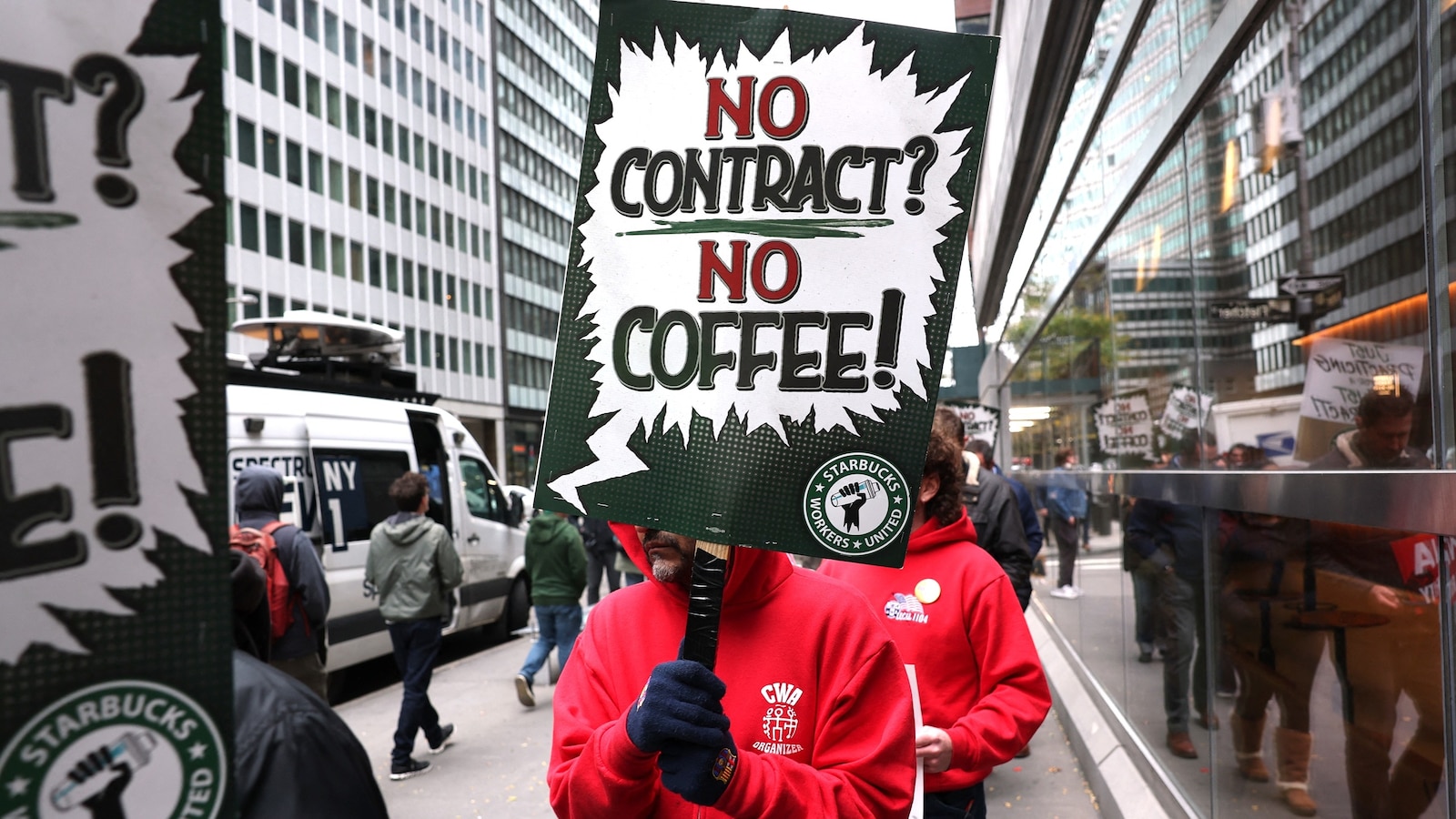
Starbucks workers initiated a "Red Cup rebellion" strike at approximately 65 stores nationwide on a key promotional day, aiming to pressure the company over stalled contract negotiations, alleged illegal labor practices, and demands for improved pay and staffing. While Starbucks downplayed the strike's impact, noting 99% of stores remained open and accusing the union of unrealistic demands, this action highlights persistent labor disputes that could pose an ongoing operational and reputational risk. This comes as Starbucks recently reported flat U.S. same-store sales, breaking a streak of declines, with management expressing optimism about building momentum, suggesting these labor issues could be a headwind to sustained recovery.
Starbucks (SBUX) faced a "Red Cup rebellion" strike on a key promotional day, involving over 1,000 workers across approximately 65 stores, as reported by Starbucks Workers United (SWU). The union, representing 9,500-12,000 members, is demanding resolution on alleged illegal labor practices, improved staffing, and substantial pay increases, having rejected a company offer in April. This action aims to pressure Starbucks over stalled contract negotiations and perceived "union busting."
Starbucks spokesperson Jaci Anderson downplayed the strike's operational impact, noting 99% of stores remained open, and accused the union of presenting unrealistic demands, including 65-77% pay increases. This labor unrest coincides with Starbucks' recent report of flat U.S. same-store sales for the quarter ending September, which broke a six-quarter decline streak, with management expressing optimism about future momentum.
The protracted labor dispute, now 625 days since a commitment to agreement, significantly exceeds the 409-day average for first contract signings, indicating deep-seated issues. This ongoing conflict, reflected in a moderately negative sentiment score for SBUX (-0.7), poses a persistent reputational and operational risk. It could divert management attention and potentially impact customer perception, despite the limited direct store closures.
AI-powered research, real-time alerts, and portfolio analytics for institutional investors.
Overall Sentiment
moderately negative
Sentiment Score
-0.40
Ticker Sentiment
