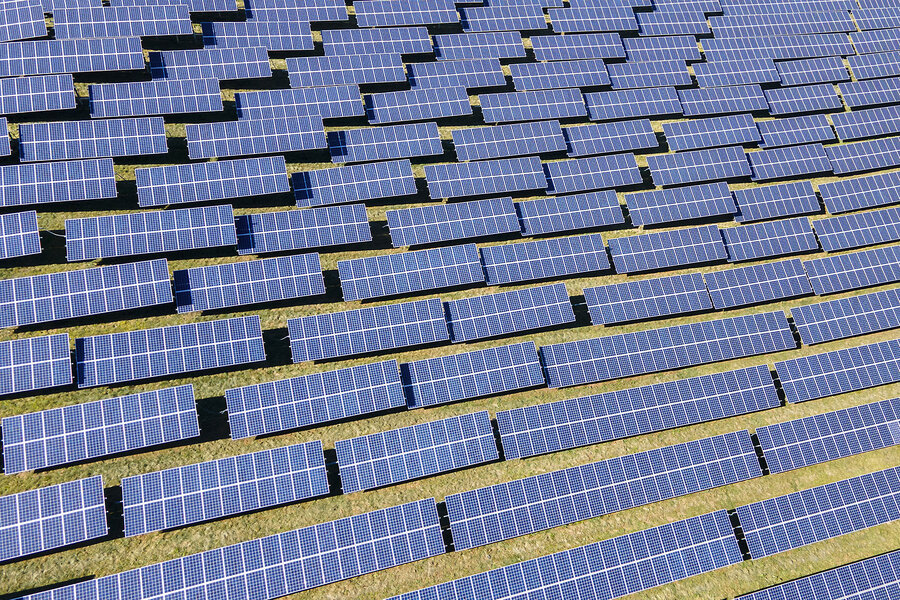
Solar accounted for 8.5% of U.S. electricity generation (up from 0.1% in 2010) and wind+solar reached 17% vs coal at 15% in 2024. The Trump administration has cut federal tax credits and phased out solar subsidies via its 2025 tax-and-spending bill (House vote 218-214) and the Energy Secretary has publicly criticized solar, creating clear policy headwinds. Electricity demand is forecast to grow at a 2.8% CAGR over the next 15 years, while proponents highlight 70 GW of new solar capacity slated for 2026–27 (a ~49% increase from end-2025) and the role of solar in supporting AI data centers in red states. Implication: near-term political/regulatory risk remains elevated, but structural demand and local economic incentives could sustain continued capacity additions.
Political cross-pressures are creating a policy bifurcation: federal hostility limits subsidies while sub-federal and corporate economics keep buying utility-scale solar and storage. That divergence favors firms able to monetize merchant and PPA cash flows, local tax receipts, and balance-sheet-backed project finance rather than players dependent on tax-equity-driven installs; expect cash-flow-rich developers and integrated storage vendors to widen margins while marginal installers compress.
Supply-chain effects will be non-linear. If domestic content or national-security framing accelerates, expect a two- to three-year surge in capex for module/inverter manufacturing and a tightening of upstream inputs (polysilicon, trackers, power electronics) that temporarily lifts prices and raises gross margins for domestic OEMs — conversely, global module oversupply would crush new U.S. entrants’ payback periods. Grid friction (permitting, interconnection queues) becomes the binding constraint in most states, which benefits firms that own interconnection capacity, developer pipelines, or transmission/EPC capabilities.
Near-term catalysts are largely political and project-timing driven: state-level incentives, large corporate PPA announcements, hyperscaler data-center siting decisions, and congressional/midterm headline risk. Tail risks include a sustained federal rollback of manufacturing or permitting support, a persistent module price collapse, or a rapid fall in battery metals pricing that undercuts recycling entrants. Time horizons split clearly: PPAs and data-center-driven demand materialize within 6–24 months; manufacturing builds and domestic supply-chain shifts play out over 24–48 months.
AI-powered research, real-time alerts, and portfolio analytics for institutional investors.
Request DemoOverall Sentiment
mixed
Sentiment Score
0.05
Ticker Sentiment
