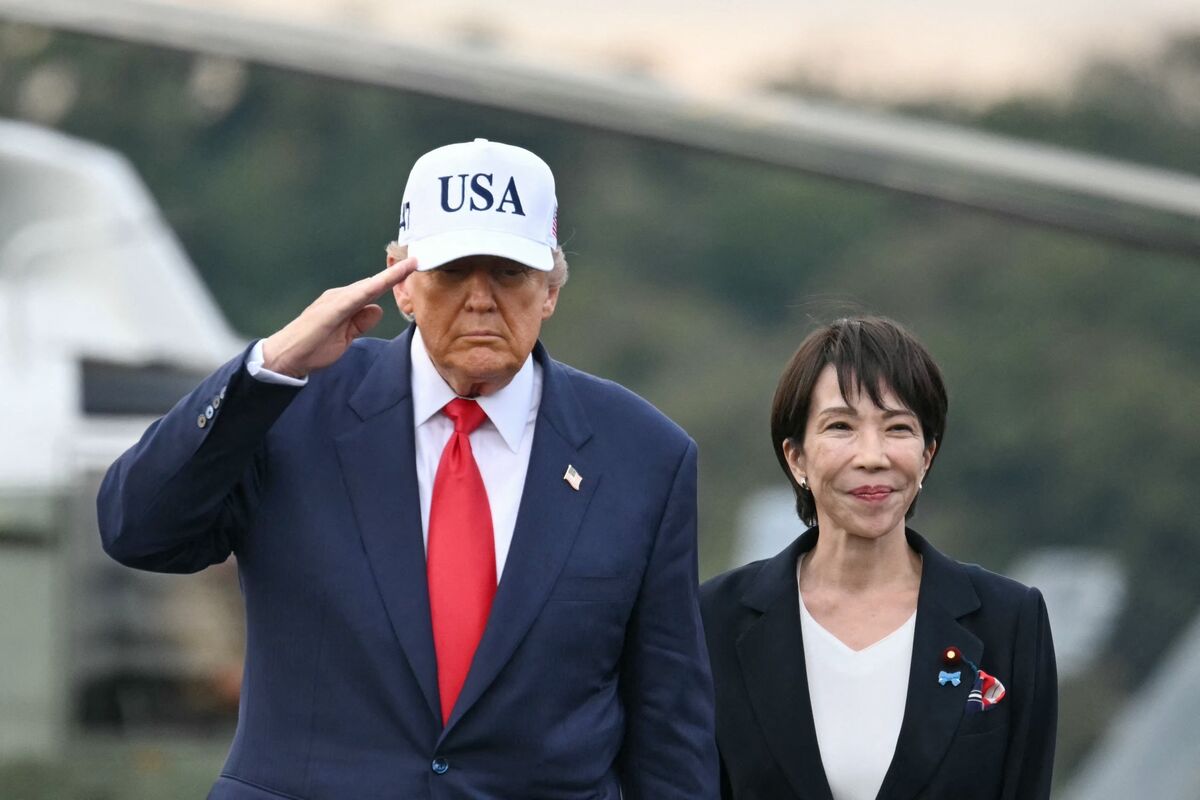
Japan's Chief Cabinet Secretary Minoru Kihara declined to confirm a report that US President Donald Trump asked Prime Minister Sanae Takaichi not to provoke China over Taiwan, saying he "can't comment further on foreign policy related exchanges." The two leaders did state they "confirmed close cooperation" between the US and Japan; the unanswered allegation leaves ambiguity over Tokyo's public posture on Taiwan and represents a modest geopolitical risk for investors monitoring regional security and related supply-chain exposure.
Market structure: A publicized de‑escalation signal between the US and Japan reduces near‑term geopolitical risk premium, favoring cyclical and capex‑exposed names while compressing immediate bids for safe‑haven FX and commodities. Medium‑term winners are firms tied to defense modernization (Lockheed LMT, RTX, NOC) and semiconductor onshoring (LRCX, AMAT) as governments favor resilience over confrontation; losers are pure short‑duration safe havens (JPY, gold) if risk sentiment normalizes by 1–3 months.
Risk assessment: Tail risk remains non‑trivial — miscommunication, a Taiwan incident, or domestic Japanese political backlash could re‑spike premiums quickly; assign a 5–10% annualized probability to a high‑impact escalation scenario that would rerate defense and safe‑haven assets +20–40% within weeks. Immediate horizon (days) likely muted; short term (weeks–months) sees flows into capex/defense; long term (quarters–years) supports structural onshoring and higher baseline defense budgets.
Trade implications: Tactical trades should favour optionality and asymmetry: buy defensive exposure on dips (2–4% portfolio into top‑tier defense contractors) while initiating leveraged, time‑limited exposure to semiconductor equipment via 9–18 month LEAPS to capture onshoring CAPEX. Use FX as a tactical overlay — a modest 1–2% overweight in USD/JPY long if markets price lower risk, and keep 0.5–1% in gold or long‑dated Treasuries as a crash hedge.
Contrarian angles: Consensus treats this as de‑escalation; missing is that public restraint often precedes accelerated behind‑the‑scenes military cooperation and TA/industrial policy (procurement, subsidies) — a multi‑quarter win for defense and semiconductor capital goods. The market may underprice a policy‑driven capex surge: look for 10–25% upside in equipment makers versus 0–5% in broad markets if onshoring subsidies pass within 6–12 months.
AI-powered research, real-time alerts, and portfolio analytics for institutional investors.
Request DemoOverall Sentiment
neutral
Sentiment Score
0.00
