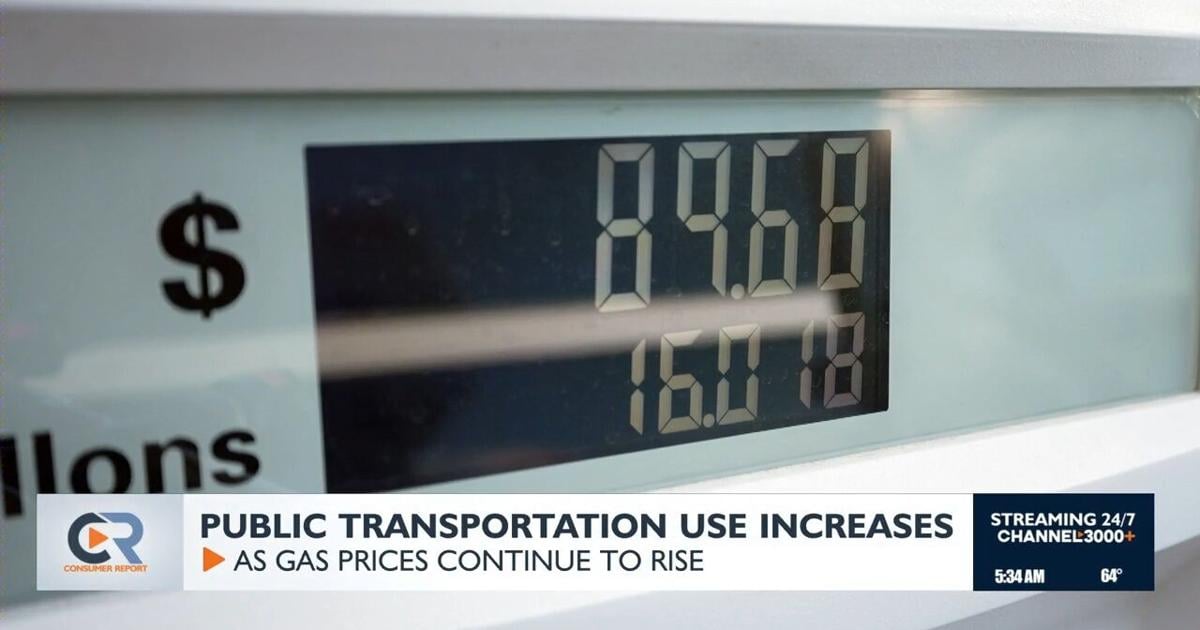
Gas prices are up more than 50% since the war with Iran began, prompting a shift toward public transit and shared mobility. Amtrak passenger volume rose 5% in March year-over-year, Trailways passengers increased 5% in March and 9% in April, and Veo says 68% of surveyed users are replacing car rides with e-scooters and bikes. The article suggests higher fuel costs are boosting demand for alternative transportation, while B-cycle pricing remains $8 for a single 30-minute ride, $20 for a guest pass, $35 monthly, and $180 annually.
The first-order read is not “transit is winning,” but that high fuel prices are forcing a temporary re-optimization of discretionary miles. That matters because the beneficiaries are operating leverage businesses with underutilized capacity: incremental riders on buses, trains, bikes, and scooters carry unusually high marginal margin, so a modest demand shift can translate into outsized revenue growth even if total trip volumes stay below pre-shock peaks.
The second-order effect is asymmetric pressure on private vehicle usage and the broader convenience economy. If commuters substitute even a small share of short car trips with micromobility, the hit is not just to gasoline demand but to parking, rideshare, and quick-service retail clustered around car traffic. Conversely, the benefit to public transit may fade if gas stabilizes, since these are elasticity-driven, not habit-driven, customers; the trade is more cyclical than structural unless fuel remains elevated for multiple quarters.
The most interesting angle is that pricing power may be stronger in the least “obvious” winners: regional operators and shared mobility platforms with dense urban coverage, not national rail alone. This is a classic duration mismatch — investors tend to chase the visible fuel winners, but the sharper near-term earnings revisions could come from software-enabled fleet utilization and urban network density, where higher usage improves unit economics and lowers payback periods on capex.
The contrarian risk is that the demand impulse could reverse quickly if gas rolls over, airfares normalize, or consumers absorb the shock through other budget cuts. If fuel retreats over the next 4-8 weeks, the headline growth rates in transit usage likely decelerate fast, and any valuation premium attached to the theme can compress just as quickly. So this is best treated as a tactical relative-value trade, not a long-duration secular thesis.
AI-powered research, real-time alerts, and portfolio analytics for institutional investors.
Request DemoOverall Sentiment
mildly positive
Sentiment Score
0.15
