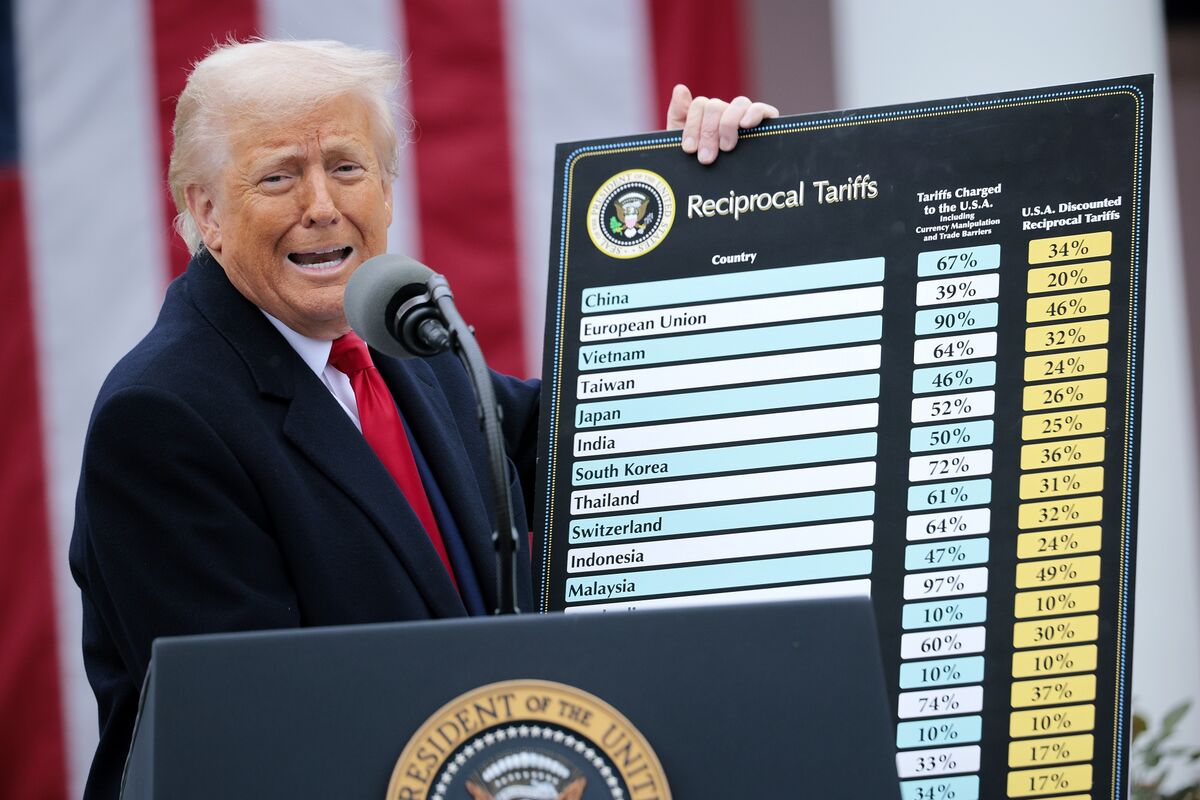
On April 2, Donald Trump declared that tariffs would fundamentally rebalance trade in America's favor, asserting that decades of perceived 'plundering' of US workers and companies would cease. He outlined a policy of 'reciprocity,' where the US would mirror trade actions, believing that unfettered tariffs would ultimately transform the country.
The article highlights a significant shift in US trade policy under Donald Trump, centered on a principle of 'reciprocity' designed to counteract what he describes as decades of economic 'plundering.' On April 2, Trump articulated a vision where 'unfettered tariffs' would fundamentally rebalance trade in America's favor. However, the article's framing, referencing a 'tariff pause' and the 'limits' of this approach, suggests that the implementation of this aggressive, transactional dealmaking style faces practical challenges. The policy introduces a high degree of uncertainty into global trade relations and supply chains, reflecting a pivot from multilateral agreements to bilateral, and often confrontational, negotiations. This stance, tied heavily to domestic political messaging, signals a sustained risk of trade disruptions, a sentiment reflected in the mildly negative and uncertain tone from associated data signals.
AI-powered research, real-time alerts, and portfolio analytics for institutional investors.
Request DemoOverall Sentiment
mildly negative
Sentiment Score
-0.30
