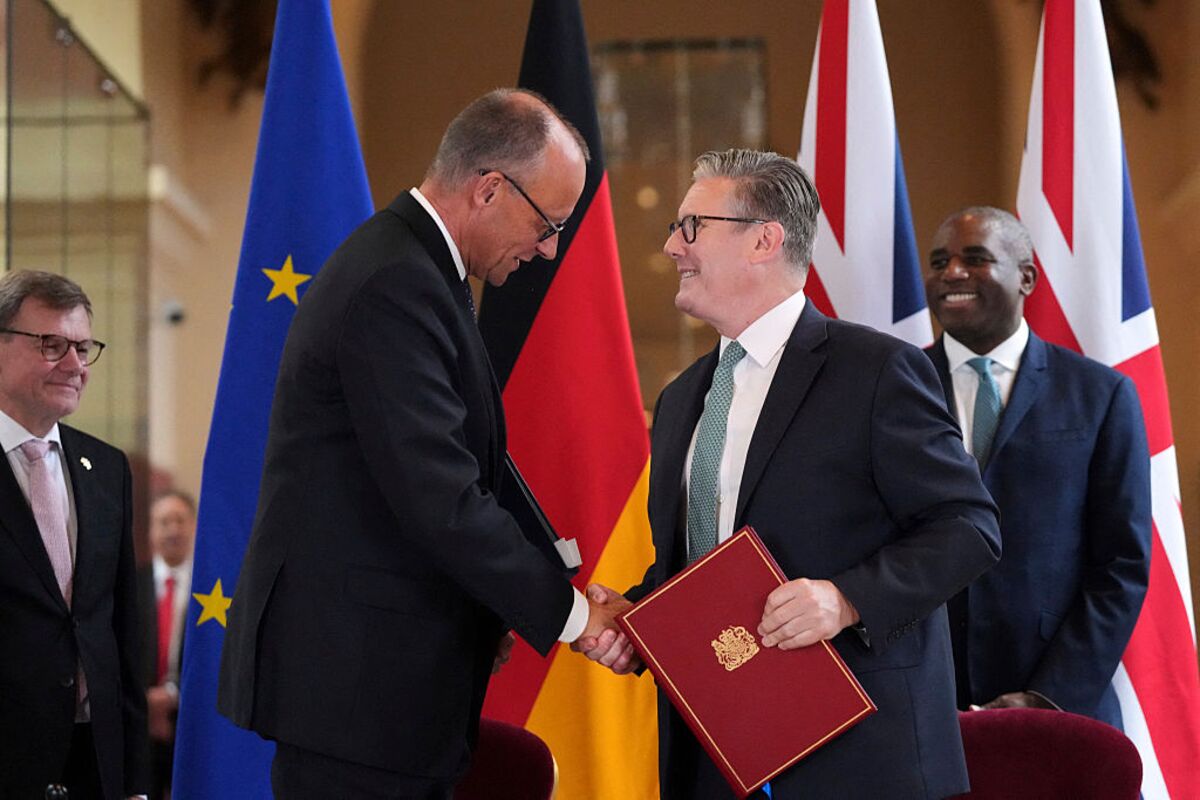
UK Prime Minister Keir Starmer and German Chancellor Friedrich Merz have signed a new treaty, committing both nations to mutual assistance in the event of an armed attack. This pact represents a significant reset of post-Brexit ties, aiming to deepen cooperation between the UK and Germany as they confront shared geopolitical challenges, including potential trade pressures from a Trump administration and Russia's ongoing conflict in Ukraine.
The United Kingdom and Germany have formalized a significant strategic realignment through a new treaty that includes a mutual defense commitment. This pact marks a notable reset in post-Brexit relations, driven by a shared desire to counter geopolitical threats, specifically citing Russia's aggression in Ukraine and potential trade protectionism from a new U.S. administration. The explicit commitment from German Chancellor Merz to deepen cooperation, despite regret over Brexit, and Prime Minister Starmer's framing of the pact as bringing the nations "closer than ever," signals a pragmatic shift toward enhanced security and economic stability. While the direct market impact is assessed as moderate, the agreement lays the groundwork for more integrated defense and trade policies between two of Europe's largest economies, potentially strengthening the continent's strategic autonomy.
AI-powered research, real-time alerts, and portfolio analytics for institutional investors.
Request DemoOverall Sentiment
moderately positive
Sentiment Score
0.35
