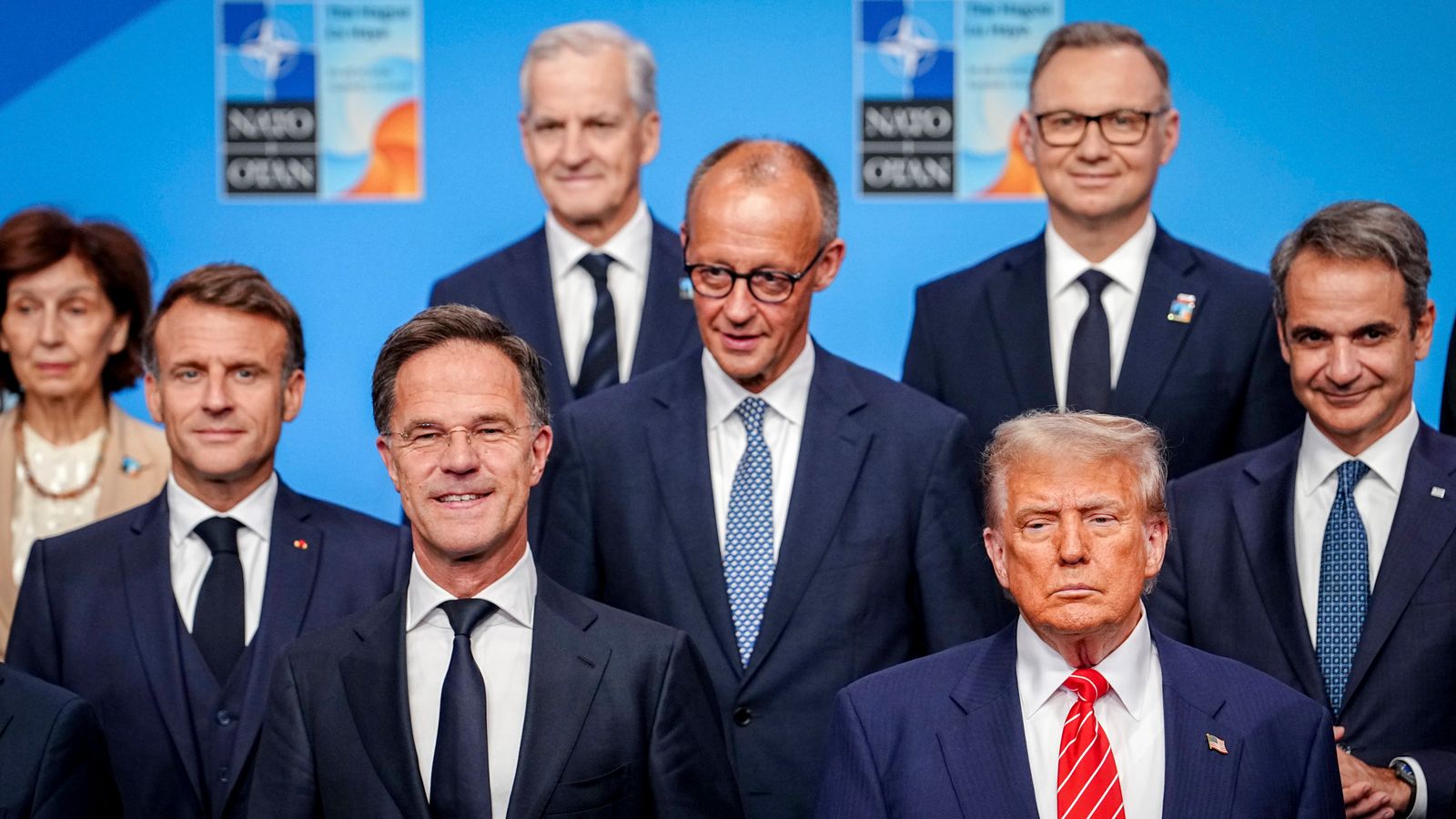
At their Hague summit, NATO allies committed to an 'ironclad' collective defense, agreeing to significantly raise defense spending to 5% of GDP by 2035, a substantial increase that includes contributions to Ukraine's defense and national resilience. Notably, the communiqué, influenced by US leadership, refrained from directly condemning Russia's war in Ukraine or mentioning Ukraine's NATO membership, despite labeling Russia a 'long-term threat', indicating a strategic recalibration of the alliance's posture and burden-sharing.
The NATO summit communiqué signals a significant strategic pivot, characterized by a substantial increase in fiscal commitments coupled with a notable softening of geopolitical rhetoric. Allies have pledged to increase defense and security-related spending to 5% of GDP by 2035, a major uplift from the previous 2% target. This new goal is broken down into 3.5% for core defense and a novel 1.5% for national resilience, including infrastructure and cybersecurity, creating a long-term structural demand for these sectors. However, this commitment is contrasted by a clear shift in diplomatic posture, influenced by the current US administration. The final statement omits any direct condemnation of Russia's war in Ukraine and makes no mention of a membership path for Kyiv, a stark departure from previous communiqués. While Russia is still labeled a 'long-term threat', the toned-down language and the brief, five-paragraph document suggest a recalibration of the alliance's approach. The long 2035 timeline and immediate reservations from members like Spain, which lacks a concrete plan to meet the target, introduce execution risk to these ambitious spending goals.
AI-powered research, real-time alerts, and portfolio analytics for institutional investors.
Overall Sentiment
mixed
Sentiment Score
0.10
