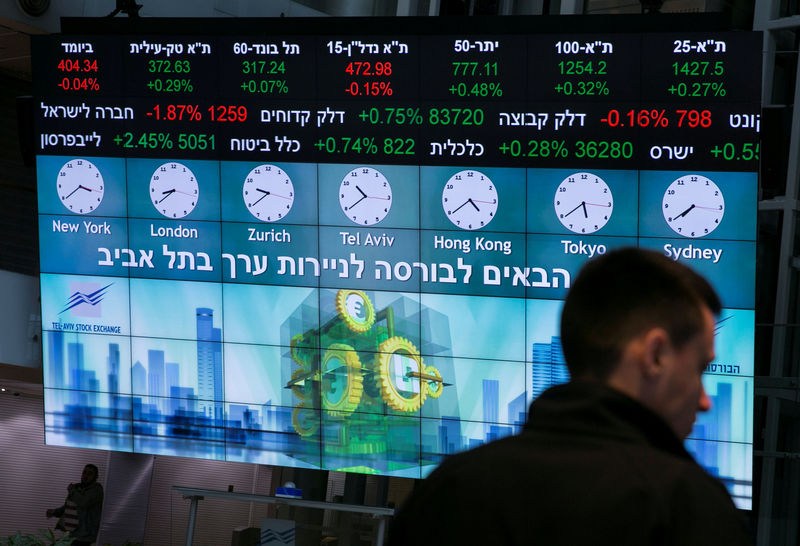
U.S. military seized another vessel linked to Iran as Mideast tensions remain elevated, keeping geopolitical risk in focus. In Israel trading, the TA 35 fell 0.22%, with Camtek up 5.33% and Tower Semiconductor down 8.86%; crude oil rose to $93.17 a barrel and Brent climbed to $102.52, while USD/ILS slipped 0.44% to 2.99. The article is mostly a market wrap, but the Iran-related seizure and firmer oil prices reinforce a risk-off backdrop.
The market is pricing this as a classic risk-off/geopolitical tape, but the more durable signal is factor rotation within Israel: defense-adjacent and “hard asset” beneficiaries are being bid while rate-sensitive and high-duration names are getting hit. The move in CAMT and ENLT suggests investors are still willing to pay up for scarce, globally relevant growth, but only when the story is insulated from local macro and supply-chain fragility. That’s important because any escalation tends to widen the dispersion between companies with export earnings and those with domestic demand or long-duration cash flows.
TSEM looks like the clearest second-order casualty: semiconductor equipment is highly sensitive to any wobble in customer capex, and in a geopolitically stressed tape the market tends to extrapolate delay risk even if fundamentals are unchanged. NICE’s weakness is more concerning than the headline implies; software with recurring revenue usually holds up better in risk-off, so a break to multi-year lows points to either multiple compression or fear that enterprise budgets are being reprioritized away from discretionary spend. That kind of weakness can persist for weeks, not days, if foreign holders de-risk from Israeli cyclicals broadly.
The currency move matters more than the equity move. A softer shekel is a partial shock absorber for exporters, but if the FX move is driven by flight-to-safety rather than local growth expectations, it can also tighten imported inflation and keep domestic rates higher for longer. Higher crude and a firmer geopolitical risk premium also support defense spending narratives, but the best expression is likely not broad-market beta — it’s either suppliers directly tied to defense procurement or companies with meaningful USD revenue and limited local cost exposure.
The contrarian read is that the market may be underpricing duration of the regime shift. If this is not a one-off incident but another step in a persistent corridor-risk environment, then the real losers are long-duration domestic compounders, not just the obvious defense-sensitive shorts. Conversely, if the oil spike fades and no follow-through occurs in shipping/insurance/security assets, the best tactical fade is in the most crowded geopolitics beneficiaries, which can retrace sharply once headline risk decays.
AI-powered research, real-time alerts, and portfolio analytics for institutional investors.
Request TrialOverall Sentiment
mildly negative
Sentiment Score
-0.15
Ticker Sentiment
