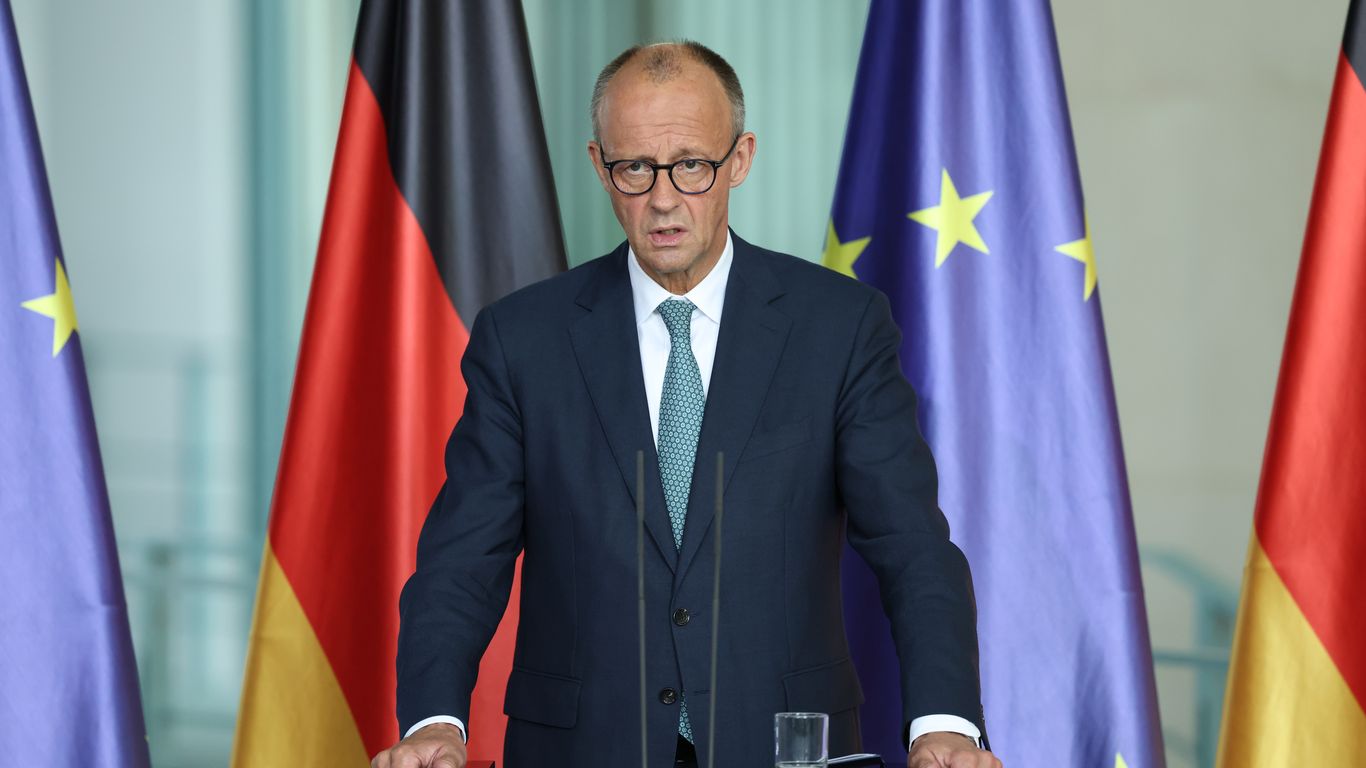
Germany has imposed a partial arms embargo on Israel following the latter's approval of a new offensive to occupy Gaza City, marking an unprecedented move by a key European ally. This decision signals a broader trend of Western allies distancing from Prime Minister Netanyahu's government and could precede further EU sanctions, including potential suspension from the 'Horizon' research program or the EU-Israeli free trade agreement, indicating escalating international pressure and potential economic ramifications for Israel.
Germany's imposition of a partial arms embargo on Israel marks a significant and unprecedented deterioration in relations with its closest European ally. This action, triggered by the Israeli cabinet's approval of a new offensive in Gaza City against the recommendation of its own military leadership, signals a broader diplomatic isolation of Prime Minister Netanyahu's government among Western nations. The potential for escalation is substantial, as Germany's shift may pave the way for wider European Union sanctions. Specifically, the potential suspension of Israel from the EU's 'Horizon' high-tech research grant program and the suspension of the EU-Israeli free trade agreement are now material risks, as formerly blocking nations may reconsider their positions. This geopolitical development, underscored by a strongly negative sentiment score (-0.75) and high market impact rating (0.7), translates directly into tangible economic risk for Israel, threatening key sectors reliant on European trade, technology partnerships, and research funding.
AI-powered research, real-time alerts, and portfolio analytics for institutional investors.
Request DemoOverall Sentiment
strongly negative
Sentiment Score
-0.75
