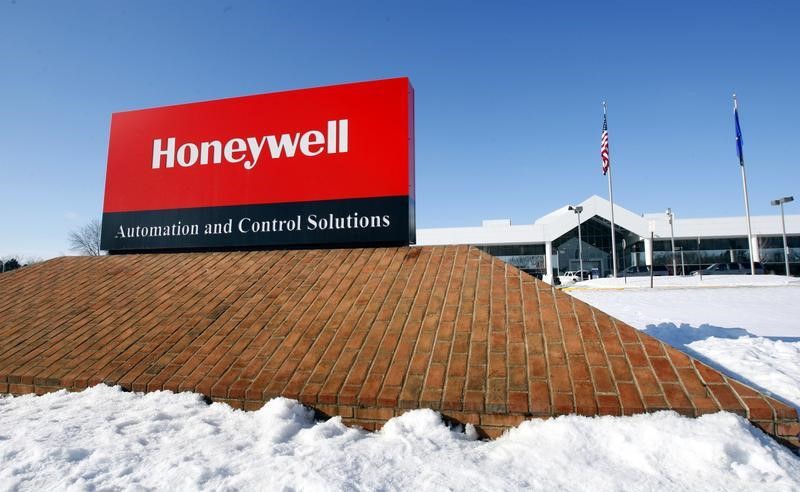
Honeywell announced a $1.4 billion all-cash sale of its Productivity Solutions and Services business to Brady, a portfolio-simplification move Evercore ISI called positive. The company kept FY2026 guidance unchanged ahead of its April 23, 2026 earnings, with consensus for Q1 adjusted EPS at $2.31 versus guidance of $2.25 to $2.35. The article also highlights Honeywell’s 15 straight years of dividend increases, a 2% yield, and additional AI and defense-related partnerships and licenses.
This reads less like a single-stock reaction and more like a confirmation of a broader platform shift: the market is rewarding the AI adjacency while simultaneously giving very little credit to the industrial “boring middle” that still funds the story. For BB, any collaboration that touches Nvidia matters mainly because it increases perceived optionality around software-defined devices and edge security, not because near-term revenue meaningfully inflects; that makes the move vulnerable to a classic sentiment squeeze if the partnership fails to translate into booked design wins within 1-2 quarters. HON is the cleaner second-order winner. The asset sale reduces conglomerate complexity and should improve capital allocation optics, but the bigger effect is competitive: by pruning slower-growth assets, management increases the chance of a multiple re-rate if investors start underwriting a more focused automation/defense compounder rather than a diversified industrial. That said, the market may be overestimating how much simplification can offset a still-premium valuation; the stock can remain supported, but the easy part of the rerating likely already happened. BRC is a low-key beneficiary if the acquired unit is operationally messy or underinvested, because Brady can extract synergies from workflow integration and distribution discipline that a larger seller may not prioritize. The risk is integration drag or customer churn if the asset is more intertwined with HON’s installed base than the headline suggests. EVR’s neutrality is informative: advisory fees help, but the absence of broader rerating signals this is not yet a full industrial M&A wave, just a selective portfolio reshuffle. The consensus is likely underappreciating duration risk: these are multi-quarter to multi-year execution stories, while the market is pricing a near-term AI/portfolio-simplification impulse. If the next earnings print does not show cleaner margins, better free cash flow conversion, or incremental AI monetization, the stocks most exposed to narrative premium could give back a meaningful portion of the move quickly.
AI-powered research, real-time alerts, and portfolio analytics for institutional investors.
Request DemoOverall Sentiment
mildly positive
Sentiment Score
0.25
Ticker Sentiment
