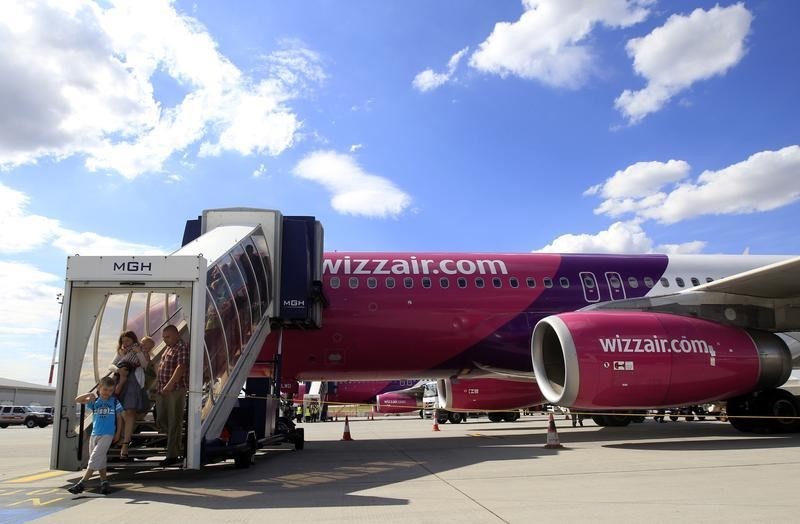
UBS cut price targets and sharply downgraded 2026 earnings across European airlines citing a >100% rise in jet kerosene and Middle East conflict; Air France-KLM PT lowered to €10 from €13.95 with 2026 EBIT cut 34% and net income down 54%. Wizz Air saw the largest hit (2026 EBIT cut 126%, PT to £14.30 from £16.30), EasyJet PT trimmed to £7 from £8, while Lufthansa and Ryanair saw minor adjustments (Lufthansa PT €9.40 from €9.50; Ryanair marginally to €33.15). UBS notes carriers have 55–80% fuel hedging cover over the next 12 months, cushioning near-term impact but risking material capacity cuts and profit pressure if the situation persists.
The immediate market response is treating the fuel shock as an input-cost story, but the economic mechanism that matters for equity returns is the pace at which carriers can convert those higher costs into ticket price realization and capacity discipline. Hedging profiles create a 6–12 month asymmetric buffer — carriers with high forward hedges buy time to pass costs, while low-hedge carriers face immediate margin compression and forced capacity cuts that amplify network effects (route closures, slot reallocation).
Second-order winners include ultra-low-cost carriers that can flex capacity quickly and reallocate capacity to leisure routes where demand is less price-elastic; less obvious beneficiaries are airport retail/F&B tied to domestic leisure travel and aircraft financing vehicles that see improved lease utilization if legacy network carriers cut capacity. Countervailing risks materialize if jet fuel mean-reverts within 1–3 months or if leisure demand softens because higher fares compress frequency-sensitive business travel, which would remove the pricing pass-through buffer and force deeper short-term capacity reductions.
On time horizon, expect most earnings shocks to front-load in next 2–6 quarters with recovery optionality in 12–24 months if carriers both cut capacity and sustain fare increases. The market may be over-penalizing growth-exposed names where downside is large today but upside optionality is convex (route re-openings, operational recovery); structured option exposure captures that asymmetry more efficiently than straight long equity.
AI-powered research, real-time alerts, and portfolio analytics for institutional investors.
Overall Sentiment
strongly negative
Sentiment Score
-0.55
Ticker Sentiment
