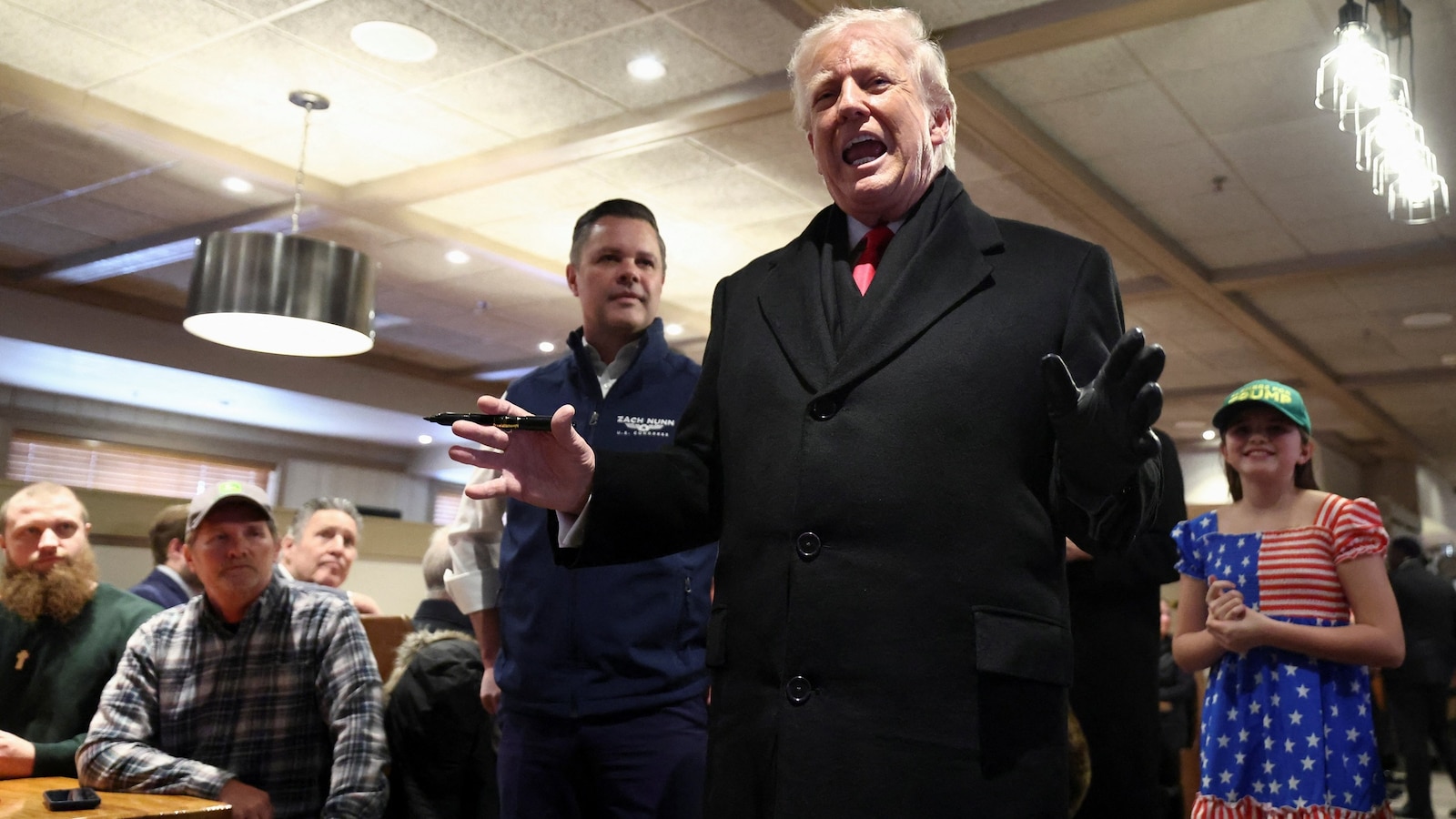
The administration is promoting new "Trump Accounts" created under recent tax-and-spending legislation that will see the federal government deposit $1,000 for every baby born between 2025 and 2028; accounts go live this summer with contributions beginning July 4, 2026. Families open accounts via IRS Form 4547, can contribute up to $5,000 annually (employers up to $2,500), funds must be invested in a broad-market tracking fund and are locked until age 18; the Treasury projects a $1,000 2026 deposit would grow to ~$5,800 by age 18 and maximum annual family contributions could reach ~$303,800. Several major firms (Charles Schwab, Robinhood, SoFi, Uber, Charter Communications, BNY) have pledged matches or contributions, and the administration is hosting a high-profile summit to drive enrollment amid broader political messaging on affordability.
Market structure: The program channels guaranteed initial deposits and required equity allocation into custodial index funds, favoring custodians and ETF issuers (Schwab (SCHW), SoFi (SOFI), Robinhood) and passive providers; Dell (DELL) gains outsized PR via a $6.25B seed that further accelerates AUM growth in low-income ZIP codes. Direct consumer impact is small versus GDP (federal ~$3.6B/yr if ~3.6M births) but concentrated flows into retail custody and index products increase secular fee pressure on active managers and raise short-to-medium term retail equity demand. Cross-asset: modest upward pressure on equities and ETF inflows, marginal downward pressure on near-term consumer discretionary sales; negligible FX/commodity impact but small positive for financials’ deposit bases.
Risk assessment: Key tail risks are policy reversal or litigation, a market drawdown (a 30% equity decline would wipe early gains and undermine political support), and employer-match withdrawals if economic conditions tighten. Time horizons split: immediate PR bump (days-weeks), account sign-ups and matching announcements (3–12 months), durable AUM build and investor behavior change (3–20 years through beneficiary adulthood). Hidden dependencies include IRS Form 4547 uptake rate, custodial KYC friction, and corporate matching budgets. Catalysts: waves of corporate match announcements, regulatory guidance from Treasury/SEC, and first-month IRS adoption statistics.
Trade implications: Direct plays — overweight custodial/retail brokers: initiate a 2–3% long position in SCHW and a 1–2% tactical long in SOFI to capture custody and deposit flows; target 12–18 month returns of 20–35% on successful adoption. Pair trade — long SCHW, short XLY (consumer discretionary ETF) 1–2% to hedge potential consumption drag. Options — buy 9–12 month call spreads on SCHW and SOFI with strikes ~15–25% OTM to limit capital with defined risk; size each options trade to 25–50% of the equity position. Entry: scale 25% now, 50% on material corporate-match wave, full size by June 2026; exit/trim at +30% or on adverse regulatory rulings.
Contrarian angles: The market likely overestimates magnitude and speed — realistic federal flows likely < $10B/yr plus one-time corporate pledges, so AUM concentration risk matters more than economy-wide stimulus. Consensus underprices operational frictions (form adoption, custodial setup) that could slow inflows for 12–24 months; historical parallels (slow 529 uptake) suggest adoption curves are multi-year. Unintended consequences include fee compression for active managers and eventual valuation multiple risk on youth-targeted assets; monitor weekly IRS 4547 filings, Schwab/Sofi kids-account AUM reports, and pace of corporate match announcements as concrete adoption signals.
AI-powered research, real-time alerts, and portfolio analytics for institutional investors.
Request DemoOverall Sentiment
mildly positive
Sentiment Score
0.25
Ticker Sentiment
