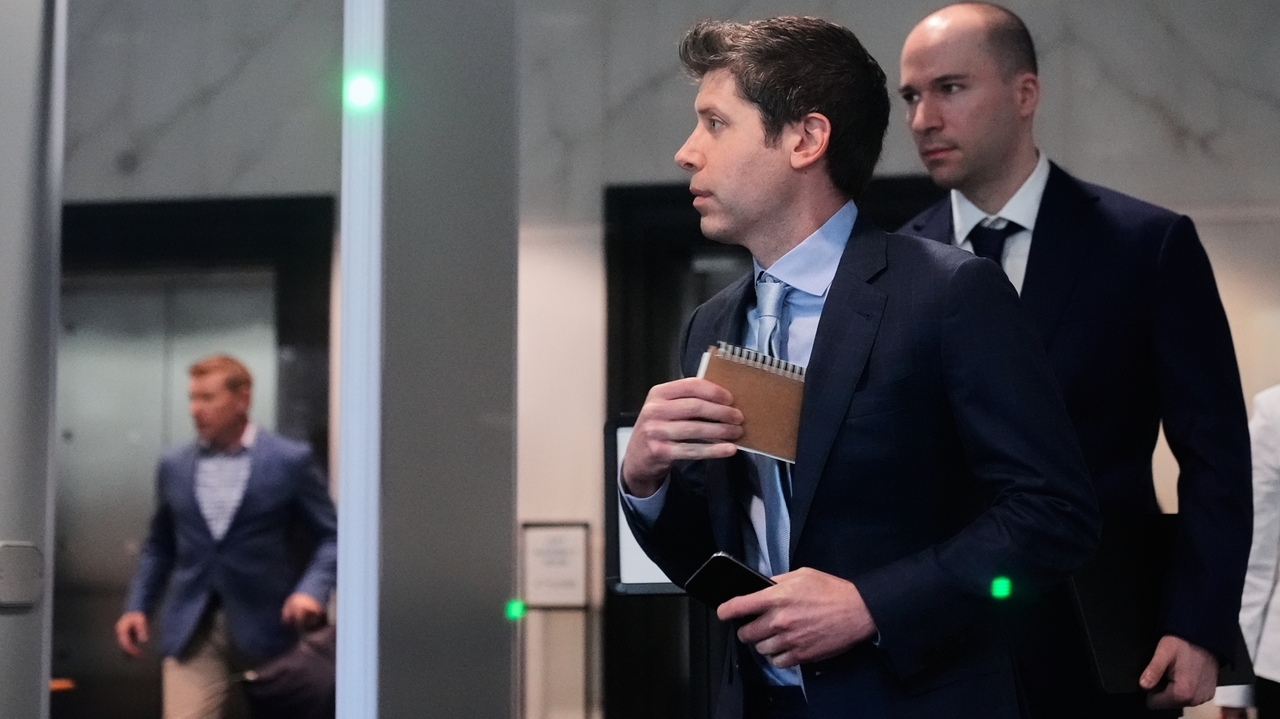
A federal trial over OpenAI’s governance and founding mission has put CEO Sam Altman under renewed scrutiny, with testimony from former board members and co-founder Ilya Sutskever alleging a "pattern of lying" and resistance to board oversight. OpenAI is now valued at $852 billion and, along with Musk’s AI firm and Anthropic, is moving toward planned IPOs that could rank among the largest ever. The case raises reputational and leadership risk for Altman and could influence investor perception of OpenAI and the broader AI sector.
The market implication is less about the verdict itself and more about governance optionality being repriced across late-stage AI. OpenAI, Anthropic, and xAI all need to persuade capital markets that founder volatility is a feature, not a bug; this trial makes that harder and should widen the governance discount applied to pre-IPO AI assets over the next 3-12 months. That discount matters because the largest AI capex programs are already being financed on trust, not current earnings, so any incremental doubt pushes up expected dilution and lowers terminal multiples.
For TSLA, the direct linkage is second-order but real: Musk’s attention is a scarce asset, and high-profile litigation increases the probability of strategic distraction just as Tesla needs clean execution on autonomy, robotics, and margin defense. The bear case is not immediate operating damage; it is a slower erosion of credibility around his “full-stack” leadership premium, which can compress the stock’s multiple even if unit data are stable. The positive offset is that any narrative harm to Musk can also create a temporary valuation reset in the broader AI complex, which may rotate capital toward more operationally focused beneficiaries with clearer monetization paths.
The contrarian takeaway is that the trial may be a near-term sentiment overhang but not a durable fundamental threat to the AI winners. If the market overreacts, quality public beneficiaries of AI infrastructure and software should outperform the private-company drama because they monetize picks-and-shovels demand without governance headline risk. The key catalyst window is the next few weeks: Altman’s testimony could create a short-lived spike in negative press, but unless it produces a concrete regulatory or financing consequence, the move should fade into the next earnings cycle.
AI-powered research, real-time alerts, and portfolio analytics for institutional investors.
Request DemoOverall Sentiment
mildly negative
Sentiment Score
-0.15
Ticker Sentiment
