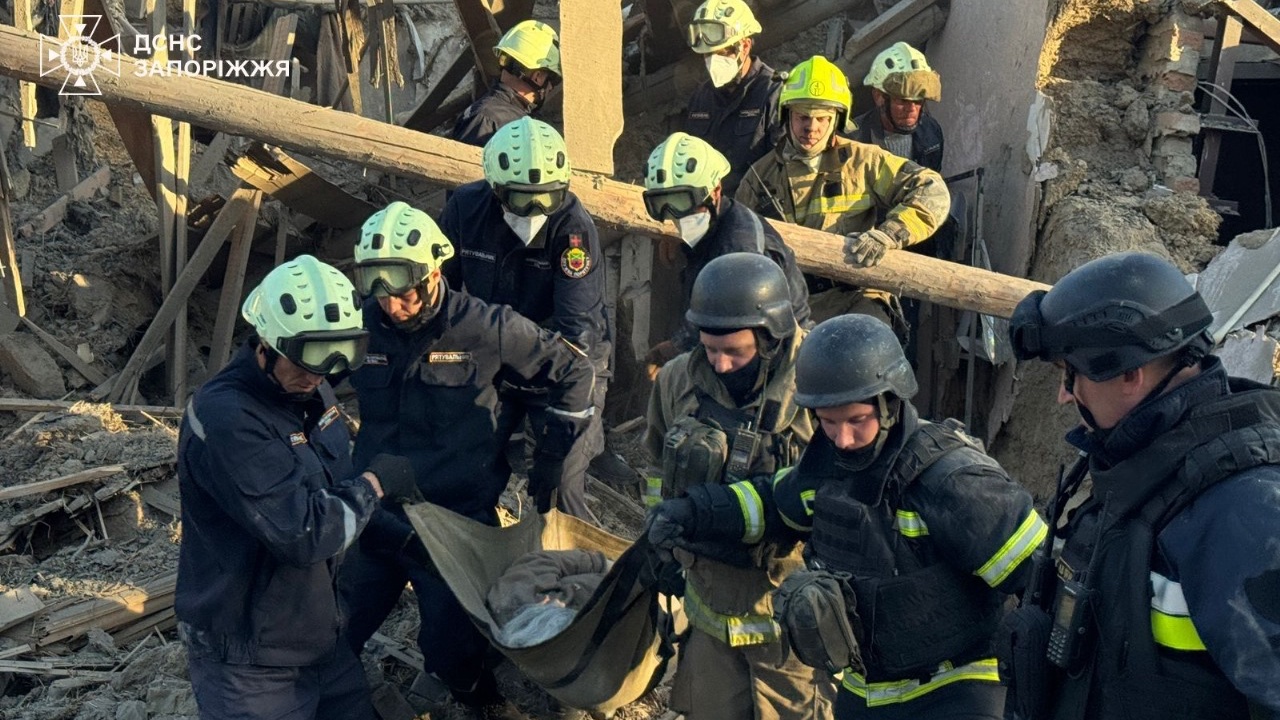
Ukrainian President Zelensky accused Russia of striking civilian homes in Zaporizhzhia with guided aerial bombs, killing at least three, amidst widespread drone attacks across Ukraine. These attacks coincide with the UN General Assembly, where Zelensky plans to meet President Trump to press for stronger U.S. pressure on Russia, including potential sanctions targeting Russian oil exports, given Moscow's continued refusal to engage in peace negotiations. This ongoing aggression underscores persistent geopolitical instability and potential for further market disruption, particularly in energy sectors.
Recent Russian military actions, including a fatal guided bomb strike on civilian homes in Zaporizhzhia and widespread drone attacks across Ukraine, indicate an escalation of the conflict. This aggression coincides with the UN General Assembly, a timing Ukrainian President Zelensky has framed as a deliberate provocation. The key near-term catalyst is a planned meeting between Zelensky and U.S. President Trump, where Ukraine will advocate for intensified international pressure on Moscow. The most significant potential market-moving outcome from these talks would be the implementation of U.S. sanctions targeting Russian oil exports, a measure previously threatened by the U.S. administration. Russia's current posture, characterized by a refusal to engage in negotiations while its forces advance, suggests that diplomatic resolutions remain distant, thereby increasing the likelihood of prolonged instability and the potential for further economic sanctions. The situation underscores persistent geopolitical risk with direct implications for global energy markets, as any disruption to Russian oil supply would have a material impact on prices.
AI-powered research, real-time alerts, and portfolio analytics for institutional investors.
Request DemoOverall Sentiment
moderately negative
Sentiment Score
-0.60
