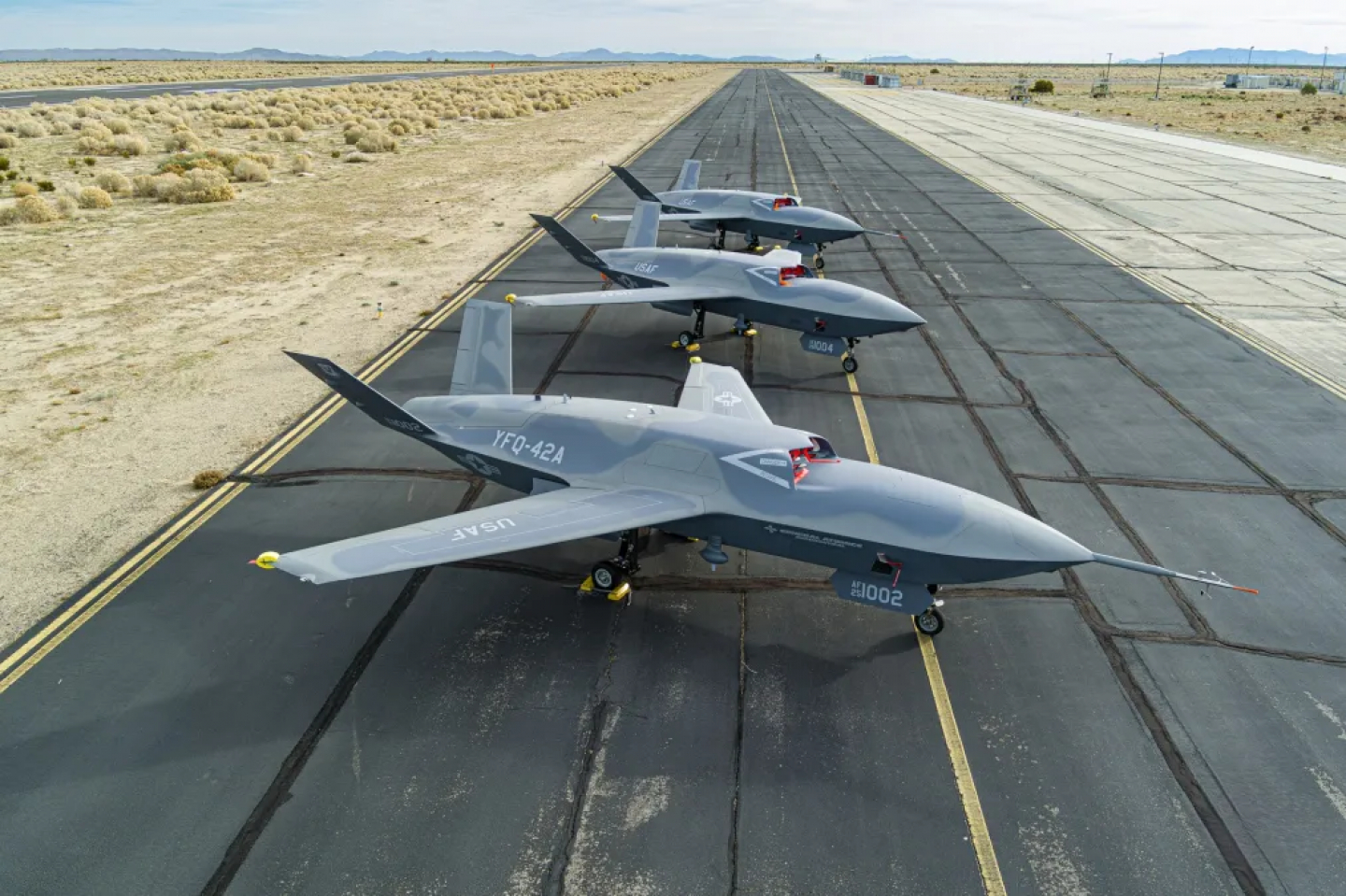
General Atomics and Anduril are working with Collins Aerospace and Shield AI, respectively, to integrate mission-autonomy software into their CCA prototypes and to conduct semi‑autonomous flight tests. These prototype integrations represent incremental technological progress in unmanned and autonomous military aviation that could accelerate capability deployment and influence competitive dynamics among defense contractors, though the developments remain at a testing stage and are unlikely to materially affect near‑term financials.
Market structure: Military autonomy prototypes from General Atomics/Anduril with Collins/Shield AI are a positive signal for prime integrators and avionics/software suppliers — winners include RTX (Collins Aerospace), L3Harris (LHX) and system integrators that can monetize mission autonomy; losers are legacy commercial OEMs with higher certification costs (e.g., BA) and small OEMs lacking software stacks. Pricing power shifts gradually to software-and-sensor owners (NVDA for compute, LIDAR/camera suppliers) as software margins scale versus airframe OEM margins; expect 5–15% incremental margin expansion for software integrators over 2–5 years if DoD adoption accelerates.
Risk assessment: Tail risks include a high-profile autonomy failure or a restrictive DoD/US export regulation that could wipe 20–40% off near-term program valuations; supply-chain shocks (semiconductor shortages) could delay rollouts by 6–12 months. Immediate (days) moves will be news-driven volatility; short-term (weeks–months) driven by demos/contract awards; long-term (2–5 years) dominated by procurement cycles and doctrine change. Hidden dependencies: sensor chips (NVDA/AVGO), cyber/secure comms (RTX, LHX), and certification timelines—any one can bottleneck deployment.
Trade implications: Direct plays: overweight NOC and LHX for prime-integration exposure and NVDA for compute stack; underweight BA and commercial aerospace suppliers. Use 3–9 month call spreads on primaries to capture catalyst windows (demo success, budget approvals) and buy 6–12 month NVDA calls for secular AI tailwinds. Pair trade: long LHX (1–2% portfolio) vs short BA (1%) to express defense-autonomy upside vs commercial cyclicality.
Contrarian view: Market may be underestimating contract friction—software-to-hardware certification typically takes 18–36 months; much of the current sentiment is hype. If Congress restricts autonomous lethality or if a crash occurs, re-rate could be sharp; conversely, a clean demo + $500M+ program award within 6–12 months would leave many primes underallocated and create a rapid re-rating opportunity.
AI-powered research, real-time alerts, and portfolio analytics for institutional investors.
Request DemoOverall Sentiment
mildly positive
Sentiment Score
0.25
