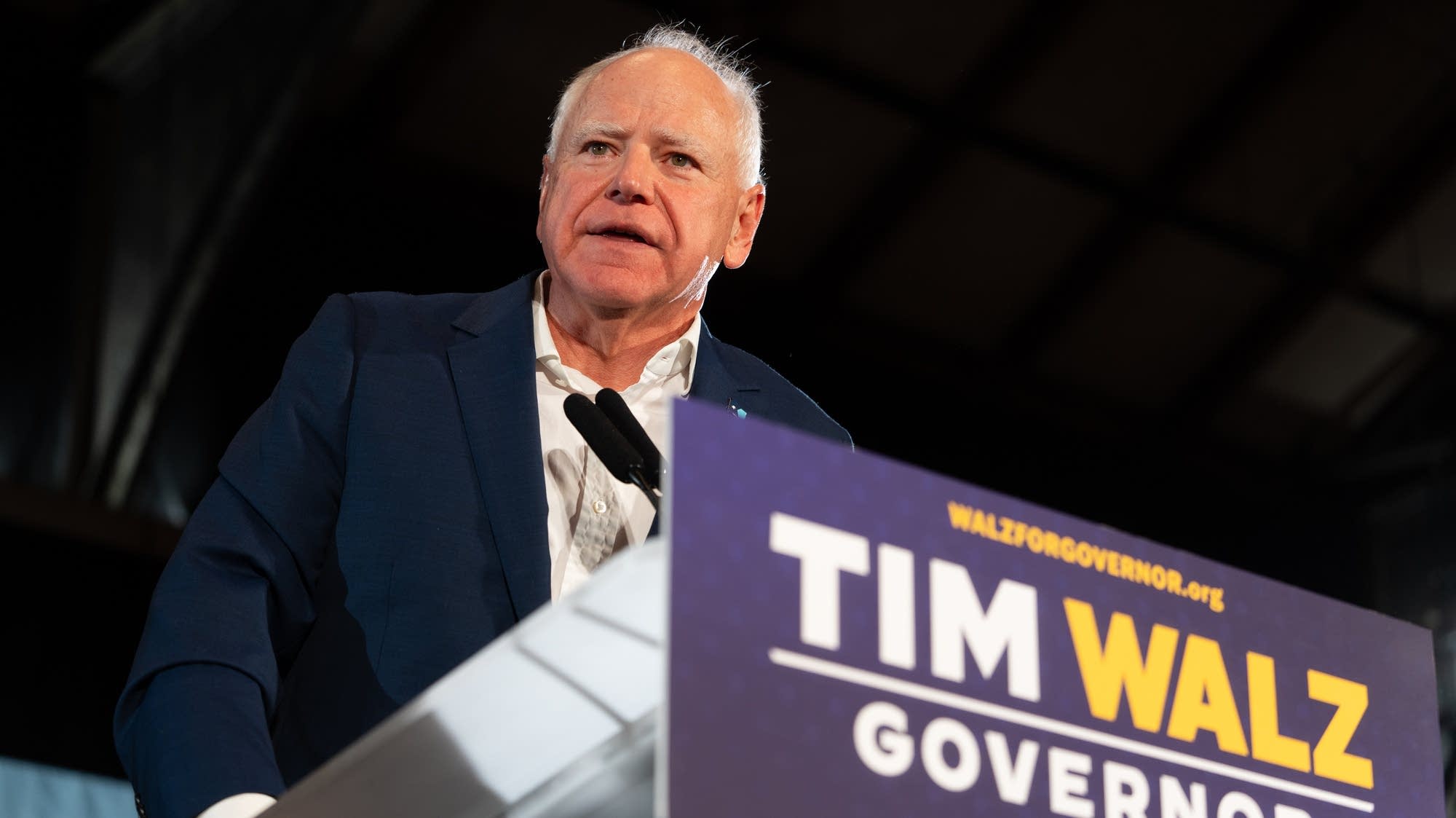
Walz has abandoned his reelection campaign amid sustained attention on alleged fraud issues and repeated clashes with former President Trump, reshaping the immediate dynamics of the gubernatorial race. The development heightens state-level political uncertainty but carries limited direct financial implications beyond potential local policy and regulatory shifts that could affect sector- or municipality-specific investors.
Market-structure: Walz’s withdrawal is a state-level political shock with concentrated winners (national defensive issuers, legal/security services) and losers (Minnesota-exposed fiscal instruments and corporates). Expect Minnesota GO and locally concentrated muni credits to underperform peers with a plausible 5–25 bps spread widening vs. comparable AAs over 30 days; large national stocks should see only 1–3% idiosyncratic volatility if headlines persist.
Risk assessment: Tail risks include escalation to contested litigation or federal probes that could broaden political volatility and push 10Y UST down 10–30 bps as risk-off flows accelerate; probability low but impact material for interest-rate sensitive assets. Immediate effect (days): headline-driven volatility; short-term (weeks–months): muni spread repricing and relative earnings risk for MN-headquartered firms; long-term (quarters+) negligible absent policy shifts.
Trade implications: Favor short-duration, high-quality fixed income and defensive equities while trimming MN-concentrated exposures. Specific relative-value pressure likely on regional-bank and municipal holders; options can cheaply hedge 1–3 month event risk around HQ-listed names. Timing: act within 7–14 days while liquidity and implied volatility remain calm; unwind after 3 months or on clear political resolution.
Contrarian angle: Consensus will overstate systemic risk; any 3–5% pullback in blue-chip MN names (UNH, TGT, MMM, MDT) is a buying opportunity given strong fundamentals. Monitor MN GO new issuance and 30-day realized muni spread moves >15 bps as a trigger to reverse tactical positioning.
AI-powered research, real-time alerts, and portfolio analytics for institutional investors.
Request DemoOverall Sentiment
mildly negative
Sentiment Score
-0.25
