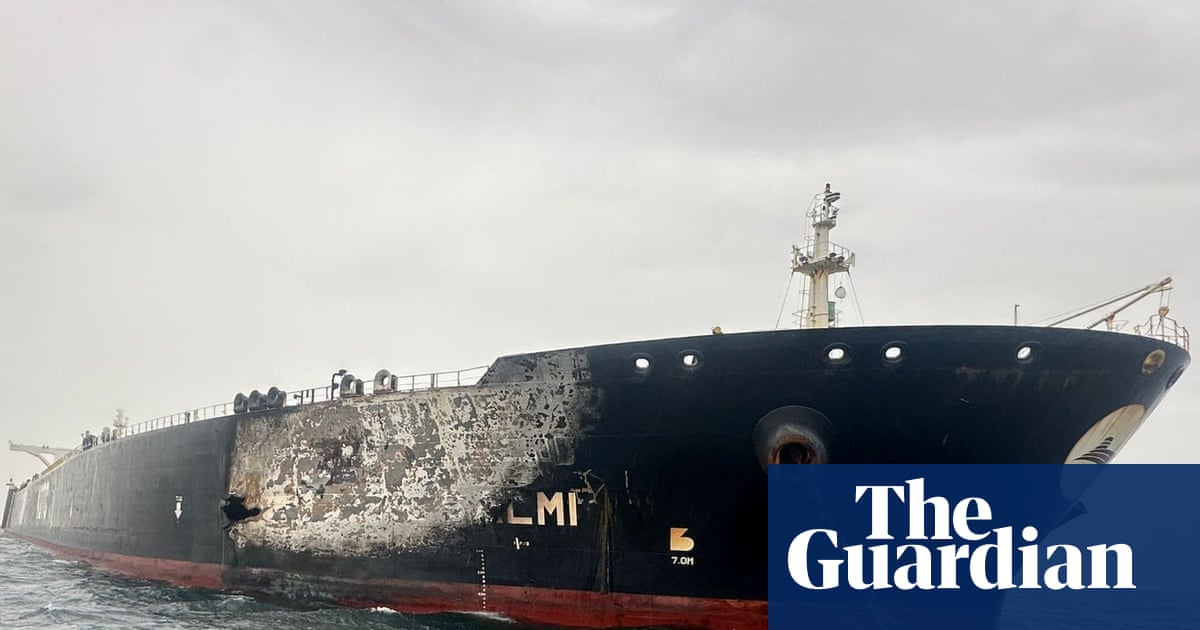
Iran attacked and set alight a fully loaded crude oil tanker (Al Salmi) anchored at Dubai port; the fire was extinguished within hours and there were no reported injuries. President Trump warned the US would “obliterate” Iran’s energy plants and oil wells, raising the risk of escalation and further disruptions to Gulf oil flows that could push oil prices higher. The Philippines is singled out as highly vulnerable because it imports almost all its crude from the Middle East, increasing exposure to fuel-price shocks and social unrest. Separately, Chinese real estate prices have fallen ~40% between 2021 and 2025, representing a major domestic demand headwind for the global economy.
Market mechanics: attacks on anchored crude tonnage reprice three discrete cost buckets — insurance premiums, voyage risk surcharges (war risk), and time-on-water for insurance-excluded routes — which historically inflate tanker spot revenues by 2-5x for owners with high spot exposure. Expect manifest effects in days to weeks: spot charter rates spike immediately, P&L flows to spot-exposed owners, and forward freight agreements re-price into the curve over 4–12 weeks as underwriters demand higher top-line premium accruals.
Energy-side dynamics: absent sustained damage to refinery or upstream infrastructure, crude price moves will be front-loaded and mean-revert within 1–3 months once risk premia cool or SPR/OPEC responses materialize. The bigger durable cost is freight and refining margin pressure — an added $0.5–$3/bbl in logistics can shave refining margins and feed disinflation into net-importing EMs, compressing discretionary spend and raising FX stress where imports are oil-intensive.
Second-order winners/losers: brokers and reinsurers can monetize higher sticker premiums and advisory fees (revenue recognition across quarters), while ports and logistics hubs lose activity share to alternate gateways — expect a secular re-routing bid into Southeast Asian transshipment nodes if the pattern persists beyond two quarters. Tourism- and trade-dependent EMs with concentrated Middle East oil sourcing face accelerated FX depreciation risk and policy tightening that can undercut local equities for months.
Key catalysts and risks: near-term catalysts are additional vessel/energy-facility strikes (high-impact, low-probability tail), visible repricing in war-risk premiums and VLCC spot indices (days–weeks), and diplomatic de-escalation or credible deterrence (rapid unwind within 2–8 weeks). Watch shipping insurance rate cards, Baltic/VLCC spot indices, Brent/WTI curve steepness, and PHP funding spreads for inflection signals.
AI-powered research, real-time alerts, and portfolio analytics for institutional investors.
Request DemoOverall Sentiment
strongly negative
Sentiment Score
-0.65
Ticker Sentiment
