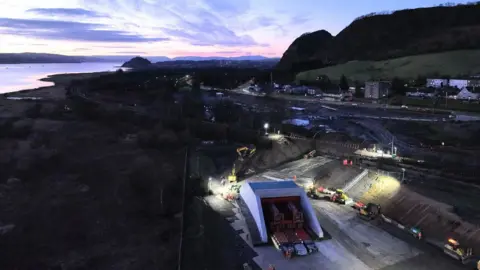
Network Rail completed an accelerated installation of a new £5.9m, 1,860-tonne concrete railway bridge near Bowling harbour during a rail closure over the festive period, moving the structure into place on Boxing Day as part of a nine-day engineering sprint; services are suspended until 2 January with replacement buses operating. The project, funded under the Glasgow City Region Deal and led locally by West Dunbartonshire Council, is intended to unlock direct road access to a former Exxon site and facilitate development of the Bowling Strategic Development Site, supporting regional regeneration although it is unlikely to move broader markets.
Market structure: The direct winners are UK civil-engineering contractors, bridge and heavy-lift specialists and local brownfield developers because the project (£5.9m, 1,860t bridge) demonstrates political will and funding (Glasgow City Region Deal) to unlock waterfront land. Short-term losers are regional rail operators (service disruption) and small retailers affected by closures; impact on national demand/pricing is marginal but improves contractors' bid leverage for similar publicly funded projects regionally over the next 6–24 months.
Risk assessment: Tail risks include discovery of heavy contamination at the former Exxon site leading to remediation costs >£10–50m, regional budget cuts that pause follow-on works, or a contractor operational failure that spooks credit markets. Immediate effects are days (service disruption), short-term are 1–12 months (planning/tenders), and long-term outcomes play out over 2–5 years as land becomes developable; hidden dependencies include planning consents, remediation liabilities and council land-sale timing.
Trade implications: Favor listed UK infrastructure/civil contractors and diversified infra ETFs for 3–12 month exposure while underweight pure private housebuilders dependent on greenfield starts. Use defined-risk options to express upside: call-spreads or buy-writes around mid-cap contractors to cap premium and capture tender-driven re-rating if additional City Region Deal projects ($10s–100sM) proceed over 6–18 months.
Contrarian angles: The market likely understates aggregate value unlocked by small, sequential projects — a string of £5–20m bridge/site works can reprice adjacent land by £20–100m over 2–4 years, benefiting contractors and local developers disproportionately. Conversely, remediation or political funding shifts could wipe out that uplift; asymmetric payoffs favor structured long exposure with capped downside.
AI-powered research, real-time alerts, and portfolio analytics for institutional investors.
Request DemoOverall Sentiment
mildly positive
Sentiment Score
0.30
