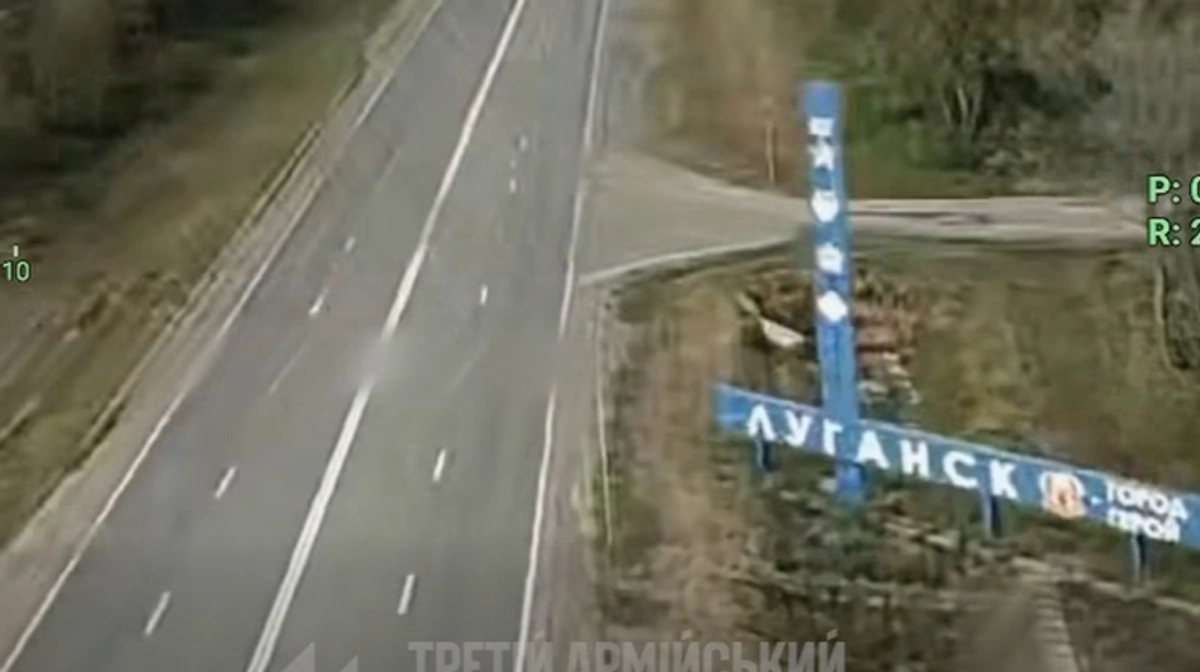
Ukraine's Third Army Corps said its drones have disrupted Russian logistics routes in occupied Luhansk Oblast, striking armored vehicles and ammunition depots and reaching the Izvarine checkpoint more than 205 km into enemy-controlled territory. The Corps claimed Luhansk, Starobilsk, Alchevsk, Brianka and Kadiivka are now under "drone control." The report is primarily a battlefield update, with limited direct market implications beyond the broader defense/geopolitical backdrop.
The market implication is not the headline claim of territorial influence; it is the degradation of fixed logistics architecture. Drone interdiction over 200km deep forces a shift from concentrated depots and predictable convoy timing to smaller, dispersed, and higher-cost movement patterns, which lowers throughput and raises the probability of localized shortages. That tends to hurt the rear-area enablers more than frontline maneuver units, especially any business model premised on centralized warehousing, rail-to-road transload, or just-in-time replenishment.
Second-order effects are more important than the direct battlefield narrative. As logistics becomes more fragile, the value of short-range air defense, EW, counter-UAS sensors, hardened shelters, and expendable decoys rises faster than traditional strike platforms. The constraint moves from weapons quantity to survivability of the supply chain, which is a favorable setup for defense firms with C-UAS, integrated air defense, and battlefield networking exposure, while pure munitions producers may see less immediate upside if inventory gets stranded before it is consumed.
The risk is that this dynamic is modular and replicable: if one side proves it can sustain deep interdiction, the other side likely responds with dispersal, deception, and escalation in electronic warfare within weeks, not months. That means the trade should be framed as a tactical duration play rather than a long-duration thesis. The main reversal catalyst would be a successful counter-UAS upgrade or a political shift that reduces the operational tempo, both of which can compress the premium quickly.
Contrarian view: the move may be underpriced in terms of defense procurement, but overpriced in terms of immediate battlefield collapse. Logistics denial usually shows up first in higher operating costs and only later in territorial shifts, so investors often chase the visible kinetic event while missing the slower-margin tailwind for defense suppliers and the lagged risk to transport-intensive regional businesses. The real edge is to own the enablers of survivable logistics, not the headline conflict itself.
AI-powered research, real-time alerts, and portfolio analytics for institutional investors.
Request TrialOverall Sentiment
neutral
Sentiment Score
0.10
