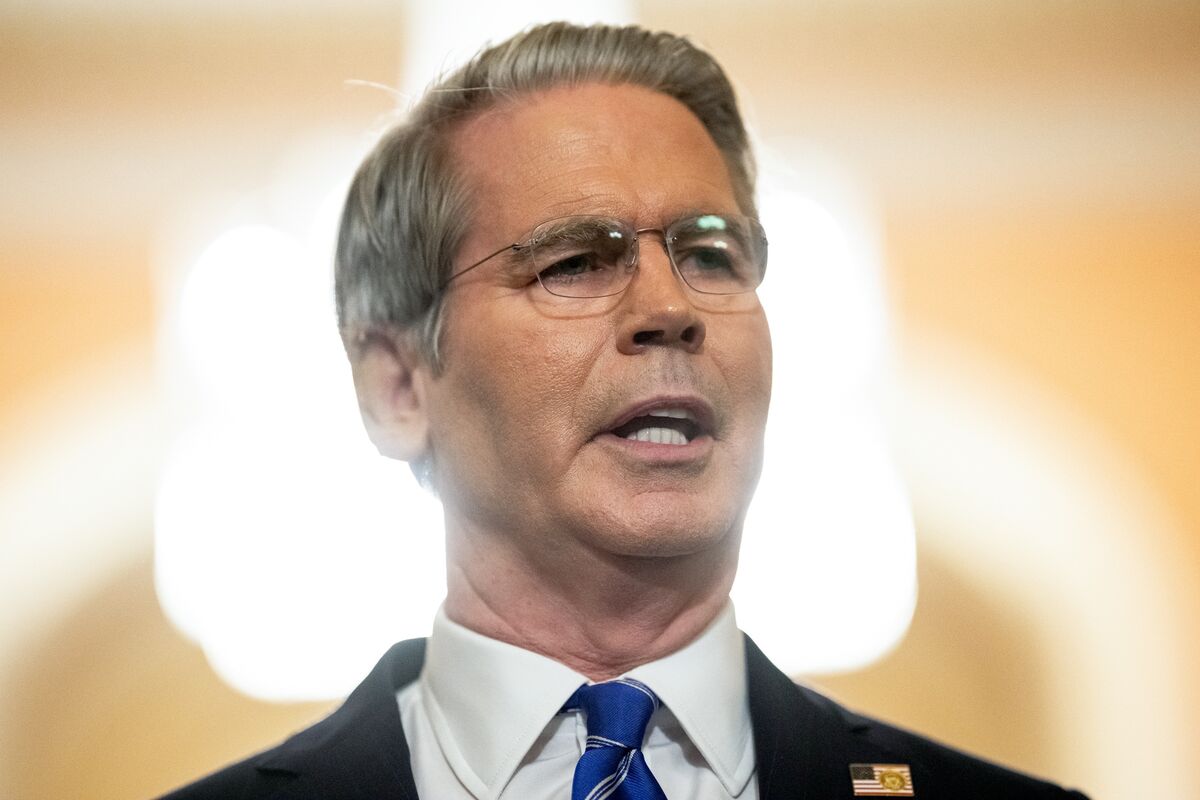
US Treasury Secretary Scott Bessent stated that current interest rates are "too constrictive" and should be 150-175 basis points lower, indicating his expectation that the Federal Reserve will embark on a series of rate cuts, potentially commencing with a 50-basis-point reduction in September.
US Treasury Secretary Scott Bessent has introduced a notably dovish perspective on monetary policy, asserting that the Federal Reserve's current interest rates are "too constrictive" and advocating for a substantial reduction of 150 to 175 basis points. This view is not just a general sentiment but is accompanied by a specific, actionable forecast: a series of rate cuts commencing with a significant 50-basis-point reduction in September. The high market impact score of 0.85 reflects the weight of this statement coming from a senior government official, which could materially shift market expectations toward a more accommodative stance from the Federal Reserve. Bessent's call for such a deep and rapid cutting cycle directly challenges the more cautious or "higher-for-longer" narratives, potentially setting the stage for increased market volatility around future economic data and Fed communications.
AI-powered research, real-time alerts, and portfolio analytics for institutional investors.
Request DemoOverall Sentiment
strongly positive
Sentiment Score
0.75
