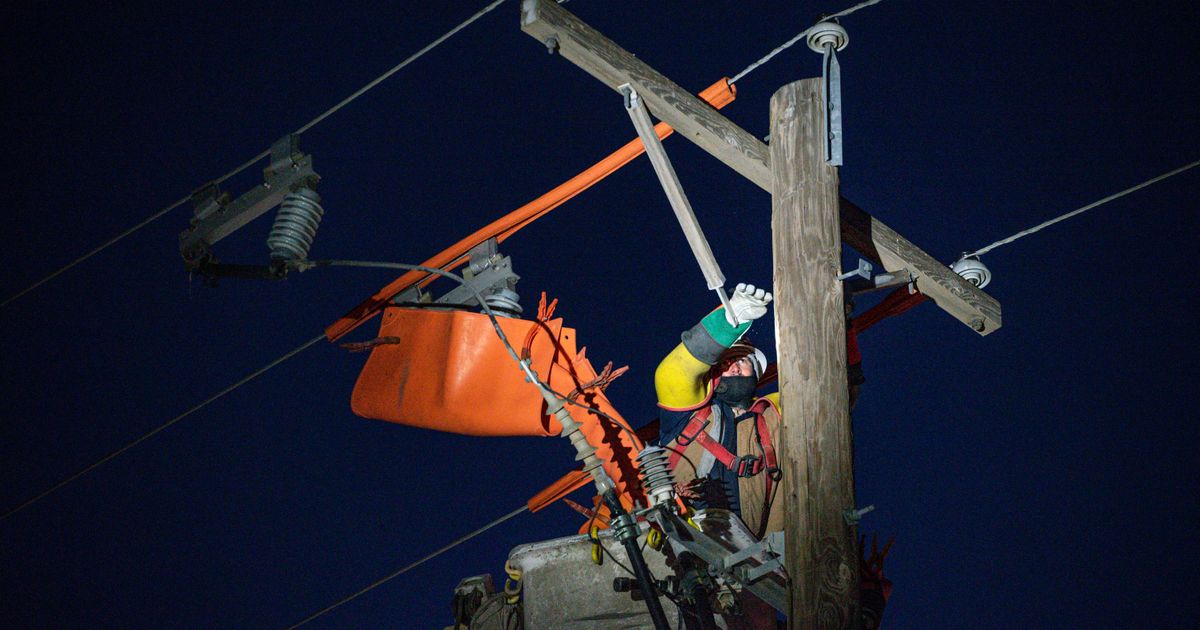
North Carolina has recorded more than 111 major weather-related power outages since 2000 (fourth-most nationally), while Climate Central and DOE data show weather-linked outages have roughly doubled since the early 2000s and account for about 80% of major incidents; winter storms alone cause nearly a quarter of weather-related outages. The article highlights grid vulnerabilities — aging above-ground lines, transformers whose oil-insulation failures can stretch restorations from hours to days — and growing demand pressure from population growth, electrification and AI data centers, implying sustained capital expenditure needs for utilities on hardening, monitoring and replacement inventory and raising operational risk for utility equity and municipal credit profiles.
Market structure: Weather-driven outage growth favors transmission & distribution (T&D) equipment makers, specialty contractors and battery/microgrid providers who can price scarce hardware and installation windows; expect transformer makers (lead times 6–18 months) to command 10–30% premium on new orders and raise margins near-term. Regional utilities in the Southeast (DUK-style) are the direct losers: higher O&M, storm restoration accruals and tighter liquidity push equity volatility and credit spreads wider by an estimated 10–50 bps in stressed scenarios. Cross-asset: utility equity implied vol should rise short-term, IG utility bonds could underperform other IG corporates, and copper/steel demand shocks would lift base-metal prices by mid-single-digits if large replacement programs accelerate.
Risk assessment: Tail risks include a multi-day cascading failure during a major storm that triggers regulatory disallowance of storm costs, federal intervention, or large insurer losses — a low-probability event but >$1–3bn industry hit if >500k customers affected. Time horizons separate out: immediate (days) = operational disruption and knee-jerk equity moves; short-term (weeks–months) = order-backlog and supplier earnings re-rating; long-term (years) = structural capex shift to hardening and storage driven by electrification and climate. Hidden dependencies: spare-transformer inventory, global copper/steel supply, permitting/workforce bottlenecks; catalysts to watch are major storms, state PUC rulings and federal grid-resilience grants.
Trade implications: Direct long exposure to T&D equipment/industrial names (Eaton ETN, GE, ABB) with 6–12 month horizons to capture backlog-driven revenue step-up; consider a 2–3% position in ETN as primary. Relative-value: pair long ETN (or ABB) / short DUK sized 1:1 for 6–12 months to capture equipment demand vs utility cost/recovery risk; options tactically use 6–9 month call spreads on ETN/GE to limit capital and buy 6–9 month put spreads on DUK if a PUC disallowance occurs. Rotate portfolio overweight to industrials/T&D contractors and underweight Southeast-focused utility equities and long-duration regional muni bonds until rate-recovery clarity (expect 30–90 day resolution windows).
Contrarian angles: The market may be overpricing permanent equity downside for large regulated utilities — many commissions allow retroactive cost recovery or storm surcharges, capping long-run damage; a PUC approval would snap back DUK shares. Historical parallels (post-hurricane rebuilding cycles) show multi-year supplier outperformance versus utility stocks; unintended consequence: aggressive undergrounding raises copper/installation demand but creates heavier future replacement burdens and political backlash on rates, which could slow projects and re-price winners/losers.
AI-powered research, real-time alerts, and portfolio analytics for institutional investors.
Request DemoOverall Sentiment
moderately negative
Sentiment Score
-0.40
Ticker Sentiment
