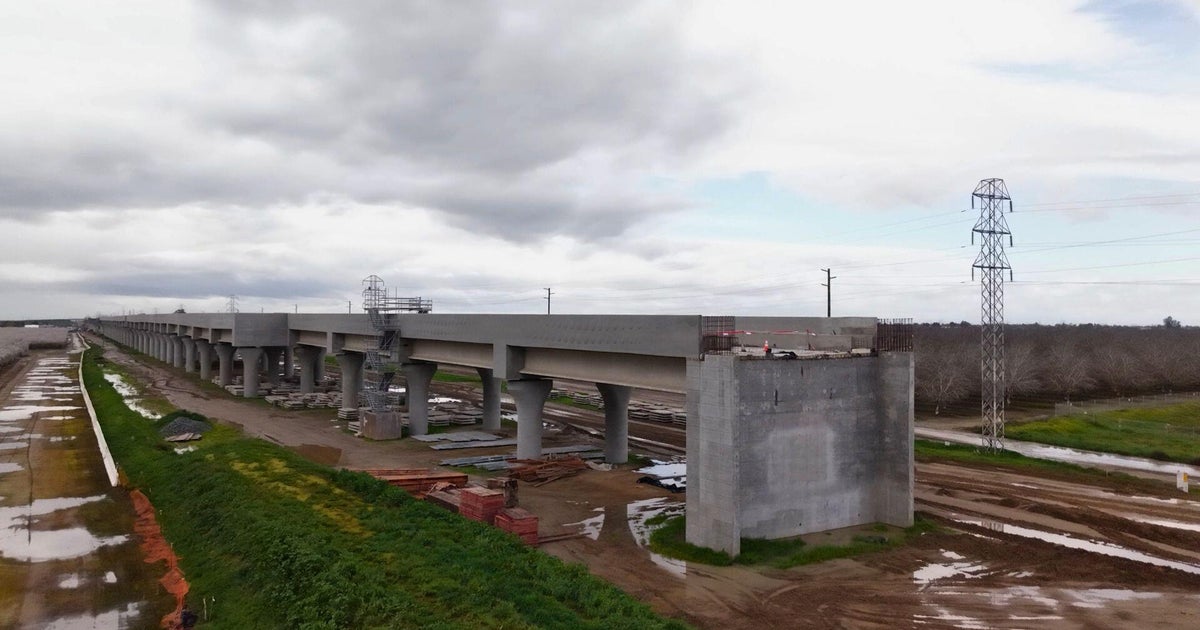
California's high-speed rail has ballooned from a 2008 $33 billion estimate to a current $125–126 billion price for a San Francisco–Los Angeles connection, leaving roughly a $90 billion shortfall and the initial Central Valley segment (Bakersfield–Merced) delayed to ~2033. Private operator Brightline aims for a 200 mph L.A.–Las Vegas line by 2029 and seeks a $6 billion loan, but junk debt ratings, safety concerns from its Florida operations, federal grant cancellations and entrenched political and regulatory obstacles make financing and completion uncertain.
The political and legal friction around big rail projects has created a stop-start demand pattern that favors firms able to monetize early-stage engineering, remediation and right-of-way work rather than contractors that rely on steady long-run build schedules. That lumpy work favors diversified engineering & services firms with backlog-driven revenue recognition and short-cycle margin expansion, while leaving pure-play civil constructors exposed to contract renegotiation, warranty claims and stranded-capacity risk.
Private-sector experiments that minimize land acquisition friction — e.g., routing along existing highway medians or brownfield corridors — create an option value for repeatable, lower-NIM public‑private partnerships in other corridors. The economic lever is not just top speed but unit-cost per mile: if a private operator can demonstrably halve delivery complexity and get stable farebox/ancillary revenue, it converts a perennial public-good debate into an investible growth market for suppliers and operators.
Financing, not technology, is the choke point: higher cost of capital for unproven private operators and the binary nature of federal/state political support mean project economics can flip quickly across election cycles. Near-term catalysts to watch are credit-rating actions on rail credits, large supplier contract awards, and federal loan/guarantee decisions — each capable of moving valuations materially over 3–24 months depending on outcome.
AI-powered research, real-time alerts, and portfolio analytics for institutional investors.
Overall Sentiment
strongly negative
Sentiment Score
-0.60
