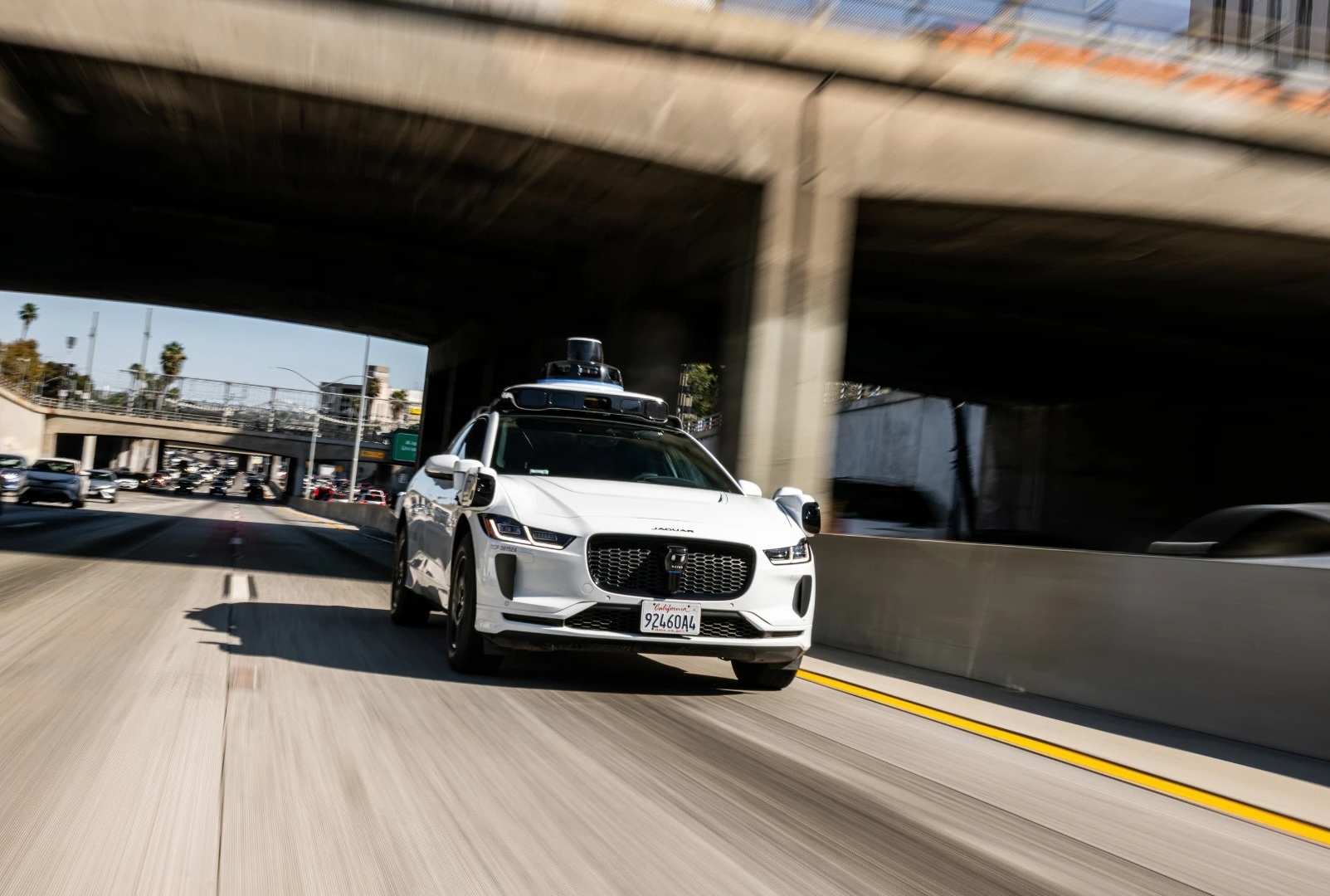
California's DMV has approved a sweeping expansion of Waymo's fully driverless operating territory — covering the entire Bay Area (including North and East Bay) east to Sacramento and a broad Southern California corridor from Santa Clarita to San Diego — a move that could be the largest geographic expansion of autonomous ride‑hailing in the U.S. and reshape travel patterns in transit‑poor regions. The amended permit authorizes deployment of both Jaguar and Chinese‑made Zeekr vehicles but requires a separate California Public Utilities Commission approval before Waymo can carry paying passengers or roll out its next‑generation platform; the company, which already operates in San Francisco and parts of Silicon Valley, says it provides over 1 million rides monthly, has launched service in five additional U.S. cities this month, and expects to begin San Diego rider service by mid‑2026.
California's Department of Motor Vehicles has approved a major expansion of Waymo's fully driverless operating territory to include the entire Bay Area (North and East Bay) east to Sacramento and a large Southern California corridor from Santa Clarita to San Diego, authorizing deployment of both Jaguar and Chinese-made Zeekr vehicles. The permit is operationally significant because Waymo already reports providing over 1 million rides monthly in San Francisco and Los Angeles and has this month launched fully autonomous services in Miami, Dallas, Houston, San Antonio and Orlando, plus driverless freeway trips across the Bay Area, Phoenix and Los Angeles.
The approval does not remove regulatory gating: Waymo must secure a separate California Public Utilities Commission deployment permit before carrying paying passengers in the newly permitted regions or rolling out its next-generation vehicle platform, and the company has indicated a target of mid-2026 for first paid riders in San Diego. Expanding into transit-poor regions could materially change local travel patterns and tourism flows, but near-term monetization depends on CPUC timing and company rollout cadence.
Operational and political risks include the complexity of scaling across diverse geographies, the use of a Chinese-made vehicle (Zeekr) that could invite additional scrutiny, and the need for continued coordination with safety regulators; sentiment and market-impact signals are moderately positive but not definitive for immediate revenue upside.
AI-powered research, real-time alerts, and portfolio analytics for institutional investors.
Request DemoOverall Sentiment
moderately positive
Sentiment Score
0.45
Ticker Sentiment
