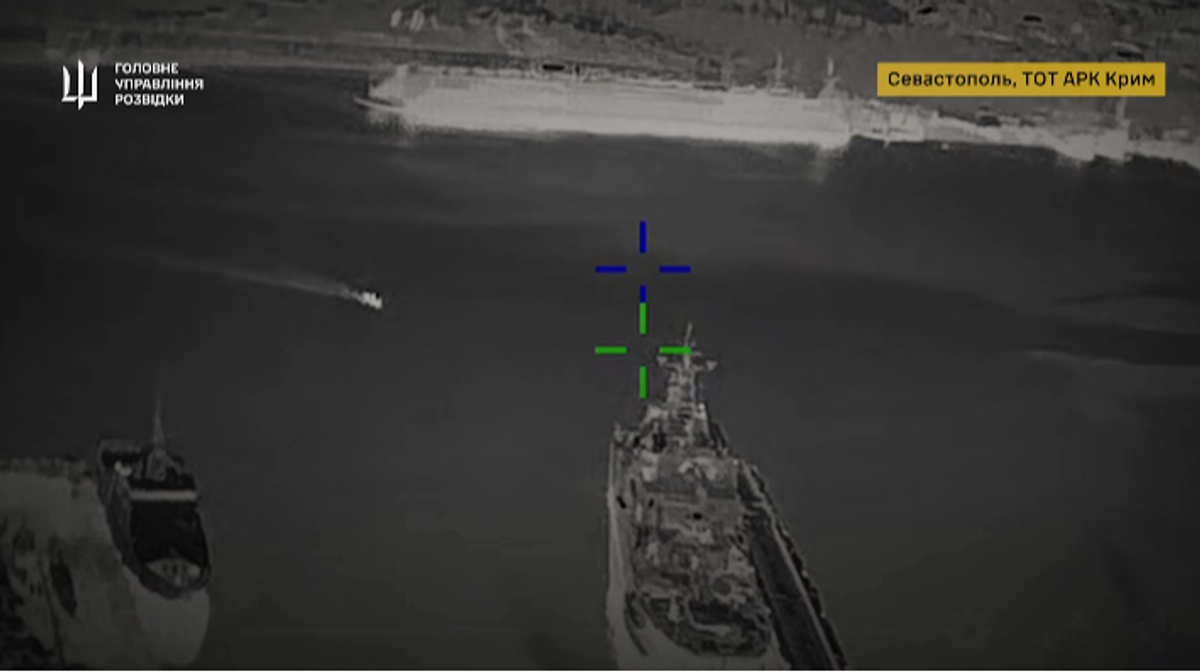
Ukraine’s DIU said it struck two Russian landing ships in Crimea on the night of 18-19 April, rendering the Yamal and Nikolai Filchenkov inoperable; the vessels are valued at more than $150 million combined. The attack also destroyed a Podlet-K1 radar station worth about $5 million. The report underscores continued escalation in the Black Sea theater and adds to war-risk sentiment.
This is less about the value of the vessels than the signaling effect on Russia’s logistics chain: repeated degradation of sea lift capability raises the cost of sustaining southern operations and forces more dependence on rail, road, and static depots. The second-order market implication is a slow-burn tightening of military logistics rather than an immediate macro shock, which tends to benefit firms exposed to long-duration replenishment cycles and hardening of rear-area infrastructure, while keeping direct Black Sea exposure in a risk-off posture. The most important near-term catalyst is whether this proves episodic or becomes a sustained campaign against mobility, radar, and port functionality. If the tempo persists for weeks, expect increased demand for air defense, electronic warfare, autonomous systems, satellite ISR, and decentralized comms, while any shipping or industrial asset with Black Sea adjacency should trade at a wider geopolitical discount. The time horizon matters: asset impairment headlines can move sentiment in days, but procurement and capex reallocation can run for quarters. The contrarian view is that markets may overestimate the immediate kinetic impact and underappreciate Russia’s adaptation path. Similar attacks can force dispersal, camouflage, and substitution rather than outright collapse, which limits the near-term operational benefit but still compounds maintenance costs and lowers fleet readiness over months. The cleaner trade is not a broad war-beta expression; it is selective exposure to defense enablers with recurring demand and to insurance/logistics names where pricing power improves as route and asset risk premiums rise.
AI-powered research, real-time alerts, and portfolio analytics for institutional investors.
Request DemoOverall Sentiment
strongly negative
Sentiment Score
-0.60
