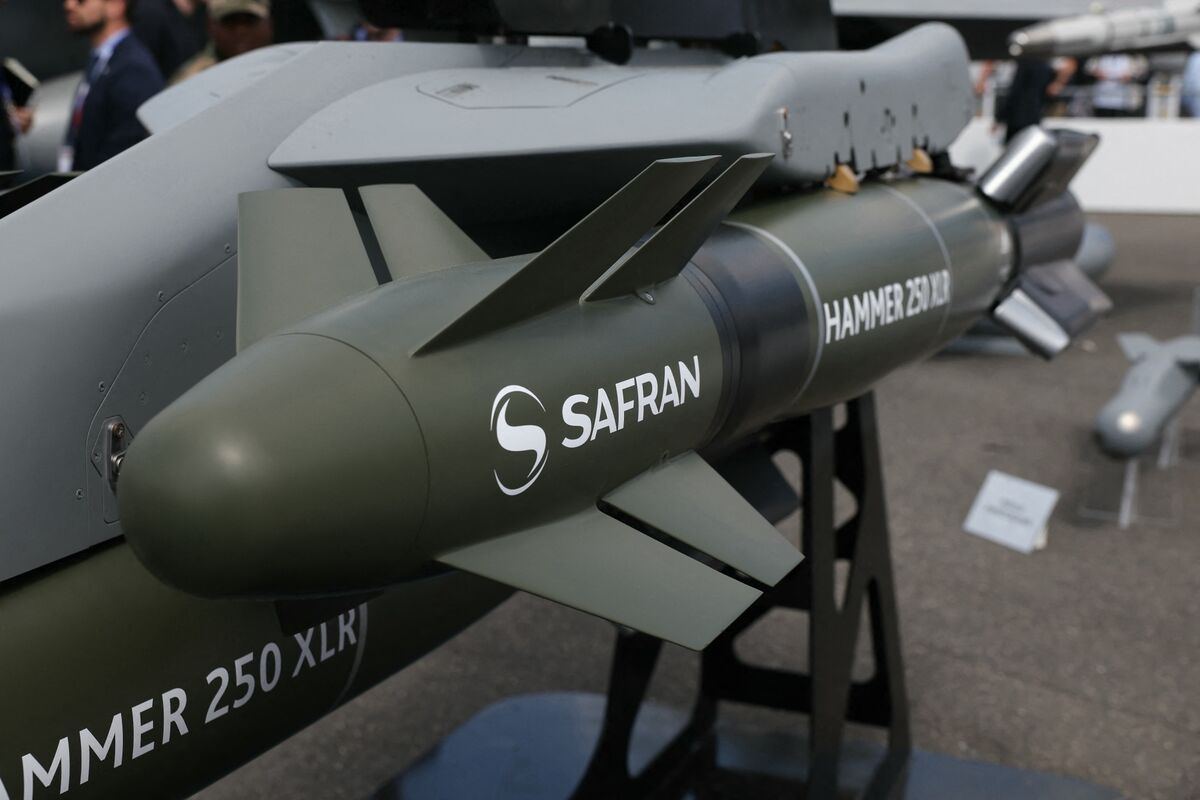
India will manufacture an air-to-ground weapon domestically in partnership with France’s Safran, marking a push to indigenize advanced munitions production. The deal strengthens Franco-Indian defense ties and could expand Safran’s footprint and India’s defense supply chain, though the report provides no contract value or timeline.
Market structure: Expect concentrated winners — SAF.PA and Indian tier-1 integrators — to gain pricing leverage on assembly and aftermarket services while global OEMs face incremental competitive pressure in Indo-Pacific tenders. Initial revenue uplift will be modest (single-digit percent of Safran aero-defence sales) but will shift margin mix toward higher-margin services/maintenance over 2–5 years, pressuring smaller munitions exporters’ market share. Commodities (titanium, specialty alloys) see low-single-digit demand lift; INR likely to firm modestly versus EUR on export‑related capital spending and supply-chain localization.
Risk assessment: Tail risks include EU export-control reversals, IP-withdrawal by France, or Indian political changes that halt offsets — each could wipe out multi-year revenue streams; probability medium but impact high. Near term (0–3 months) watch for official contract signatures and offset clauses; medium (3–12 months) operationalization and vendor awards; long term (1–5 years) technology transfer, localized supply chain scale-up and margin normalization. Hidden dependencies: semiconductor and precision-test equipment imports, and certification windows that can add 6–18 months of delay.
Trade implications: Direct plays — buy SAF.PA for 6–12 months and selective Indian suppliers (BHARATFORG.NS, BDL.NS) for 12–24 months; size positions conservatively (2–3% each) and use OTM calls to leverage conviction. Pair trade — long SAF.PA vs short HO.PA (Thales) on relative contract capture; options — buy SAF 12‑month calls 10–15% OTM or buy INDA (1–2% portfolio) to express localized capex and INR strength. Enter within 30–90 days, trim on +25–35% gains or if no contract within 12 months.
Contrarian angles: Consensus will overestimate near-term revenue — historical India offset programs (e.g., fighter offsets) delivered slower, lower-margin outcomes than headlines suggested, so valuation gaps can open if execution stalls. Risk of supply-chain inflation (skilled labour, test ranges) could compress margins; set re-evaluation triggers (no vendor awards in 9 months or execution delays >12 months) and avoid full carry into long-dated conviction until second- or third-tier suppliers are contracted.
AI-powered research, real-time alerts, and portfolio analytics for institutional investors.
Request DemoOverall Sentiment
mildly positive
Sentiment Score
0.25
