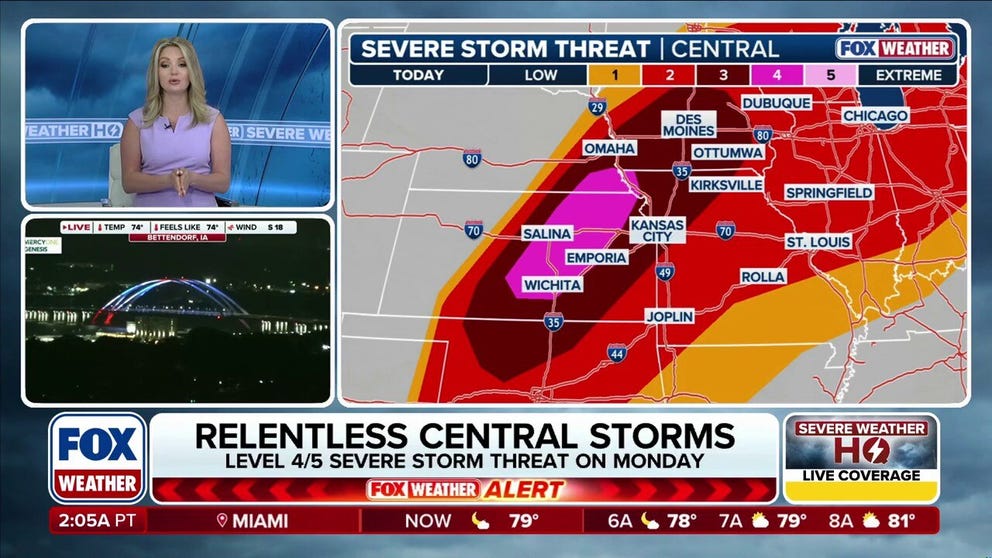
A multi-day severe weather outbreak is threatening more than 80 million people across a 1,000-mile corridor from North Texas to western New York, with a rare Level 4 of 5 tornado risk in parts of Kansas and southeastern Nebraska. The main hazards include violent EF-3+ tornadoes, softball-sized hail, damaging winds up to 75 mph, and 1–2 inches of rain that could trigger localized flash flooding and power outages. The event could disrupt travel, logistics, and local infrastructure across at least a dozen states through Tuesday.
This setup is less about a one-day “storm headline” and more about a rolling micro-disruption tax on the physical economy. The first-order pain is obvious for regional utilities, rails, trucking nodes, and warehouse distribution centers in the corridor; the second-order effect is tighter slack in already-fragile inventory systems just ahead of Memorial Day, when replenishment velocity matters and any missed delivery window forces expensive expediting. The market typically underprices how quickly localized weather events become working-capital events for shippers and retailers with low buffer stocks.
The bigger opportunity is in infrastructure and restoration beneficiaries rather than pure damage names. If outages materialize across multiple states, line crews, transformers, poles, generators, and temporary communications equipment see demand spikes that can persist 2–6 weeks after the weather clears. That favors electrical equipment, grid service, and disaster-recovery suppliers over high-beta insurers, where immediate loss estimates often get over-extrapolated before reserve strength and reinsurance recoveries are understood.
Contrarian view: the headline tornado threat is likely to create more volatility than economic damage unless the event clusters over a dense metro/industrial footprint. The real market mover is not tornado count but whether the storm line forces broad power interruptions in Chicago/Milwaukee/Ohio Valley logistics corridors or causes rail bottlenecks and airport cancellations; if impacts stay rural, the macro read-through fades fast. On the other hand, a handful of supply-chain chokepoints can create disproportionate pricing dislocation in names with just-in-time exposure, especially if the pattern repeats into the holiday weekend.
For timing, the highest value window is the next 24–72 hours: weather risk trades best on escalation, while restoration and repair spend becomes visible only after outages are confirmed. If power and transport disruptions prove broader than expected, this can spill from a pure event trade into a short-duration earnings revision story for logistics and industrial distributors. The asymmetry is attractive because the downside for beneficiaries is typically limited to a short-lived fade, while losers can see margin leakage and service-level penalties for several quarters if inventory cadence is broken.
AI-powered research, real-time alerts, and portfolio analytics for institutional investors.
Request DemoOverall Sentiment
moderately negative
Sentiment Score
-0.35
