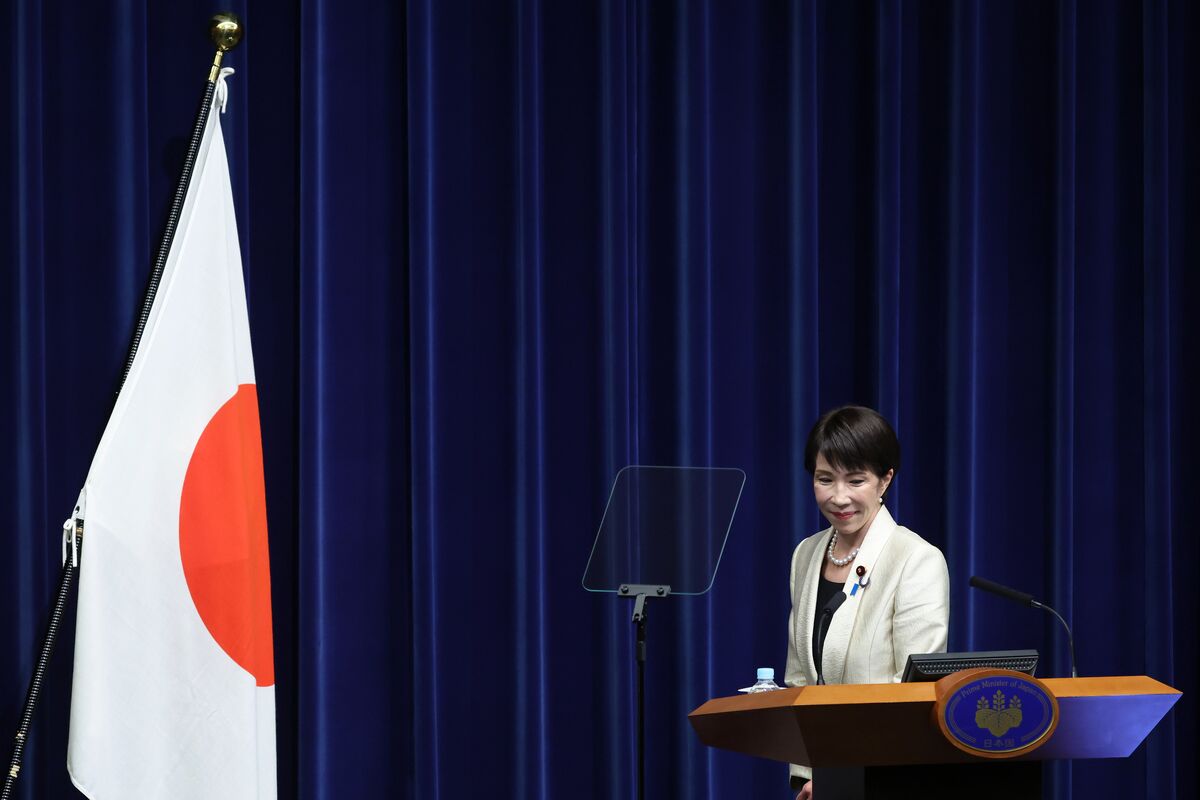
Sanae Takaichi is preparing for a potentially bruising Oval Office meeting after being singled out by former President Trump as one of the first leaders to visit since the war began. Trump pushed allies to assist on Iran but has since stepped back from that demand, leaving political pressure on Takaichi to respond. The visit raises geopolitical risk and could heighten diplomatic tensions without a clear U.S. policy commitment.
The immediate market vector to watch is political-optics-to-policy: a bruising Oval Office meeting increases the probability that US demands translate into near-term signalling (joint statements, intelligence sharing) and medium-term policy alignment (export controls, procurement coordination) over 3–18 months. That sequence disproportionately benefits US defense primes and services that can deliver allied interoperability quickly, while creating asymmetric downside for Japanese firms exposed to China demand or to energy/supply shocks caused by faster divestment from risky jurisdictions. Second-order supply-chain winners include non-China fabrication nodes and tooling/equipment suppliers that get wooden-ship-in-port orders as firms diversify — expect order-book visibility to shift over 6–24 months toward Taiwan/Japan-friendly partners, boosting capex cycles for selected equipment vendors. Conversely, Japanese exporters with >20% revenue sensitivity to Chinese industrial demand (autos, industrial machinery) are exposed to 10–30% revenue hit scenarios over a year if alignment drives formal controls or de-risking incentives. Market micro: expect JPY and Tokyo equities to be sensitive around the meeting window (intra-day to 2 weeks) with potential 2–5% JPY moves and 3–8% swings in defense stocks on contract-signalling. JGB yields are a medium-term lever — credible commitments to higher defense spending would lift yields (and hurt long-duration Japanese assets) over 6–24 months; that is a distinct tail that can flip risk premia quickly if Tokyo signals fiscal offsets are unlikely. Contrarian: the consensus treats the meeting as binary escalation; that misses the political incentive for limited, staged concessions that satisfy domestic optics without triggering full-blown export-control cascades. Markets that price only escalation (JPY collapse, blanket decoupling) are overdoing tail risk — tactical options are therefore asymmetric and should be used to harvest mispriced event volatility rather than directional conviction alone.
AI-powered research, real-time alerts, and portfolio analytics for institutional investors.
Request DemoOverall Sentiment
mildly negative
Sentiment Score
-0.15
