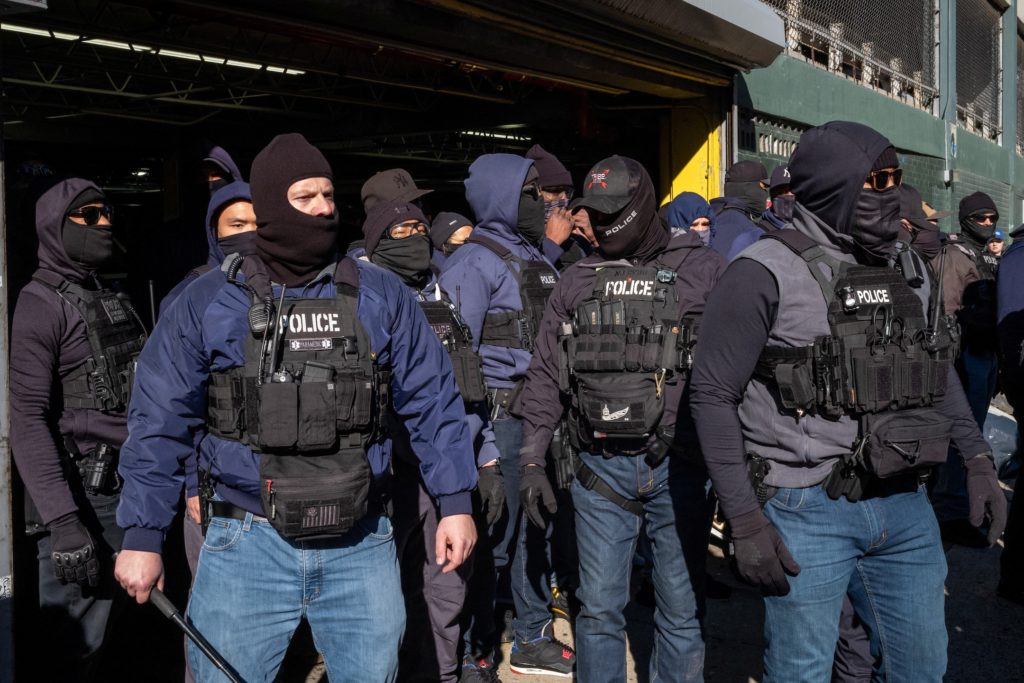
The Department of Homeland Security's ICE has launched an expanded, multimillion-dollar recruitment drive to hire roughly 10,000 new agents — more than doubling deportation officers from ~6,000 to ~16,000 — supported by nearly $75 billion in additional funding from the recent spending bill. To meet that goal the agency has removed age limits, halved training duration, and offered incentives including up to $50,000 sign-on bonuses and student-loan forgiveness, prompting concerns about diluted vetting, higher misconduct risk, and politically charged recruitment messaging. The changes increase operational capacity for immigration enforcement but raise governance, legal and reputational risks that could translate into political controversy and oversight or litigation exposure for the agency and related contractors.
Market structure: The $75B infusion and a stated goal to add ~10,000 ICE agents materially upshifts demand for detention capacity, surveillance/biometrics, and government IT services over 3–18 months. Direct winners: private prison operators (CXW, GEO), government analytics/security vendors (PLTR, BAH, LHX), uniform/equipment suppliers; losers: municipal budgets, sanctuary cities, NGOs and firms with reputational exposure to immigration enforcement. Bond markets may price slightly wider Treasury issuance if expanded spending is sustained (10–25bp over 12–24 months), FX and commodities see negligible impact.
Risk assessment: Key tail risks are high-profile misconduct or judicial injunctions that could cut occupancy/contracting by 20–40% within months, or state-level bans that constrain operations regionally; reputational cascades could trigger contract pauses and stock downdrafts. Immediate risks (days–weeks): vetting failures and trainee fallout; short-term (1–6 months): contract awards/revenue recognition volatility; long-term (1–3 years): litigation and regulatory clampdowns. Watch local jail capacity, GAO/DOJ probes, and state legislation as hidden dependencies.
Trade implications: Tactical plays: establish modest, hedged exposure to CXW and GEO (1.5–3% NAV each) for 6–12 months to capture reopening/detention demand, with 15% stop-loss and buy 3–6 month protective puts 20% OTM to cap downside. Buy a 3–6 month PLTR call spread (25–40% OTM) sized 1–2% NAV to play accelerated government analytics spend while limiting capital; overweight defense/IT suppliers (LHX, BAH) up to 2–4% combined. Pair trade: long PLTR vs short a small-cap non-government services name to isolate government IT upside.
Contrarian angles: The market may underprice operational risk — rapid hiring historically correlates with misconduct and contract reversals (post-2000s Border Patrol precedent). If vetting problems persist, private-prison upside is capped and volatility will spike; therefore prefer options-backed exposure and strict position sizing rather than outright concentrated longs. If no major scandals occur in 3–6 months, re-rate upside could be 30–50% for direct contractors; conversely, a single major scandal could halve equity value quickly.
AI-powered research, real-time alerts, and portfolio analytics for institutional investors.
Request DemoOverall Sentiment
mildly negative
Sentiment Score
-0.25
Ticker Sentiment
