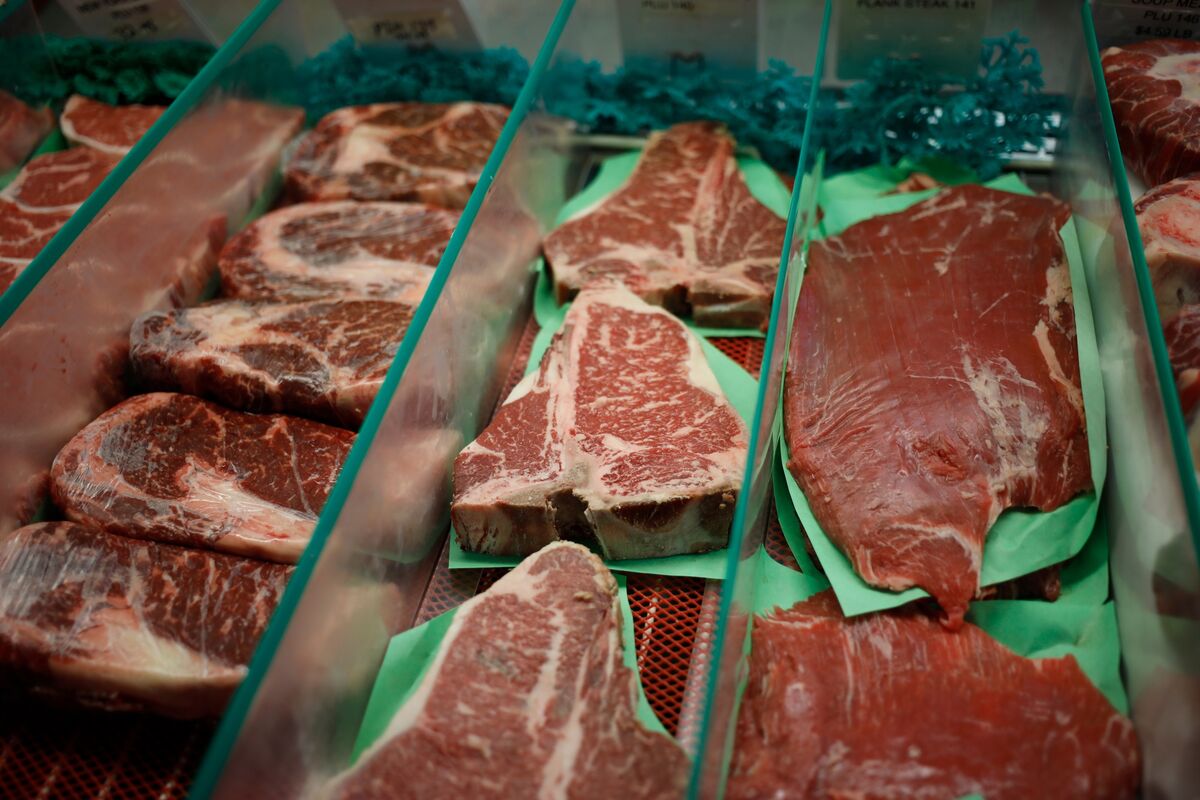
President Trump issued an executive order directing the Department of Justice and the Federal Trade Commission to establish a task force to investigate the U.S. food supply chain for possible price fixing and other anti-competitive conduct, with specific focus on sectors such as meat, seeds and fertilizer and on foreign ownership posing national-security risks. The directive raises the likelihood of enforcement actions and investigations that could pressure agricultural suppliers, processors and foreign-owned firms, potentially affecting commodity input costs and margins across the food and fertilizer value chains.
Market structure: Large, concentrated food processors (Tyson TSN, Pilgrim’s Pride PPC, Hormel HRL) are primary losers — expect near-term margin pressure (100–300bps) from fines, forced price concessions or litigation costs. Retailers (WMT, COST) and distributors could be relative winners if enforcement curbs supplier pricing power, improving gross margins by ~50–150bps over 3–12 months. Seed/fertilizer firms with perceived foreign control (Bayer ADS BAYRY, Nutrien NTR, CF Industries CF, Mosaic MOS) face policy and trade risk that can swing EBITDA +/- 10–30% depending on export restrictions or tariffs.
Risk assessment: Tail risks include multi-year antitrust litigation, forced divestitures with >$1bn fines, or export curbs triggering supply shocks; each could move targeted equities 20–50% and agricultural commodity prices 10–30%. Time horizons: immediate (days) volatility on headlines, short-term (30–90 days) for DOJ/FTC subpoenas and initial suits, long-term (6–24 months) for structural remedies. Hidden dependencies: pass-through to consumer CPI, retailer bargaining leverage, and geopolitical retaliation (e.g., export limits) that can amplify commodity moves.
Trade implications: Tactical trades favor long defensive retail (COST 1–2% portfolio) and selective long fertilizer producers if supply curbs raise prices (CF, MOS 0.5–1%). Short concentrated processors: initiate small short positions in TSN/PPC (1–2% each) or buy 3‑month puts 10–15% OTM sized at 0.5–1% portfolio to limit skew exposure. Use pair trade: long COST (2%) / short TSN (2%) to play margin reversion; consider buying volatility (long straddle) on TSN around expected DOJ announcements within 30–60 days.
Contrarian angles: Consensus assumes aggressive, fast enforcement; history (meatpackers 2015–2018 probes) shows protracted legal battles with limited structural change — initial selloffs may be overdone, creating mean-reversion opportunities >20% off peaks. Unintended consequence: breaking scale could raise consumer prices, hurting grocery sales and retailers; therefore verify concrete DOJ actions (subpoenas, consent decrees) before adding large directional exposure. Monitor filings and 8‑Ks for named subpoenas within 30–90 days as primary catalyst.
AI-powered research, real-time alerts, and portfolio analytics for institutional investors.
Request DemoOverall Sentiment
mildly negative
Sentiment Score
-0.25
