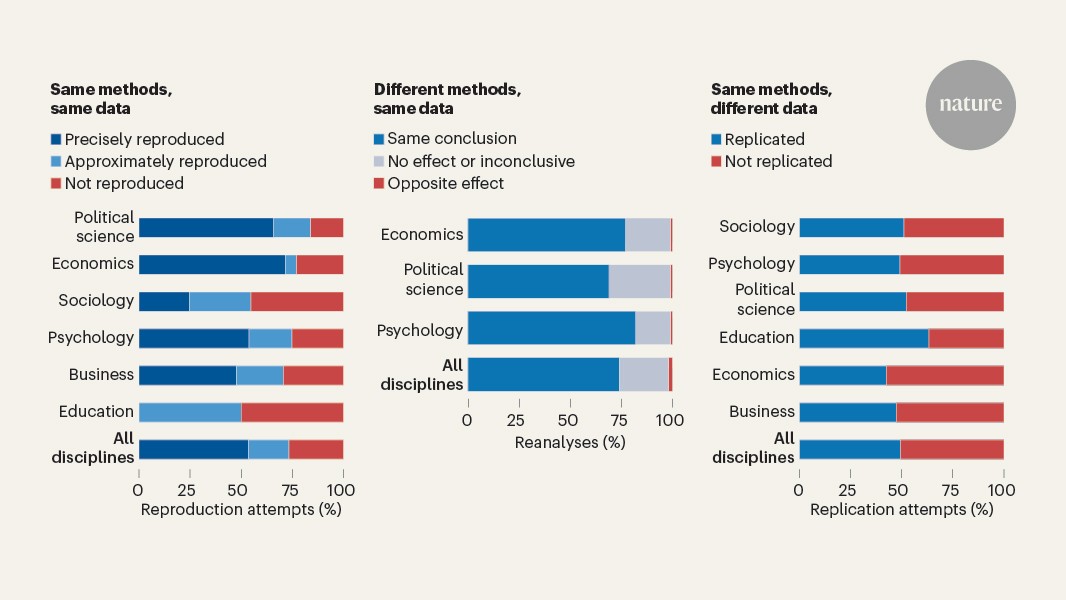
A large meta-research project that tests claims in social-science papers was published in Nature (652:39-41, 2026). The piece links to related studies (Miske et al.; Aczel et al.; Tyner et al.) and notes that the authors declare no competing interests.
This meta-research spotlight increases structural demand for provenance, indexing, and machine-assisted synthesis tools; vendors that sell searchable, auditable research pipelines win recurring revenue as institutions scramble to demonstrate compliance. If even 10-15% of major universities mandate reproducible pipelines within 12–24 months, analytics providers that can convert that into managed-subscription deals could grow revenue 8–15% above baseline during rollout.
Second-order winners are the compute and AI stack: large language models and large-scale meta-analyses raise demand for GPUs, cloud quotas, and MLOps—an incremental multi-year revenue tail for NVDA and cloud providers that is lumpy but high-margin. Conversely, legacy publishers face margin compression as more work shifts to open-data repositories and third-party verification services; institutional library budgets are finite, so a reallocation toward analytics and data hosting is likely.
Key catalysts to watch are funder/publisher mandate timelines (6–24 months), major replication studies that trigger policy change, and the emergence of turnkey replication-as-a-service platforms. Reversals occur if methodological consensus emerges quickly or if cost/complexity stalls institutional adoption; those outcomes would push benefits further into a multi-year horizon.
Contrarian point: the market will likely overreact to headline reproducibility concerns but underprice the monetization friction — integration with university procurement, identity/access, and legacy workflows makes near-term revenue realization slow. That argues for focused, patient exposure to infrastructure winners rather than quick bets on publishers losing subscribers overnight.
AI-powered research, real-time alerts, and portfolio analytics for institutional investors.
Request DemoOverall Sentiment
neutral
Sentiment Score
0.00
