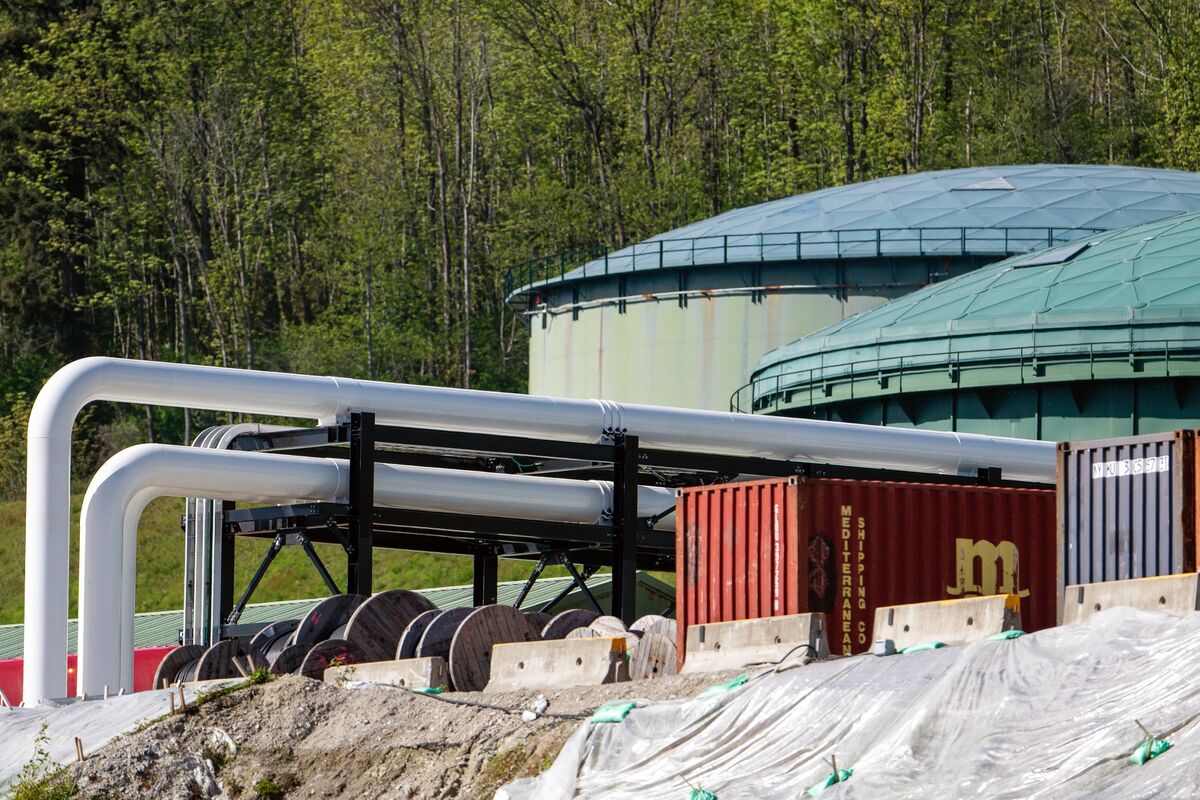
Prime Minister Mark Carney and Alberta Premier Danielle Smith have agreed to the broad terms of a deal to support a new oil pipeline to Canada’s west coast, according to CBC. The agreement is aimed at addressing regulatory barriers—most notably a ban on oil tankers off northern British Columbia—that currently deter investor commitments and, if implemented, could unlock Alberta crude access to Asian markets and materially change export logistics for Canadian energy producers.
Winners are pipeline owners, coastal terminal operators and heavy-crude producers that can access Asia (expect meaningful EBITDA upside for ENB, TRP, PBA and large oils if capacity adds 100-300kbd); losers include oil-by-rail providers and inland midstream/terminals (rail volumes could drop 10-30% over 12–24 months). Pricing power shifts toward exporters who secure long‑term offtake — heavy-light differentials could compress by $5–12/bbl if new capacity reaches FID and starts flowing within 18–36 months.
Tail risks: Indigenous injunctions, federal election reversals, or insurer refusal could delay or kill projects — model a 20–60% probability of multi-year stalls and a 30–50% cost overrun if built. Time horizons separate: immediate market reaction is muted (days); meaningful credit/capital reallocation and FID signals occur in 30–90 days; realized export volumes and margin shifts play out over 1–3 years. Hidden dependencies include tanker insurance, port dredging, and Asian term-contract demand that can flip economics quickly.
Trade implications: favor pipeline and export-linked producer exposure but size positions to policy milestones — scale into positions after legislative text or FID. FX: USDCAD downside of 3–6% is plausible if export receipts rise; provincial spreads and HY credit of Alberta could tighten. Options: use 9–15 month call spreads to capture upside while capping premium; pair trades long pipelines vs short rail to isolate export-execution risk.
Contrarian: consensus underestimates operational frictions (shipping, terminal bottlenecks) that can delay flow for 2+ years, meaning current implied NAV uplifts may be overstated. Historical parallels (Keystone XL) show political wins often take years to translate into barrels; price action may be underdone for CAD but overdone for small-cap producers priced as if immediate access is guaranteed.
AI-powered research, real-time alerts, and portfolio analytics for institutional investors.
Request DemoOverall Sentiment
mildly positive
Sentiment Score
0.30
