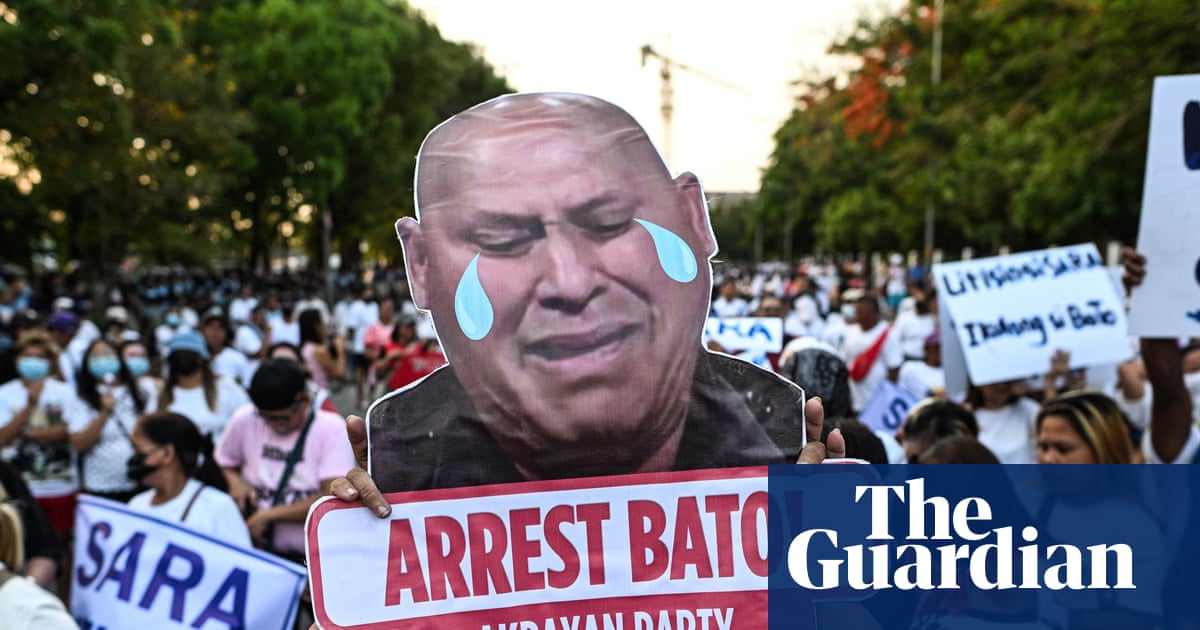
Philippine authorities are trying to confirm reports that senator Ronald dela Rosa, wanted by the ICC over his role in Duterte’s drug war, secretly left the Senate premises after days evading arrest. The article also reports an investigation into gunshots fired in the Senate, with police detaining one person in connection with the incident. The developments add political and legal uncertainty in the Philippines but are unlikely to have immediate broad market impact.
This is less a single legal event than a live stress test of institutional control in Manila. The market-relevant signal is not the fate of one senator, but whether the administration can enforce rules without triggering factional retaliation from security services, Congress, or Duterte-aligned networks. That raises a short-term governance premium across domestic assets: the immediate risk is not policy change, but a disorderly political spiral that widens bid/ask spreads for Philippine risk and delays decision-making in agencies that matter for investment approvals. The second-order effect is on the succession game and the 2025-2028 political cycle. If the ICC-linked camp is seen as being cornered, it can unify a fragmented opposition around anti-Marchos grievance politics, which may weaken reform momentum and complicate fiscal execution over the next 6-12 months. Conversely, a clean, orderly resolution would be mildly positive for rule-of-law credibility, but the current uncertainty means the market is likely to price a higher tail risk than the base case. The biggest near-term catalyst is not the legal process but any fresh incident involving armed personnel, Senate security, or mass mobilization outside government buildings. That would shift this from governance noise to a real stability event, with potential spillover into the peso, local financials, and airport/retail foot traffic in Metro Manila. A quieter resolution could fade the headline impact quickly, but the reputational damage to institutions may linger and keep a modest political risk discount in place for months. Contrarianly, the consensus may be underestimating how contained this could remain if Marcos keeps distance from direct enforcement and allows procedural handling. That would actually preserve the status quo and avoid forcing coalition partners to choose sides. In that scenario, the selloff in Philippine domestic proxies could reverse faster than expected, especially if foreign investors had preemptively de-risked on headline volatility alone.
AI-powered research, real-time alerts, and portfolio analytics for institutional investors.
Request DemoOverall Sentiment
mildly negative
Sentiment Score
-0.15
