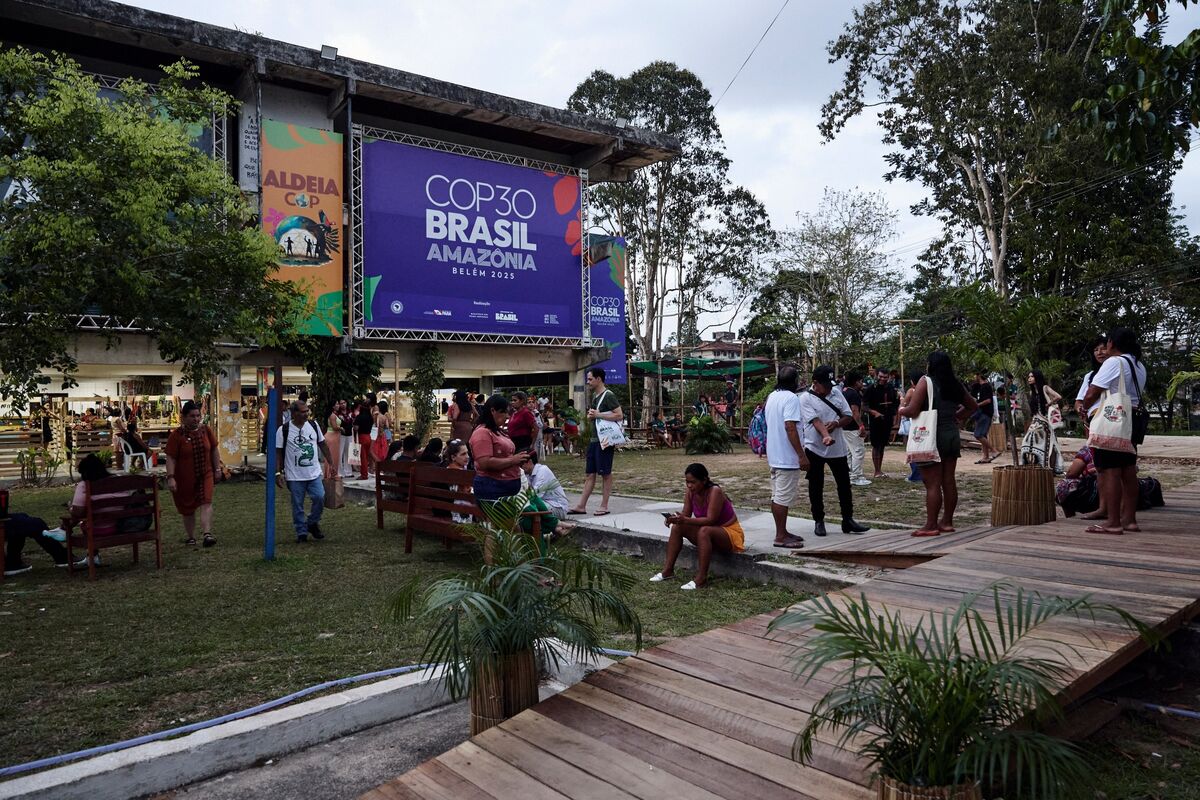
Negotiators at the UN COP30 summit in Brazil laid out possible approaches to tackle the world’s disappointing progress in cutting greenhouse-gas emissions, but remained deeply divided on finance and trade issues; those splits leave the prospects for new, enforceable funding commitments and trade-related climate measures uncertain. The impasse increases the risk that policy clarity and predictable climate finance needed by markets and investors will be delayed, keeping adaptation and transition funding questions unresolved.
Negotiators at the United Nations COP30 summit in Brazil presented options to address the world’s disappointing progress in cutting greenhouse-gas emissions, but the talks show deep divisions on finance and trade policy. The article highlights that countries remain far apart on funding commitments and trade-related measures, leaving substantive, enforceable international agreements uncertain.
Those divisions materially raise the risk that the predictable climate finance and policy clarity markets require for planning adaptation and transition investments will be delayed, and the summary explicitly notes that adaptation and transition funding questions remain unresolved. A continued impasse increases the odds of fragmented national responses rather than a coordinated global package, which amplifies policy execution risk for projects dependent on multilateral financing.
Market signals in the provided data show mildly negative sentiment and a modest market-impact score (0.25), indicating moderate near-term sensitivity but not an acute market shock. Investors should therefore treat COP30 outcomes as a catalyst for policy-driven volatility: monitor communiqué language for finance and trade specifics, and expect selective impacts across ESG-sensitive sectors and supply chains rather than broad market moves.
AI-powered research, real-time alerts, and portfolio analytics for institutional investors.
Overall Sentiment
mildly negative
Sentiment Score
-0.30
