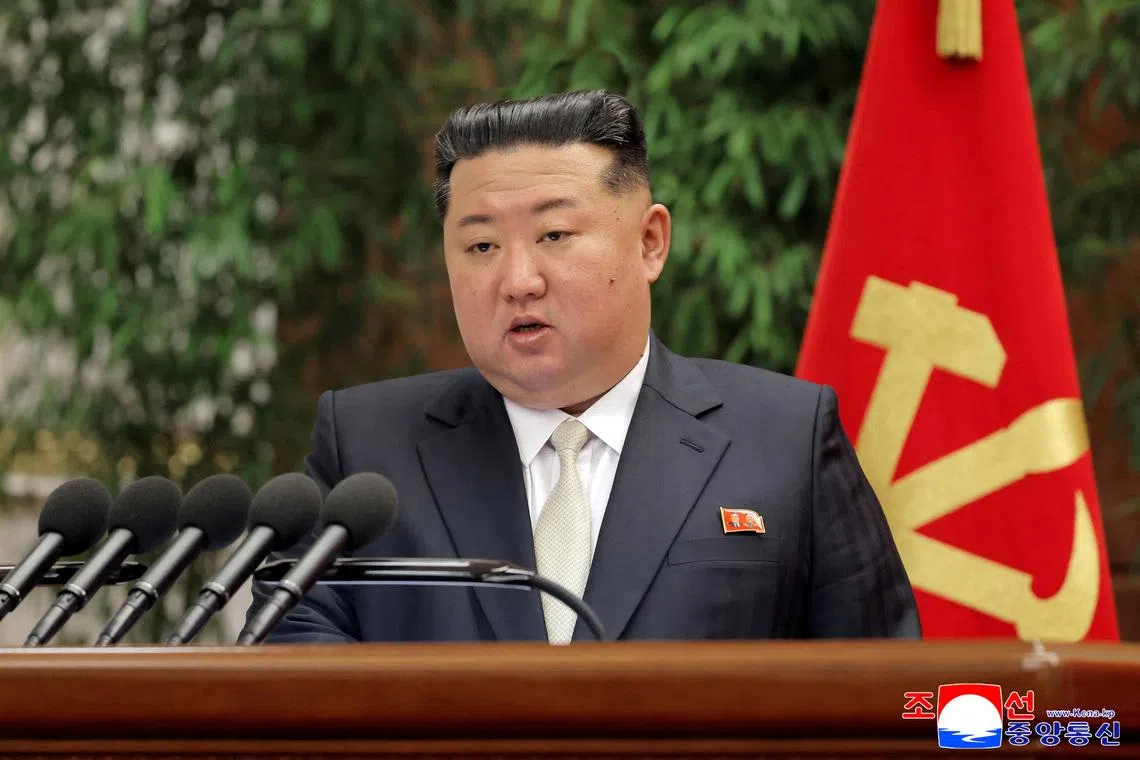
North Korea said Kim Jong Un inspected new 155-mm self-propelled artillery with a range exceeding 60 km, weapons intended to strengthen strike capability against Seoul and other South Korean targets. Kim also supervised testing of a modern navy destroyer and ordered two more destroyers, underscoring continued conventional military buildup. The developments are geopolitically negative and could raise regional security risk, with potential implications for defense assets and broader Korea exposure.
This is less about a near-term battlefield shift and more about a steady improvement in North Korea’s exportable weapons quality. Battlefield feedback from a live war tends to compress development cycles, so the real second-order effect is that Pyongyang can iterate on artillery, fire-control, and naval systems faster than regional defenders can adapt, raising the probability of more credible conventional deterrence over the next 6-18 months.
The immediate market consequence is not a broad EM selloff, but a modest risk premium re-pricing for Northeast Asia defense and a higher floor for regional procurement budgets. The more important channel is industrial: South Korea, Japan, and the U.S. will likely emphasize counter-battery, ISR, air defense, and munitions replenishment, which benefits suppliers with exposure to sensors, command-and-control, and interceptors more than legacy platform builders.
The contrarian risk is overestimating the headline while underestimating budget inertia. Security shocks in Korea rarely move markets for long unless they alter alliance posture or trigger sanctions escalation; absent that, the trade is mostly in defense earnings revisions rather than macro risk-off. The tail event is an actual artillery or naval provocation that forces a rapid U.S./ROK response, which would be a short-dated volatility event rather than a persistent trend.
On the Russia angle, the deeper issue is ammunition and systems interoperability: continued wartime data-sharing can improve North Korea’s product reliability and sustainment, which is more valuable than range alone. That creates a longer-dated threat to regional force planning and increases the odds of additional procurement cycles, especially in counter-UAS, radar, and missile defense.
AI-powered research, real-time alerts, and portfolio analytics for institutional investors.
Request DemoOverall Sentiment
moderately negative
Sentiment Score
-0.35
