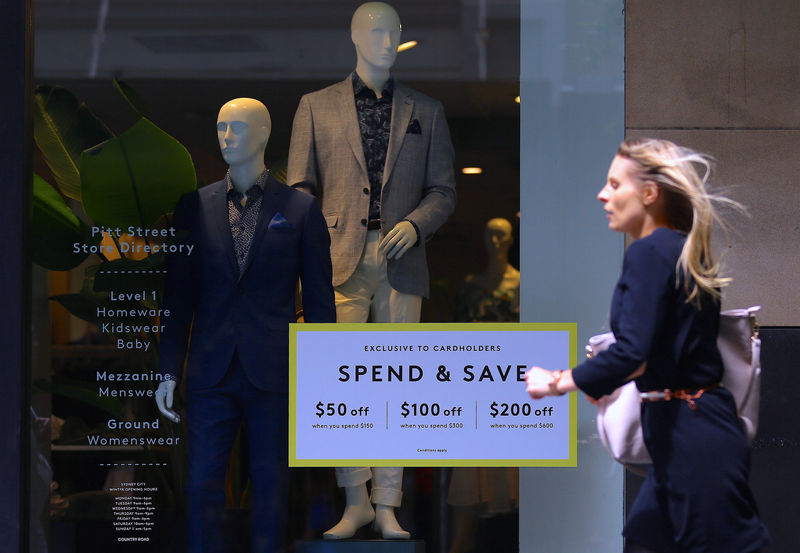
Australian retail sales grew a modest 0.2% month-on-month in May, falling short of the 0.3% forecast, despite improving from April's decline. The growth was driven by a rebound in clothing and department store sales, which offset the first decline in food spending this year. This weaker-than-expected consumer spending signals tightening amid economic uncertainty and reinforces market expectations for the Reserve Bank of Australia to implement further interest rate cuts, potentially at its July meeting.
Australian retail sales for May presented a mixed signal, rising 0.2% month-on-month, which, while an improvement from April's 0.1% decline, fell short of the 0.3% consensus forecast. The headline growth was narrowly driven by a rebound in discretionary categories, with clothing and department store sales increasing by 2.9% and 2.6% respectively, as consumers made delayed seasonal purchases. However, this was significantly tempered by the first decline in food spending this year, a non-discretionary category, signaling underlying consumer fragility. This spending caution is attributed to heightened uncertainty surrounding U.S. tariffs and the domestic economic outlook. The subdued nature of the overall data reinforces market conviction that the Reserve Bank of Australia will pursue further monetary easing, with expectations now firmly pointing towards an interest rate cut at its July policy meeting.
AI-powered research, real-time alerts, and portfolio analytics for institutional investors.
Request DemoOverall Sentiment
moderately negative
Sentiment Score
-0.35
