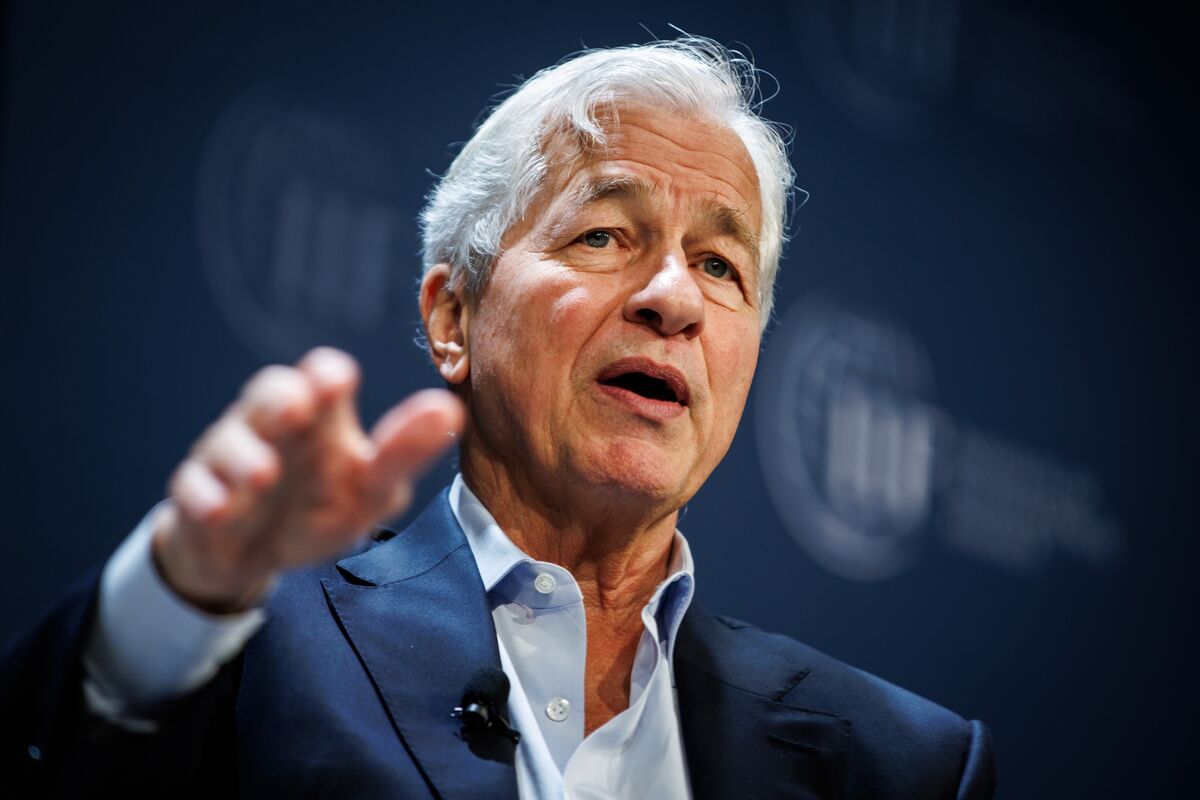
JPMorgan CEO Jamie Dimon said the U.S. must permanently remove any threat from Iran and that it is more important to 'finish this thing and finish it right' than to focus on market movements. Markets have bounced on hopes of a swift resolution, but Dimon's hawkish comments underscore lingering geopolitical risk that could influence investor positioning.
Market optimism priced as a near-term resolution is a crowded, binary narrative; if the conflict does not snap back to calm within days, the marginal buyers who pushed asset prices higher are first to bail, amplifying intraday volatility and widening credit spreads. Near-term mechanics: safe-haven flows (USD, Treasuries, gold) and higher implied volatility will compress risk assets, while any visible supply shocks in oil or shipping will feed through to inflation expectations within 2–12 weeks.
For banks, the initial effect is two-fold and time-staggered: trading and FICC desks typically capture the volatility spike immediately (days–weeks), while balance-sheet stress (higher charge-offs, drawdowns on credit lines, commercial real estate repricing) emerges over quarters. Large diversified banks (JPM included) are better positioned to monetize market dislocations but are still vulnerable to contagion via counterparty chains and higher deposit flight risk if a prolonged risk-off regime sets in.
Second-order winners/losers are non-obvious: marine insurers, freight forwards, and defense suppliers re-rate on sustained conflict, while consumer cyclical sectors (airlines, leisure supply chains) experience soft demand and higher operating costs. Reversal catalysts include a demonstrable de-escalation step (diplomatic or operational) within 7–21 days, a central-bank liquidity backstop for markets, or a noticeable break in oil risk premia; absence of these should keep risk premia elevated for 1–3+ months.
AI-powered research, real-time alerts, and portfolio analytics for institutional investors.
Overall Sentiment
mixed
Sentiment Score
0.10
Ticker Sentiment
