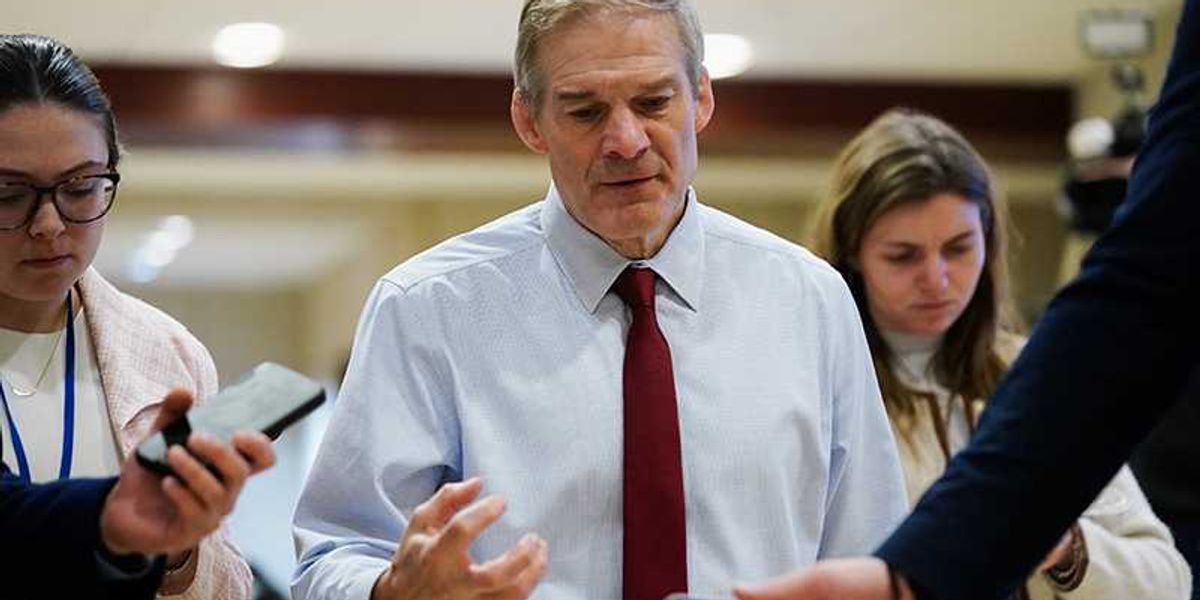
Rep. Jim Jordan is positioning to seek the Speakership if Republicans lose the House in November, with 'over two dozen' GOP aides and operatives telling NOTUS he is raising and donating substantial campaign cash to broaden his support. The report says the GOP looks increasingly likely to lose control amid weak Trump economic polling and concerns about an unpopular Iran war, raising near-term political uncertainty that could influence policy-sensitive sectors and risk assets ahead of the midterms.
House leadership churn is a volatility amplifier for policy-sensitive markets: leadership fights raise the unconditional probability of episodic brinkmanship (shutdowns, debt-ceiling standoffs) in the next 3–9 months by an estimated 10–20%, which pushes cash into short-duration Treasuries and increases intraday rates volatility. That pattern favors liquid short-duration fixed income and defensive large-cap cash flows while penalizing cyclical discretionary businesses whose sales are sensitive to consumer confidence and fuel prices.
A consolidation toward more confrontational leadership increases tail risk for overseas escalation and sustained defense spending surprises. Incremental defense procurement typically shows up within 6–18 months; small, specialized suppliers with concentrated DoD revenue (sub-$5bn market caps) can see EBITDA re-rating of 20–40% on multi-year contract flows if procurement cycles accelerate, while prime integrators capture steadier backlogs but less percent upside.
Campaign capital being redeployed to protect incumbents is a stabilizing force for regional political outcomes — this reduces near-term turnover risk in a subset of House districts and therefore mutes abrupt regulatory shifts at the state/local level (municipal credit and utilities). That said, the net effect is more policy unpredictability at the federal level, so event-driven hedges around key calendar dates (post-midterms, debt-ceiling windows) become higher-conviction plays.
Key catalysts to watch: midterm returns within 0–90 days, DOJ/House investigative filings (30–120 days) and any kinetic escalation in the Gulf (real-time). Reversals arrive if (a) polls materially reprice the midterms toward status quo, (b) bipartisan crisis management stabilizes the calendar — both would compress risk premia and punish defense/flight-to-quality trades.
AI-powered research, real-time alerts, and portfolio analytics for institutional investors.
Request DemoOverall Sentiment
moderately negative
Sentiment Score
-0.35
Ticker Sentiment
