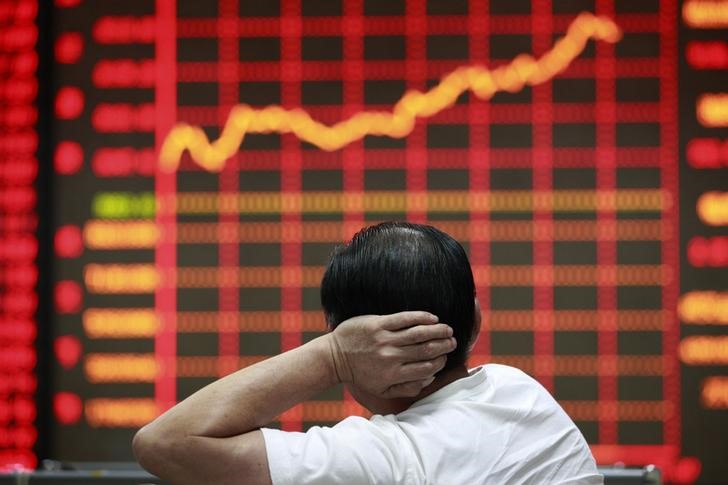
Asian equities rallied as markets ramped up odds of a 25bp Fed cut in December to about 82.7%, boosting technology shares across Japan and Korea (Nikkei 225 and KOSPI ~+2%) and lifting regional futures; focus now turns to upcoming US PCE inflation data. Sector movers included SoftBank (+6.3%), Meituan (+6%), while Nvidia slid to a two-month low amid reports Google is developing AI chips and Alibaba fell ~1.5% after mixed Q2 results; Australia’s ASX 200 rose 0.9% despite hotter-than-expected October CPI of 3.8% that clouds near-term RBA easing. Investors are pricing a more dovish Fed path while parsing mixed country-specific inflation and earnings signals, keeping markets responsive to further economic prints and AI-related technology developments.
Market structure: Tech and AI-capex beneficiaries (hyperscalers, data-center hardware, semis suppliers such as Murata/TSMC peers) are short-term winners as markets price an 82.7% Fed cut by Dec and push up multiples; idiosyncratic losers include high-valuation incumbents with new competitive threats (NVIDIA facing Google silicon) and margin-stretched Chinese e-commerce (Alibaba). The Fed-cut pricing increases risk-on flows into equities and compresses term premia, likely lowering 2–10y yields by ~10–30bp if realized, supporting growth sectors while lifting FX carry into AUD/JPY on divergent local RBA timing.
Risk assessment: Tail risks include a) Fed disappoints (no cut) causing a 7–12% tech drawdown in 1–2 weeks; b) accelerated US–China geopolitical escalation disrupting supply chains; c) regulatory/antitrust action on AI platforms reducing TAM. Near-term catalysts are PCE (early Dec) and the Dec 9–10 FOMC; medium-term (3–12 months) will be hyperscaler capex plans and Google chip performance/availability. Hidden dependency: AI demand is concentrated in few buyers (MSFT/GOOGL/AMZN) — any slowdown in their capex cascades to supplier revenues.
Trade implications: Tactical long ideas: overweight GOOGL (AI stack + in‑house silicon) and selective Japan/Korea semis suppliers (Murata) for 3–12 months; hedge with short/neutrally sized NVDA positions or buy puts to protect against headline-driven repricing. Use event-option plays: buy S&P or NASDAQ straddles into PCE and a Dec 9 FOMC window (~30–45 days) to capture volatility; run 1–3% portfolio-sized directional positions, stop-loss 8–12%.
Contrarian angles: The market may be overpricing a December cut — if PCE prints sticky CPI, risk assets will gap lower; conversely, the Google-chip narrative could be overblown short-term — NVDA’s software/ecosystem moat limits share loss over 12–24 months. Historical parallel: 2019 Fed pivot lifted tech multiples but increased dispersion; expect similar dispersion with winners (hyperscalers, selected suppliers) and losers (margin-compressed platforms like BABA) over the next 6–18 months.
AI-powered research, real-time alerts, and portfolio analytics for institutional investors.
Request DemoOverall Sentiment
moderately positive
Sentiment Score
0.50
Ticker Sentiment
