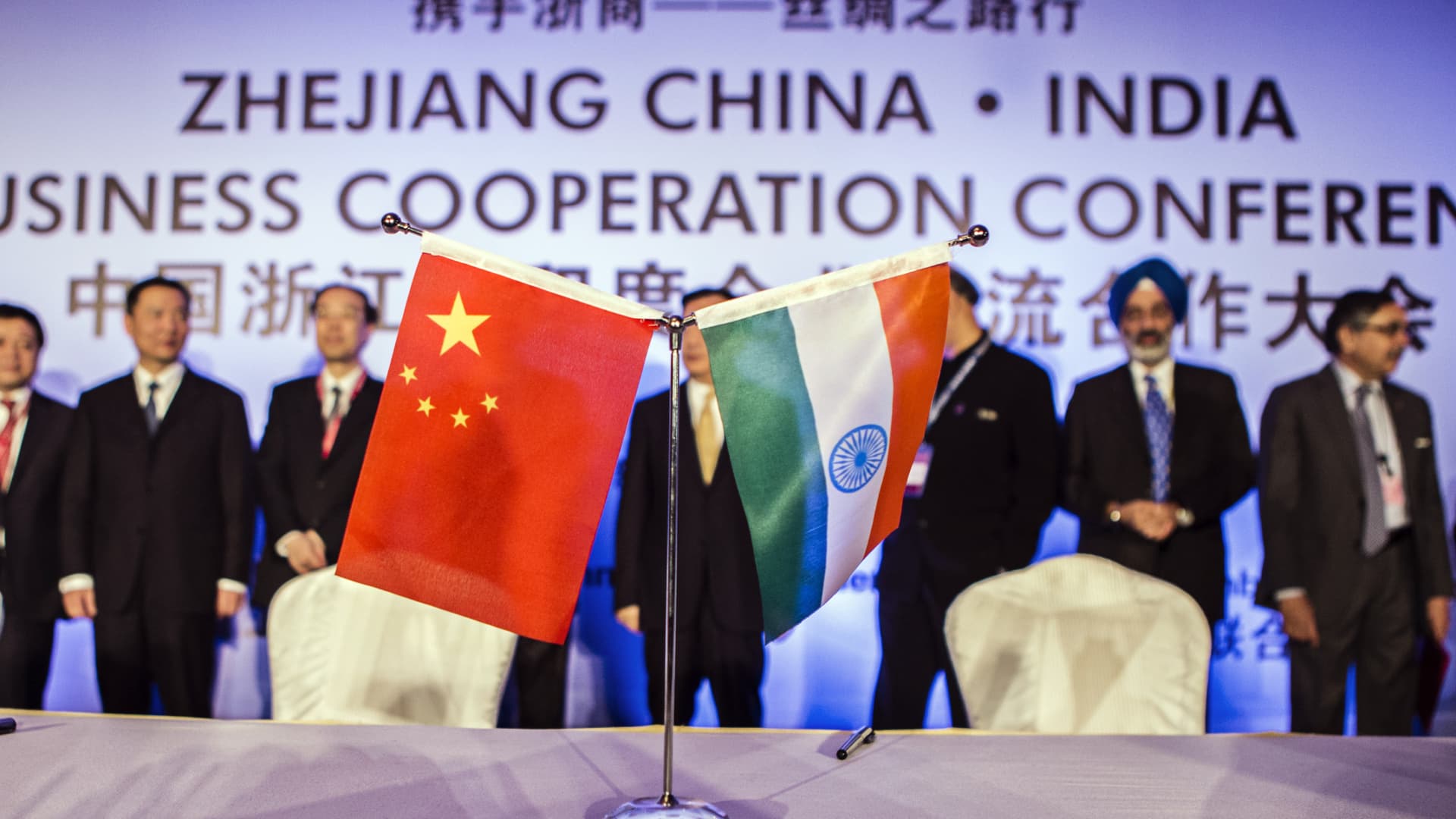
An eight‑company Indian delegation (March 29–April 4) made the first business visit to China in 5+ years, with six startups focused on EV charging, electric trucks, battery storage and energy trading. India, highly dependent on oil/LPG transiting the Strait of Hormuz, is seeking Chinese tech and JV partnerships to address energy security and inadequate charging infrastructure as it targets 30% EV sales by 2030. New Indian easing of Chinese investment rules (March 11) and planned larger delegations signal incremental normalization that could modestly benefit India‑facing EV/renewables suppliers and tech‑transfer deals.
The immediate economic lever here is technology arbitrage: Chinese scale can compress installed EV‑charging and battery system cost per kWh by 15–30% versus locally engineered solutions within 12–24 months through standardized packs, verticalized cell/module supply and low‑cost BOS (balance of system) manufacturing. That cost delta will meaningfully shorten payback for India commercial fleets and urban charging rollouts, converting latent range‑anxiety into measurable incremental demand for charging services and grid‑tied storage over a 2–4 year horizon.
Second‑order competitive dynamics favor firms that act as systems integrators or local OEM partners rather than pure domestic component makers — Indian startups that secure Chinese licensing/JV terms will gain a 6–18 month go‑to‑market lead while standalone domestic suppliers face margin compression and consolidation pressure. This also creates a tactical arbitrage for Chinese equipment exporters: incremental volumes into India can substitute for slower Western markets, preserving their global utilization and keeping component prices depressed for longer.
Key policy and event risks are binary and fast‑moving: a single border incident or political flare‑up could reclose investment channels, reversing partner confidence within weeks and leaving Indian startups exposed with stranded tech transfer contracts. Conversely, firm commitments (MOUs, binding JV capital deployment, fast‑tracked certification) at major trade events would be catalytic within 3–9 months and should materially re‑rate equities and project pipelines tied to deployment.
For commodity flows, expect mixed outcomes: downward pressure on device ASPs from Chinese supply, but structurally higher copper, nickel and lithium demand in India as deployments scale — a multi‑year demand tail that will support mining and precursor producers even as battery‑component margins compress.
AI-powered research, real-time alerts, and portfolio analytics for institutional investors.
Request DemoOverall Sentiment
mildly positive
Sentiment Score
0.25
