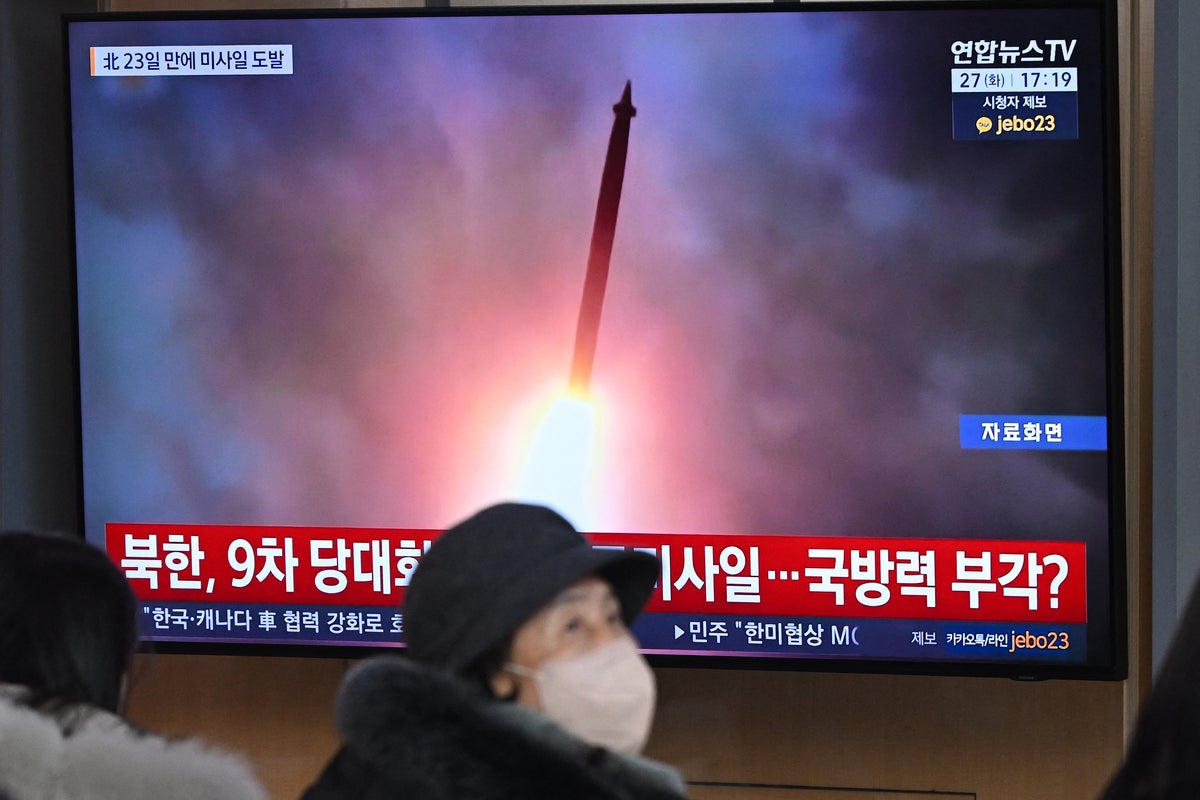
North Korea fired a suspected ballistic missile that fell into the sea about 10 minutes after launch; this episode is part of its fourth-to-sixth ballistic missile launches this year (two in January, one in March) and earlier short-range tests flew roughly 240 km. Japan reported no breach of its territorial waters or EEZ, while South Korea convened an emergency National Security Council meeting and Tokyo condemned the launches as threats to regional security. Market implication: expect near-term regional risk-off flows (safe-haven bids into JPY and government bonds, pressure on Korean equities and exporters), but direct global market disruption appears limited given the missile failure and lack of escalation. Monitor further launches, shifts in diplomatic rhetoric, and any sanctions or military responses that could broaden impact.
Repeated test activity increases the odds that Seoul and Tokyo accelerate near-term procurement of layered missile defenses (ship- and land-based interceptors, sensors, and solid‑motor replacement programs). Budget and contracting timelines mean visible revenue for large primes in 6–24 months and margin tailwinds for specialty suppliers (composites, propellants, avionics) over 2–4 years; expect backlog re-rating to lead equity outperformance versus cyclicals rather than immediate EPS beats.
Markets will treat these events like transient geopolitical risk: short-dated volatility and FX safe‑haven flows (JPY, short-duration Treasuries, gold) should spike for days–weeks while defensive equities grind higher over months. Maritime and insurance costs can rise along certain Northeast Asian corridors, imposing discreet cost pressure on export‑dependent manufacturers and logistics providers that will show up as margin headwinds if tests remain frequent.
Key reversal triggers are diplomatic appeasement or repeated non‑escalatory failures that normalize testing as R&D rather than provocation; conversely, a single successful capability demonstration or US/ROK/Japan formal procurement announcement would crystallize upside quickly. Tail risks remain asymmetric (low-probability, high-impact escalation) so position sizing must assume short, sharp volatility episodes even as the multi‑quarter procurement story plays out.
AI-powered research, real-time alerts, and portfolio analytics for institutional investors.
Request DemoOverall Sentiment
mildly negative
Sentiment Score
-0.30
