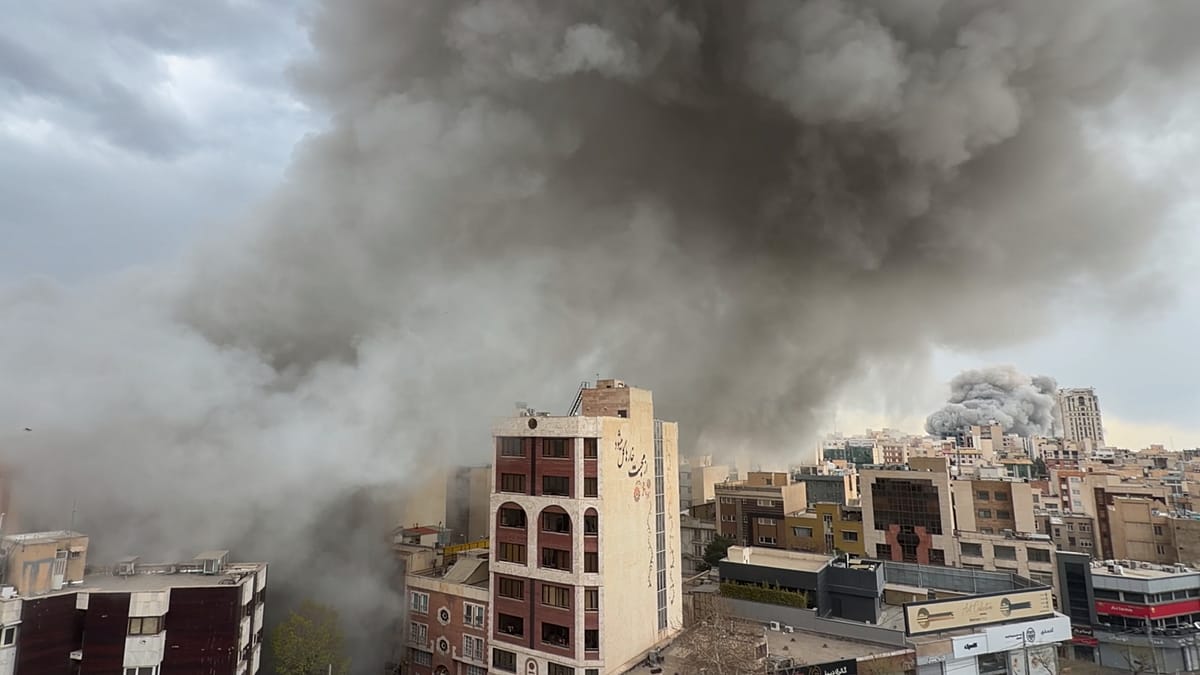
U.S. and Israeli forces have launched sustained strikes on Iran, with President Trump saying operations could last four to five weeks while U.S. Central Command reported destruction of IRGC command facilities and air defenses. Iran has responded with strikes across the region—including alleged attacks on a U.S. air base in Bahrain, energy infrastructure in Gulf states, and claims of closing the Strait of Hormuz with threats to attack transiting vessels—prompting U.S. embassy closures, travel advisories for Americans in 14 Middle East countries, and Saudi reports of drones striking the U.S. embassy in Riyadh. The confrontation has already lifted energy prices and poses acute downside risk to global oil supply, shipping through the Hormuz chokepoint, regional stability, and risk assets more broadly.
Market structure: Immediate winners are integrated oil majors (XOM, CVX) and global tanker owners (DHT, FRO) from higher crude prices and rerouting; defense contractors (LMT, RTX, GD) gain backed by likely emergency procurement. Direct losers are airlines and travel (AAL, DAL, LUV), Gulf logistics hubs, and regional commercial real estate tied to expat workers; expect 10–30% short-term EPS hit for exposed airlines if Brent sustains >$100 for 30+ days.
Risk assessment: Tail scenarios include full Strait-of-Hormuz closure (oil >$150–200/bbl within weeks) or rapid de-escalation after 2–4 weeks; both are low-probability but high-impact. Near-term (days–weeks) risk-off should push US 10y yields down 20–40bp and USD up 1–2% while gold (GLD) rallies; medium-term (months) persistent supply shocks lift yields and inflation expectations.
Trade implications: Tactical plays — 2–4% long in XOM/CVX for cash-flow shelter and dividend carry, 1–2% long in LMT/RTX via Nov-2026 LEAP call spreads (buy 2: sell 1) to cap cost, and 1% long GLD as inflation/safe-haven. Pair trade: long XOM (2%) / short AAL (1.5%); options: buy 3-month Brent call spread (WTI Jul 2026 85/130) sized to 1–2% notional and buy SPY 3-month 5% OTM puts (1% portfolio) as tail hedge.
Contrarian angles: Consensus expects sustained $200 oil; that pricing ignores demand destruction threshold — global recession risk if Brent >$120 for >3 months. Overbought small-cap E&P will mean-revert; prefer large-cap integrateds and tanker owners over levered explorers. Key unintended consequence: a steep oil spike could force coordinated OPEC+ production response within 2–6 weeks, compressing opportunities in pure-play E&P longs.
AI-powered research, real-time alerts, and portfolio analytics for institutional investors.
Request TrialOverall Sentiment
strongly negative
Sentiment Score
-0.75
