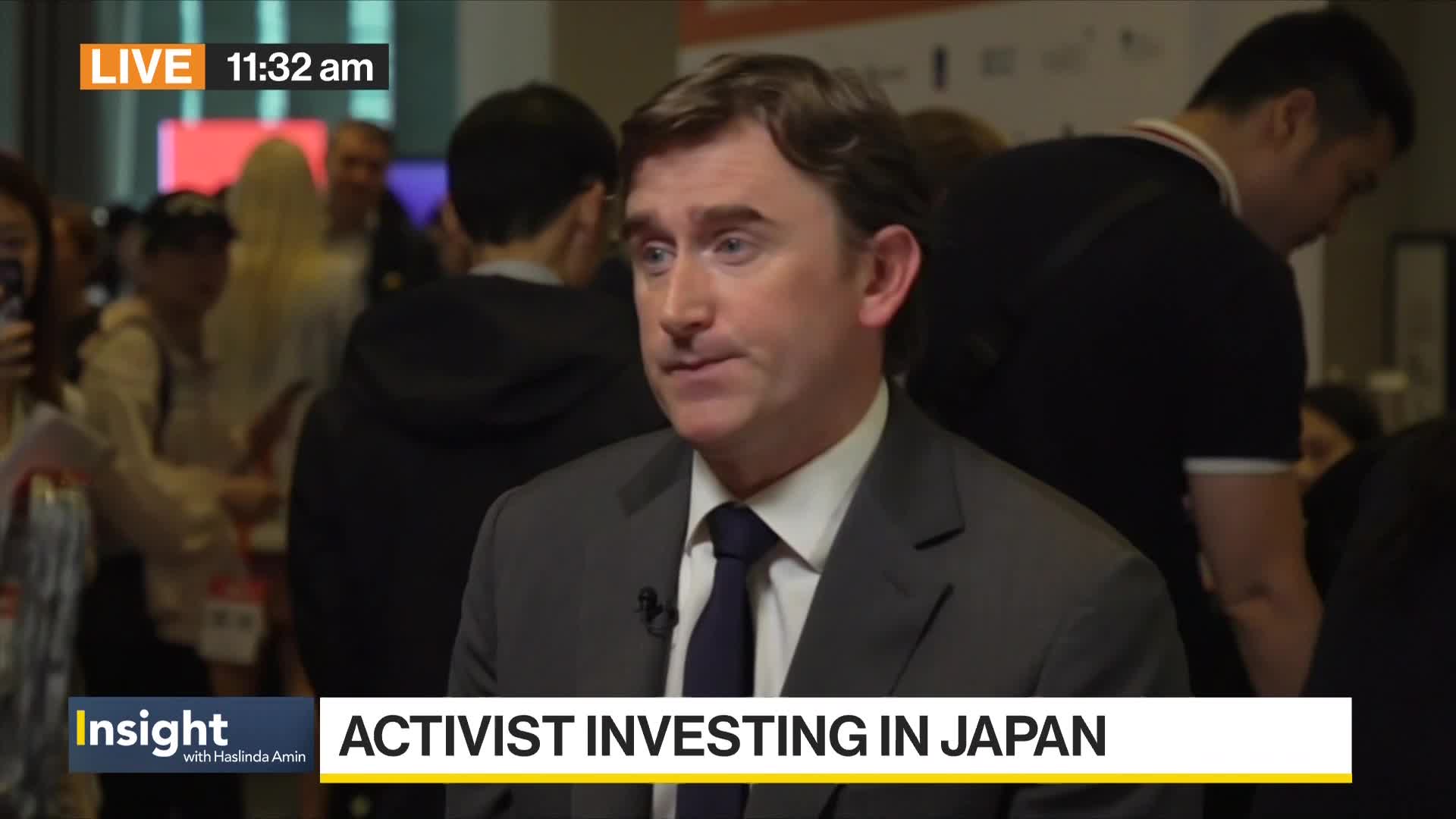
Eisuke Smith of Palliser Capital discussed the increasing prevalence and evolving dynamics of activist investing in Japan on Bloomberg. Smith highlighted that while activism is growing, it is still less confrontational than in the U.S., with a focus on constructive dialogue with management to unlock shareholder value through improved capital allocation and governance. He noted that Japanese companies are becoming more receptive to activist engagement, driven by pressure from the government and institutional investors to enhance corporate value.
Eisuke Smith of Palliser Capital highlights a significant trend in the Japanese market: the increasing prevalence and evolving dynamics of activist investing. While activism is growing, it notably differs from the U.S. model by being less confrontational, emphasizing constructive dialogue with corporate management. The primary objectives of such activism in Japan are to unlock shareholder value through enhancements in capital allocation and corporate governance. This shift is supported by Japanese companies demonstrating greater receptivity to activist engagement, a change influenced by governmental pressure and institutional investors advocating for improved corporate value. The neutral sentiment and a relatively low market impact score of 0.25 suggest this is an ongoing development rather than a sudden, disruptive event, aligning with the themes of 'Short Interest & Activism' within the Japanese market context.
AI-powered research, real-time alerts, and portfolio analytics for institutional investors.
Request DemoOverall Sentiment
neutral
Sentiment Score
0.00
