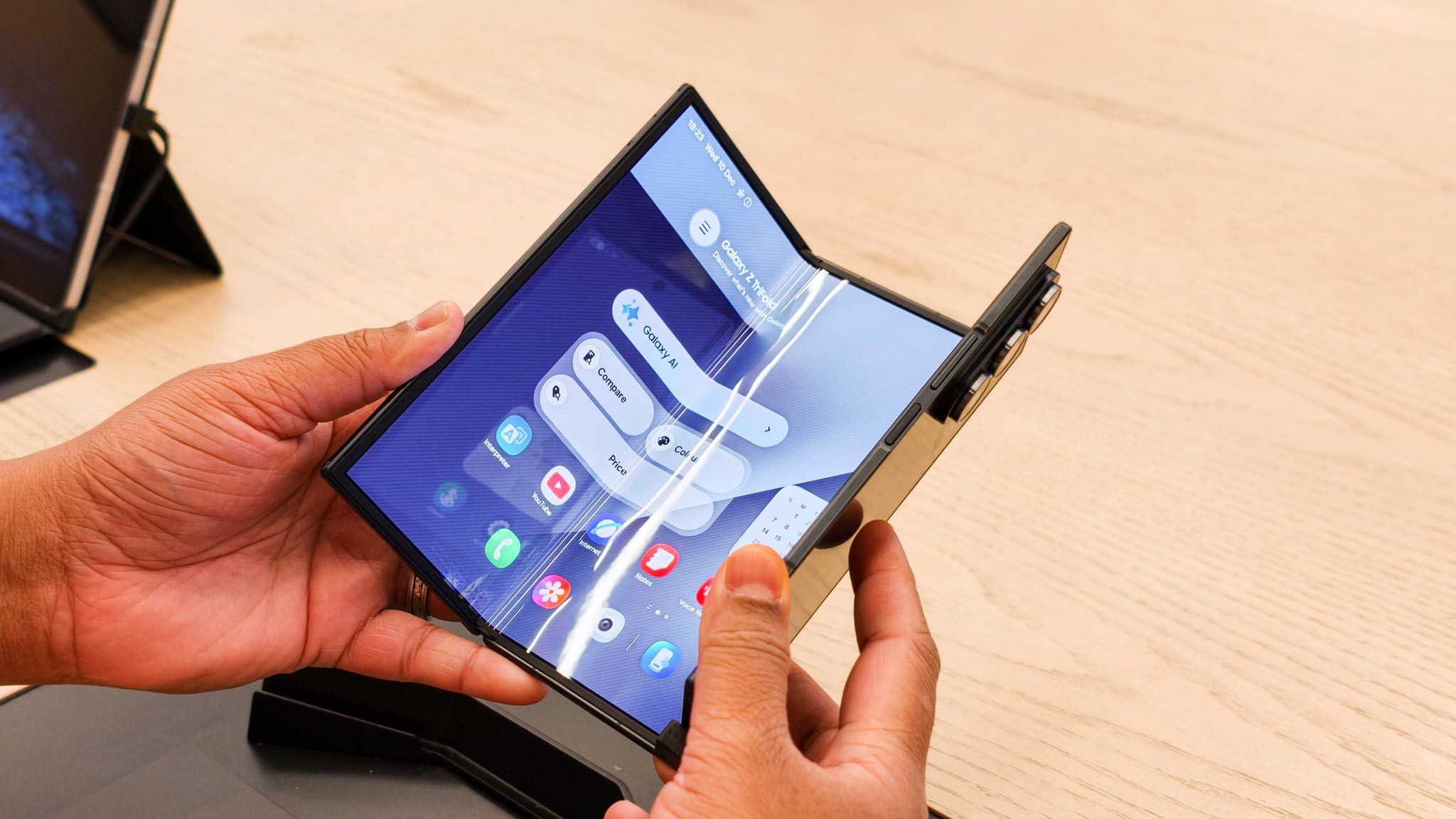
Samsung will restock the Galaxy Z TriFold in the U.S. starting April 10, 2026, via online and select retail experience stores, but has confirmed the device is discontinued and will not be produced after remaining inventory sells out. The move signals limited commercial viability—reports point to high production costs, complex manufacturing and weak demand—and Samsung appears to be reallocating focus to the Z Fold 8 and a new Wide Fold, with an unconfirmed successor to the TriFold possibly targeted for late 2027.
Samsung’s withdrawal from an experimental, high-complexity form factor is a supply‑side signal: yields, bespoke tooling and low volume are a poor fit for mainstream smartphone economics. Expect component orderbooks to get lumpier over the next 2–6 quarters as manufacturers reallocate capacity to higher-velocity fold and slab SKUs, which will amplify quarterly revenue volatility at smaller display, hinge and test-equipment suppliers.
Competitively, this reduces headline noise around exotic hardware and gives Apple a clearer runway to control the narrative and pricing for any entry into foldables this year. That doesn’t eliminate competitive risk — Samsung’s R&D consolidation means a potentially stronger successor in 2027 — but it shifts the near-term battleground from feature differentiation to supply-chain scale and component cost decline, favoring incumbents with purchasing leverage.
Market micro-arbitrage: the final inventory dynamic creates short-term scarcity and a reseller spread that can be monetized over days–weeks, but the real investor signal comes from supplier guidance and ASP (average selling price) trajectories over 1–3 quarters. Watch upcoming supplier quarterlies and Apple’s product cadence: a muted supplier upgrade cycle would be the most direct reversal of the current narrative within 60–180 days.
AI-powered research, real-time alerts, and portfolio analytics for institutional investors.
Overall Sentiment
mildly negative
Sentiment Score
-0.20
Ticker Sentiment
