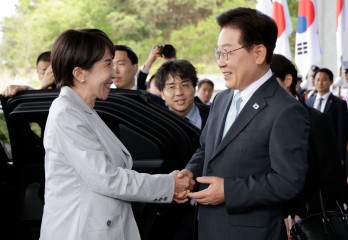
Starbucks Korea suspended a tumbler promotion and issued an apology after backlash over its "Tank Day" and "Bang on the Desk" phrases, which were seen as mocking Korea's May 18 Gwangju Democratization Movement and the 1987 Park Jong-chul torture death. President Lee Jae Myung publicly criticized the company and called for appropriate moral, administrative, legal and political responsibility. The issue is primarily reputational and governance-related, with limited direct market impact but potential downside for Starbucks Korea's brand perception.
This is less a one-off PR mishap than a governance stress test for any consumer brand operating in Korea’s high-sensitivity political-memory environment. The immediate damage is reputational, but the second-order risk is management distraction and a higher probability of overcorrection: tighter centralized approvals, slower local marketing cadence, and more conservative campaign design. That usually compresses short-term topline optionality more than it impacts baseline traffic, but it can still shave several weeks of promotional efficiency and worsen comp assumptions around holiday/event-driven sales.
The key economic question is whether this becomes a consumer boycotts story or stays an executive accountability story. If it escalates, the hit is likely to be concentrated in urban, social-media-native demographics where brand choice is fluid; the damage would spill over to adjacent premium QSR and café concepts because the same consumers tend to rotate among a small set of brands. The beneficiary is not necessarily a direct competitor with durable share gains, but rather lower-profile local chains and convenience channels that can capture substitution without being dragged into the controversy.
From a risk standpoint, the downside window is days to a few weeks if political actors keep amplifying the issue, but the longer-tail risk is regulatory scrutiny and a lasting discount on the brand’s local license-to-operate. If the apology is paired with tangible remediation—donations, victim-family outreach, local governance changes—the market will likely move on quickly. If not, this can morph into a recurring headline risk each time the company launches culturally themed campaigns, which raises the hurdle rate for Korea growth assumptions over the next 6-12 months.
The contrarian take is that the selloff in sentiment may be overstated if investors assume a durable demand shock. For a category leader with habitual purchase behavior, controversy typically impacts frequency at the margin rather than core retention, and the real earnings risk is usually low-single-digit same-store-sales noise unless the story becomes nationalized. The better trade is to express the issue as a governance-quality discount versus the broader consumer basket rather than a pure demand-collapse thesis.
AI-powered research, real-time alerts, and portfolio analytics for institutional investors.
Request DemoOverall Sentiment
moderately negative
Sentiment Score
-0.35
