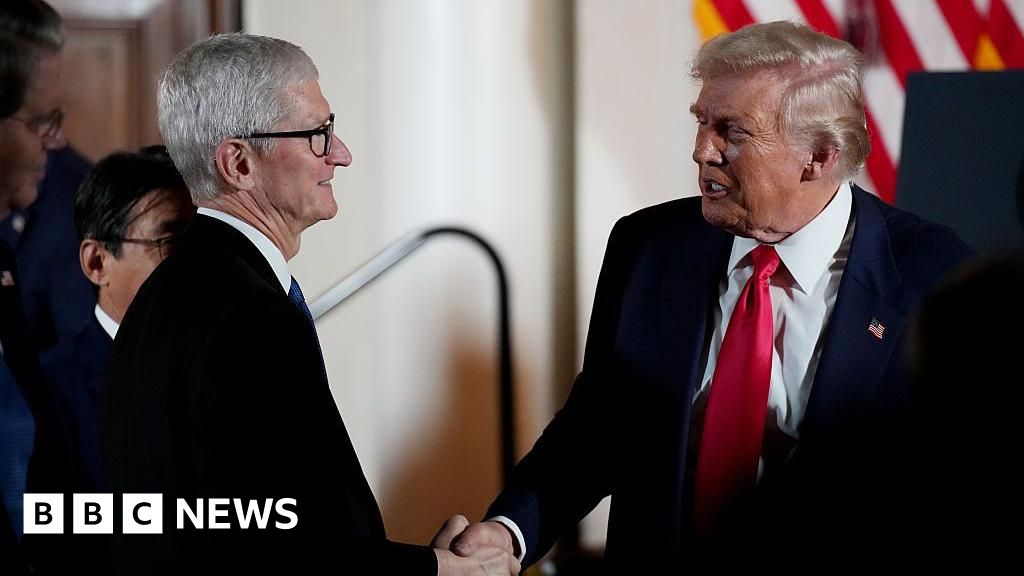
Apple will begin producing some Mac mini units and artificial intelligence servers at an expanded Houston factory later this year, part of a broader push after promising $600bn in US investment and amid political pressure from the Trump administration. Mac mini currently represents under 5% of Mac sales; the move includes an advanced manufacturing training center and follows tariffs that have cost Apple more than $3bn, while the company’s shares rose over 2% on the announcement. The shift signals a modest but strategic diversification of Apple’s supply chain into US manufacturing, though analysts note major changes to iPhone production and broader supply-chain exposure would take considerably more time.
Market-structure: Moving some Mac mini and AI-server assembly to Houston helps domestic industrial suppliers and automation vendors while doing little for Apple’s top-line — Mac mini represents <5% of Mac sales and likely <0.5% of AAPL revenue (Macs ~10% of sales). Tariff relief (avoiding the ~$3bn+ Apple has absorbed) and political goodwill are the primary drivers, not immediate margin expansion; expect modest capex and a multi-year shift in logistics and OPEX mix rather than a revenue shock.
Risk assessment: Near-term (days-weeks) the market will be sentiment-driven — AAPL popped ~2% on the news — but meaningful operational shifts take quarters-years. Tail risks: an enforced 10–15% global tariff, Chinese regulatory retaliation (China ~18–20% of Apple revenue), or US ramp-up delays could compress margins by hundreds of basis points. Hidden dependency: chips and advanced packaging still come from TSMC/Asia, so supply-chain concentration risk remains.
Trade implications: Tactical: favor AAPL modestly (sentiment lift) while hedging headline/tariff risk; favor US industrial/automation and semiconductor-equipment names that benefit from reshoring capex (Lam/Applied/ABB) over Asian EMS names that rely on China assembly. Options: use short-dated hedges around potential tariff announcements and buy 6–12 month call spreads on select equipment names to play capital spend.
Contrarian: Consensus is overstating revenue impact and understating political risk — this is a signaling move to reduce tariff pressure more than a structural supply-chain overhaul. The short-term rally is likely overdone; if tariffs are not enacted within 30–90 days, AAPL upside will fade and industrial-equipment names should reprice higher as projects concretize.
AI-powered research, real-time alerts, and portfolio analytics for institutional investors.
Request DemoOverall Sentiment
mildly positive
Sentiment Score
0.30
Ticker Sentiment
